ED raids 8 Bengaluru locations in ISIS recruitment money laundering probe
Synopsis
The Enforcement Directorate has raided eight Bengaluru locations in a money laundering probe tied to ISIS recruitment, with preliminary findings pointing to two charitable trusts allegedly used to channel funds for illegal travel to Syria. The NIA has already chargesheeted five persons in the linked terrorism case — making this ED action a critical financial layer of a widening counter-terror investigation.
Key Takeaways
The Enforcement Directorate (ED) searched eight locations in Bengaluru on 21 July in an ISIS-linked money laundering case.
Funds allegedly routed through Iqra Welfare Trust and GFM Trust were purportedly used to finance ISIS recruitment.
The probe stems from an NIA FIR under unlawful activities and terrorism provisions.
The NIA has chargesheeted five persons for allegedly radicalising and recruiting Muslim youth in Bengaluru via 'Iqra Camp' and 'Quran Circle' programmes.
Recruits were allegedly facilitated to travel illegally to Syria via Turkiye to join ISIS.
The group allegedly exploited anti-CAA/NRC sentiments to spread ISIS ideology through secure social media platforms.
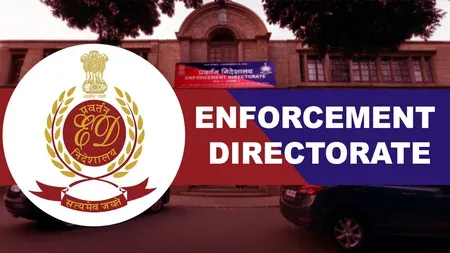
The Enforcement Directorate (ED) on Tuesday, 21 July conducted searches at eight locations across Bengaluru as part of a money laundering investigation tied to the alleged recruitment and funding of individuals to join the Islamic State of Iraq and Syria (ISIS) terror outfit in Syria. The operation marks a significant escalation in the financial probe into suspected terror financing networks operating out of Karnataka's capital.
Basis of the Investigation
The ED's action is grounded in a First Information Report (FIR) registered by the National Investigation Agency (NIA) under provisions governing unlawful activities and terrorism. According to the ED, preliminary findings suggest that funds channelled through the Iqra Welfare Trust and GFM Trust were allegedly used to finance and facilitate the recruitment of vulnerable individuals into ISIS.
Officials said the searches were aimed at tracing the flow of funds, identifying those allegedly involved in the network, and gathering evidence relating to the financing of terror activities. Financial transactions and other materials seized during the raids are currently under examination.
What the NIA Chargesheet Reveals
The NIA has already chargesheeted five persons allegedly linked to the banned terrorist organisation ISIS — also referred to as the Islamic State of Iraq and the Levant (ISIL) and Al-Dawlah al-Islamiyah fi al-Iraq wa al-Sham (Daesh) — for conspiring to radicalise and recruit Muslim youth in Bengaluru.
According to the chargesheet, the accused allegedly used programmes called 'Iqra Camp' and 'Quran Circle' to identify and influence potential recruits, raise funds, and facilitate their illegal travel to Syria via Turkiye to join ISIS and fight against the Syrian government.
How the Network Allegedly Operated
The ED has alleged that the group exploited anti-CAA/NRC sentiments to propagate ISIS ideology through secure social media platforms. The accused reportedly used encrypted communication channels to radicalise targets and coordinate funding. This is consistent with a broader pattern of ISIS-linked cells in India using domestic grievances as an entry point for radicalisation, a trend that security agencies have flagged repeatedly since 2014.
Notably, the alleged use of charitable trust structures — the Iqra Welfare Trust and GFM Trust — to route funds mirrors methods documented in other terror financing cases globally, where legitimate-seeming organisations serve as conduits for illicit money flows.
Current Status and What Comes Next
The ED has confirmed that further investigation is underway. An official statement from the agency is awaited. The probe is expected to widen as investigators map the full extent of the alleged financial network and its links to the NIA's ongoing terrorism case. Any attachment of assets under the Prevention of Money Laundering Act (PMLA) would be a likely next step if the financial trail is substantiated.
Point of View
It points to a deliberate exploitation of India's trust-registration framework, which carries minimal financial oversight compared to corporate entities. The anti-CAA/NRC angle is also significant: it suggests the alleged network was designed to convert domestic political anger into ideological entry points, a radicalisation pathway that is harder to detect and disrupt than direct recruitment. With the NIA chargesheet already filed against five persons and the ED now pursuing the money trail, the investigation has reached a stage where asset attachment under PMLA could follow — and that outcome will be the real test of whether the financial network can be dismantled, not just documented.
NationPress
20 Oct 2026
Frequently Asked Questions
Why did the ED raid eight locations in Bengaluru on 21 July?
The ED conducted the raids as part of a money laundering investigation linked to the alleged recruitment and funding of individuals to join ISIS in Syria. The probe is based on an NIA FIR under terrorism and unlawful activities provisions, with preliminary findings pointing to two charitable trusts allegedly used to channel funds.
What are the Iqra Welfare Trust and GFM Trust accused of?
According to the ED, both trusts allegedly served as conduits to finance and facilitate the recruitment of vulnerable individuals into ISIS. The funds were reportedly used to support illegal travel of recruits from India to Syria via Turkiye.
How many people has the NIA chargesheeted in the linked case?
The NIA has chargesheeted five persons allegedly linked to ISIS — also known as ISIL and Daesh — for conspiring to radicalise and recruit Muslim youth in Bengaluru. The accused allegedly used 'Iqra Camp' and 'Quran Circle' programmes for this purpose.
How did the accused allegedly radicalise recruits?
According to the NIA chargesheet, the accused used structured religious programmes to identify and influence recruits, raised funds through trust structures, and allegedly exploited anti-CAA/NRC sentiments to spread ISIS ideology via secure, encrypted social media platforms.
What happens next in the ED investigation?
The ED has confirmed that further investigation is underway and an official statement is awaited. The next likely steps include mapping the full financial network and potentially attaching assets under the Prevention of Money Laundering Act (PMLA) if the money trail is substantiated.