Are Elections Approaching? Intelligence Warns of Radicalisation Efforts in Bengal, Assam, and Bangladesh?
Click to start listening
Synopsis
As elections approach in West Bengal, Assam, and Bangladesh, intelligence agencies warn of rising radicalisation efforts aimed at influencing voters and establishing terrorist networks. This article explores the implications of large gatherings like the Biswa Ijtema and the alarming trends in radicalisation spreading across the borders.
Key Takeaways
- Intelligence agencies warn of rising radicalisation.
- Large gatherings may serve as recruitment grounds.
- Biswa Ijtema's implications raise alarm.
- Increased surveillance in vulnerable areas.
- Islamic State actively seeking recruits in the region.
New Delhi, Jan 20 (NationPress) With the election season nearing in West Bengal, Assam, and Bangladesh, intelligence agencies have issued a warning regarding extensive radicalisation activities occurring in these areas.
These radicalisation initiatives aim not only to polarise the voting demographic but also to establish terror modules for potential large-scale attacks.
In Bangladesh, the Jamaat-e-Islami is reportedly intensifying efforts to radicalise individuals, aiming to shift voter allegiance away from the Bangladesh Nationalist Party (BNP).
The developments in Bangladesh have raised concerns in West Bengal and Assam, where certain factions are organising events and camps to further their radicalisation agendas.
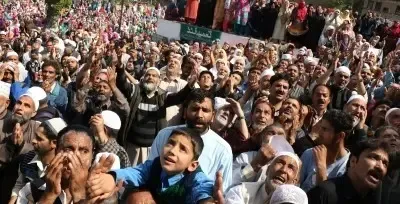
One particular event in West Bengal, known as the Biswa Ijtema, has caught the attention of intelligence agencies. This gathering took place in Punian village near Hooghly district from January 2 to 5, attracting participants from 100 different countries.
Two aspects of this event raised red flags. Firstly, it was the first occurrence in nearly three decades; the previous event was held in 1992. Secondly, it was relocated to West Bengal after being cancelled in Bangladesh due to political turmoil.
According to an Intelligence Bureau official, the event concluded with appeals for global peace. However, such large gatherings can potentially become breeding grounds for radicalisation. With the current instability in Bangladesh and upcoming elections in various Indian states, these events should be approached with caution.
Last year, National Security Advisor Ajit Doval visited Kolkata for a series of meetings with police and intelligence officials. This was prompted by reports indicating that areas like Murshidabad, 24 South Parganas, Malda, and Birbhum are of particular concern. The significant number of Madrasas in these regions has been flagged, necessitating increased surveillance.
Officials have stated that terror groups often exploit large events, like the one in West Bengal, as recruitment grounds, sending recruiters to engage with youths and persuade them to join their ranks.
Furthermore, the Islamic State is reportedly on the lookout for young recruits to establish its Bengal Province, actively seeking individuals from Bangladesh, Assam, and West Bengal. They aim to infiltrate large gatherings to identify potential members.
Posters promoting the Islamic State's agenda have been circulated through its online platforms, including Al-Bengali Media, calling for unity among Muslims against the Indian state. An official noted that the Islamic State is actively encouraging Muslims in West Bengal, northeastern states, and Bangladesh to unite in opposition to India.
In a recent communication to the Union Government, West Bengal Governor C.V. Ananda Bose expressed concerns about the fallout from riots in Murshidabad district, highlighting the dual threats of radicalisation and militancy.
According to an Intelligence Bureau official, these developments underscore the urgency with which radical elements are operating. With elections approaching, they may resort to various tactics to advance their agenda, including infiltration, illegal immigration, radicalisation, recruitment, rioting, and smuggling. The awareness that security forces will focus on maintaining law and order during the elections may encourage them to exploit this situation.
Point of View
It is crucial to uphold a vigilant stance against radicalisation efforts, particularly as elections approach. The integrity of our democratic processes must be protected, ensuring that such radical elements do not jeopardize the safety and unity of our communities.
NationPress
20/01/2026
Frequently Asked Questions
What are the recent concerns regarding radicalisation in India?
Intelligence agencies have raised alarms about increasing radicalisation efforts in West Bengal, Assam, and Bangladesh, particularly targeting young individuals during the election season.
How do large gatherings relate to radicalisation?
Large gatherings can serve as recruitment grounds for extremist groups, allowing them to connect with potential recruits and promote their ideologies.
What is the Biswa Ijtema and why is it significant?
The Biswa Ijtema is a significant religious gathering held in West Bengal, which has raised concerns among intelligence agencies due to its potential to influence participants and attract radical elements.
What actions are being taken by intelligence agencies?
Intelligence agencies are increasing surveillance in areas of concern, particularly where there are many Madrasas, and are vigilant about the movements of radical groups.
What is the role of the Islamic State in this context?
The Islamic State is reportedly scouting for recruits in West Bengal, Assam, and Bangladesh, aiming to establish a presence and exploit ongoing tensions.