Should the Governor’s Address Be Scrapped in Opposition-ruled States?
Synopsis
Tamil Nadu's Chief Minister M. K. Stalin is on a mission to eliminate the Governor’s address in Opposition-led states, calling for a constitutional amendment. This bold move comes after a notable incident in the Assembly, sparking a debate on the role of Governors in Indian politics.
Key Takeaways
Stalin is advocating for a significant constitutional change.
Elimination of the Governor’s address is seen as a move to enhance democracy.
The recent Assembly incident underscores tensions between the Governor and elected officials.
Stalin emphasizes the importance of the Dravidian Model achievements.
The push may influence Centre-State relations in India.
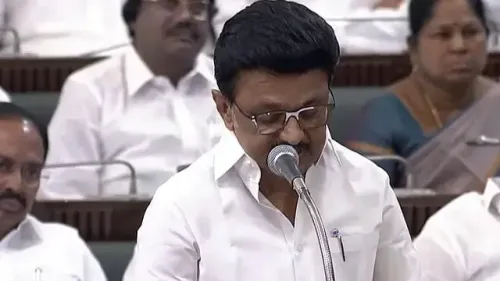
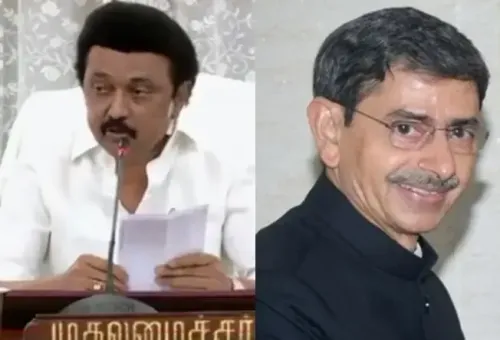
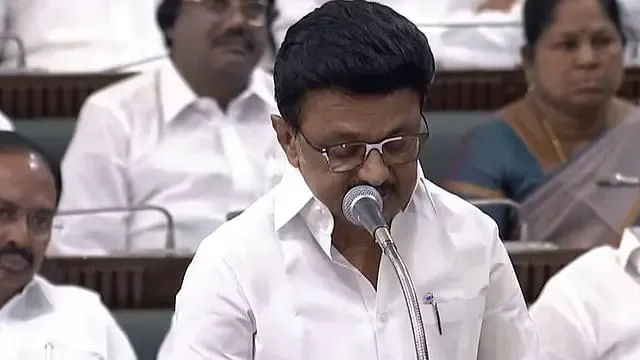
Chennai, Jan 20 (NationPress) Tamil Nadu Chief Minister M. K. Stalin has announced that his administration will push for a constitutional amendment aimed at eliminating the necessity for the Governor’s address in states led by Opposition parties, describing this tradition as increasingly obsolete and detrimental to democratic processes.
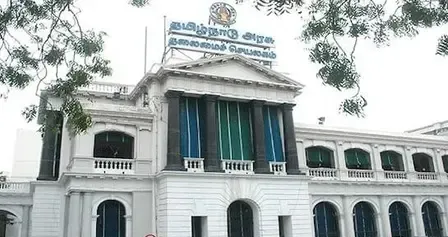
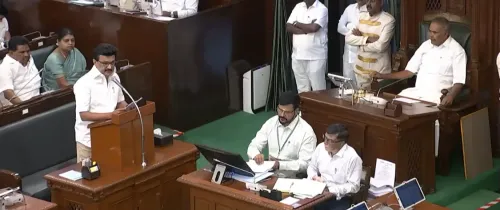
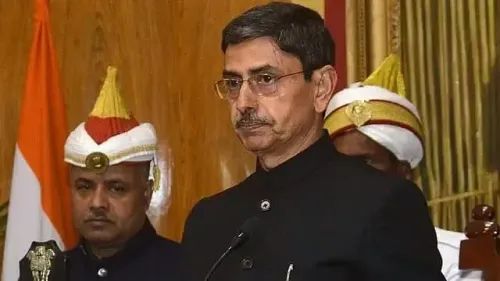
The comments followed a remarkable incident in the Tamil Nadu Legislative Assembly, where Governor R. N. Ravi departed the House without giving the customary address at the beginning of the session.
The Governor's exit occurred due to disagreements with the State government regarding established Assembly protocols, leading to renewed tensions between the Raj Bhavan and the elected government.
In reaction, the Assembly adopted a resolution—invoking a relaxation under Rule 17—considering the government-prepared text of the Governor’s address as formally presented.
Chief Minister Stalin subsequently took to social media to emphasize that this incident highlighted the necessity for structural changes.
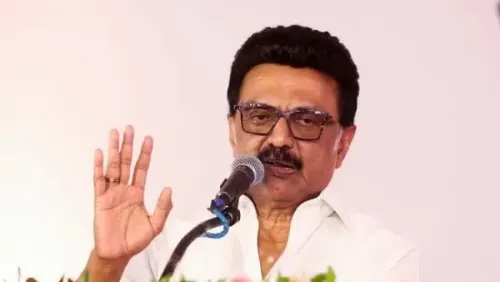
“We will advocate for a constitutional amendment to eliminate the requirement of the Governor’s address in all states governed by Opposition parties,” he stated.
Stalin argued that the Governor’s refusal to present the address would not diminish the accomplishments of the Dravidian Model government over the last four years, nor would it deprive citizens of the advantages of its welfare and development initiatives.
The government, he asserted, possesses a constitutional mandate to present its policy vision to the legislature, regardless of gubernatorial objections. In a forthright post, the Chief Minister accused the Governor of instigating unnecessary disruptions by ignoring the Constitution, the will of the people expressed through an elected government, and the authority of the legislature.
Such actions, he argued, equate to hindering public welfare programs and undermining cooperative federalism.
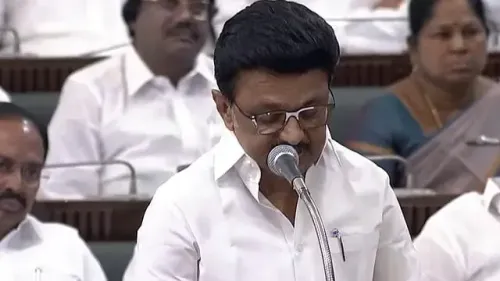
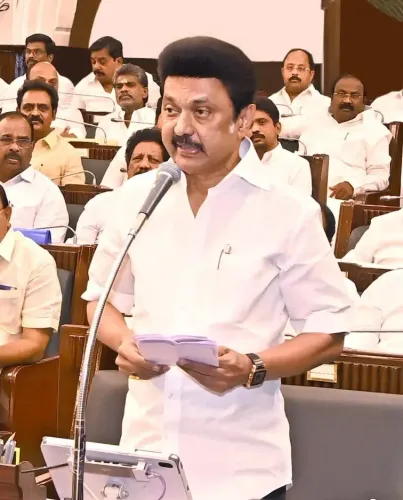
Significantly, Stalin also informed the House that the Dravida Munnetra Kazhagam (DMK) would spearhead efforts to unite like-minded political parties nationwide to advocate for a constitutional amendment early this year.
With the support of Opposition-led states, the DMK intends to cultivate a national consensus to reassess the relevance of the Governor’s address—an inherited tradition that, according to the Chief Minister, has evolved into a recurring source of conflict rather than a unifying constitutional practice.
This initiative is anticipated to introduce a new dimension to the ongoing discussion surrounding the role of Governors and Centre-State relations within India's federal framework.
Point of View
It is essential to recognize that M. K. Stalin's push for a constitutional amendment highlights a broader conversation about the relevance and role of Governors in India's federal structure. This initiative could redefine the balance of power between state and central authorities, reflecting the ongoing tension between elected governments and appointed officials.
NationPress
25 Sept 2026
Frequently Asked Questions
What is the significance of the Governor's address?
The Governor's address traditionally outlines the government's agenda and priorities at the beginning of each legislative session. It serves as a formal communication from the Governor to the legislature.
Why does M. K. Stalin want to eliminate it?
Stalin argues that the Governor's address is increasingly redundant in states led by Opposition parties and disrupts the democratic process.
What reactions have there been to this proposal?
The proposal has sparked discussions about the role of Governors in India's political landscape, especially regarding their relationship with elected state governments.
How does this relate to federalism in India?
Stalin's push reflects concerns about cooperative federalism and the need for clearer definitions of authority between state and central governments.
What impact could this have on other states?
If successful, this amendment may inspire similar movements in other Opposition-led states, leading to a reevaluation of the Governor's role nationwide.