Should MK Stalin Amend the Constitution to Eliminate the Governor's Address in Opposition States?
Synopsis
Tamil Nadu's Chief Minister M. K. Stalin proposes a constitutional amendment to remove the Governor's address requirement in opposition-led states, arguing it's an outdated practice disrupting democracy. This follows a controversial assembly incident, highlighting tensions between state governance and gubernatorial authority.
Key Takeaways
Stalin advocates for a constitutional amendment.
The move aims to eliminate the Governor's address in opposition-led states.
The proposal follows a contentious incident in the Tamil Nadu Legislative Assembly .
Stalin emphasizes the need for democratic reform .
The DMK seeks to unite other opposition parties for support.
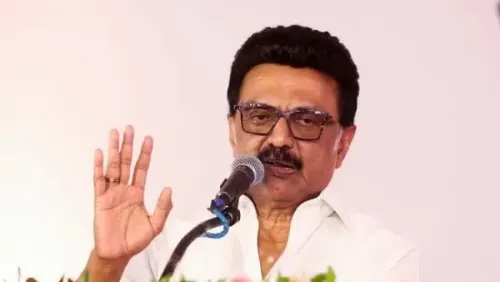
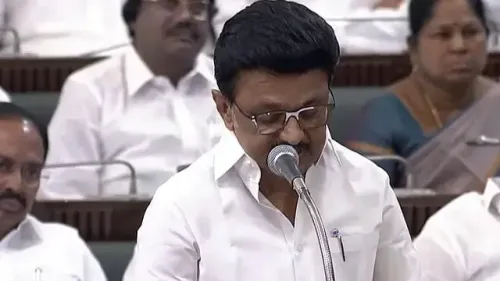
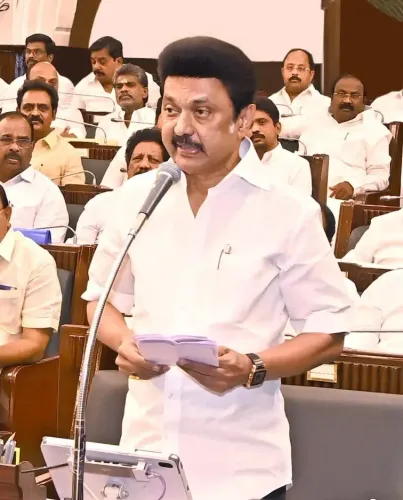
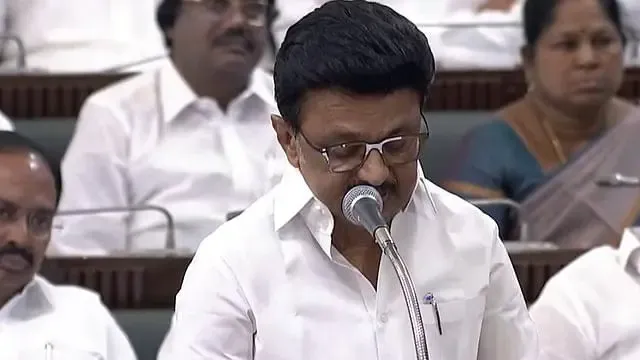
Chennai, Jan 20 (NationPress) Tamil Nadu Chief Minister M. K. Stalin has announced that his administration will pursue a constitutional amendment aimed at eliminating the necessity of the Governor’s address in states governed by opposition parties, deeming the practice increasingly unnecessary and a hindrance to democratic processes.
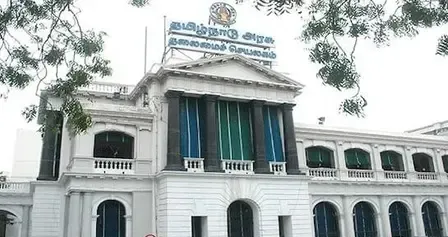
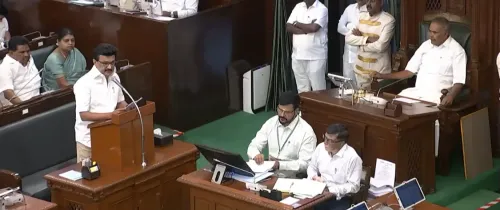
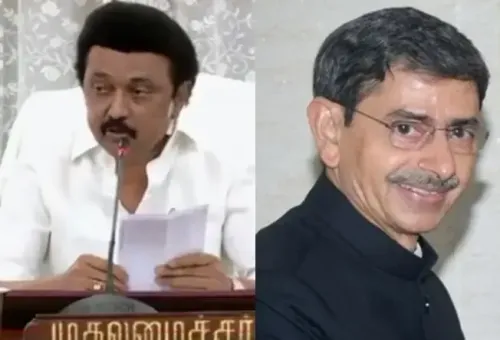
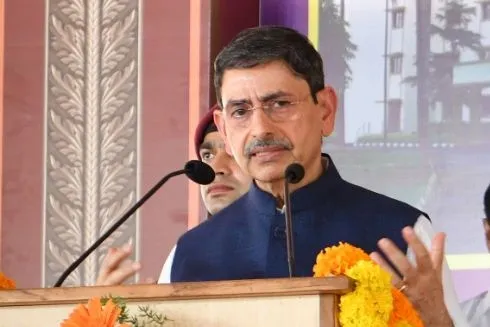
The declaration followed a noteworthy incident in the Tamil Nadu Legislative Assembly, where Governor R. N. Ravi departed the House without giving the standard address at the commencement of the session.
This exit occurred due to disagreements with the state government regarding established Assembly protocols, igniting a renewed clash between Raj Bhavan and the elected government.
In reaction, the Assembly adopted a resolution - utilizing a provision under Rule 17 - which recognized the government-prepared text of the Governor’s address as having been officially read.
Following this, Chief Minister Stalin took to social media to emphasize that the event highlighted the urgent need for systemic reform.
“We will advocate for a constitutional amendment to abolish the requirement of the Governor’s address in all states led by opposition parties,” he stated.
Stalin argued that the Governor’s refusal to present the address would not diminish the accomplishments of the Dravidian Model government over the past four years, nor would it deny citizens the advantages of its welfare and development initiatives.
He asserted that the government possessed a constitutional right to present its policy vision to the legislature, regardless of gubernatorial objections. In a strongly worded message, the Chief Minister accused the Governor of causing unnecessary disruptions by neglecting the Constitution, the will of the populace expressed through an elected government, and the authority of the legislature.
Such actions, he claimed, amounted to obstructing public welfare programs and undermining cooperative federalism.
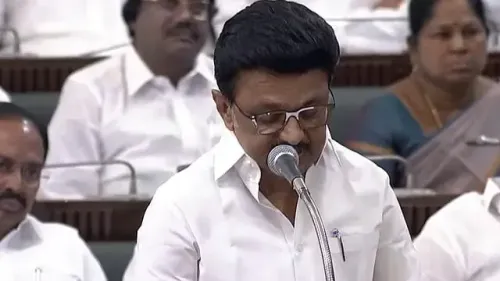
Notably, Stalin also informed the House that the Dravida Munnetra Kazhagam would spearhead efforts to unite like-minded political entities across the nation to advocate for a constitutional amendment early this year.
With support from opposition-ruled states, the DMK intends to foster a national consensus to reevaluate the significance of the Governor’s address - a traditional practice that, according to the Chief Minister, has evolved into a recurring point of contention rather than a unifying constitutional norm.
This initiative is poised to introduce a new perspective to the ongoing dialogue regarding the role of Governors and Centre-State relations within India’s federal framework.
Point of View
This development signifies a critical shift in the relationship between state governments and the central authority. Chief Minister M. K. Stalin's call for a constitutional amendment reflects growing tensions within India's federal structure. The push to reconsider the Governor's role in opposition-ruled states may not only reshape political dynamics in Tamil Nadu but also set a precedent for similar movements across the country.
NationPress
5 Oct 2026
Frequently Asked Questions
What is the purpose of the proposed constitutional amendment?
The amendment aims to eliminate the requirement of the Governor's address in states governed by opposition parties, which is seen as redundant and disruptive.
What incident prompted this move by Chief Minister Stalin?
The proposal was prompted by a situation in the Tamil Nadu Legislative Assembly where Governor R. N. Ravi left without delivering the customary address.
How does this proposal impact the relationship between state and central government?
The proposal highlights existing tensions and could redefine the role of governors in state governance, impacting federal dynamics.
What are the implications for democracy in Tamil Nadu?
Stalin argues that eliminating the Governor's address could strengthen democratic processes by allowing elected governments to present their policies without gubernatorial interference.
What support is expected for this amendment?
The DMK plans to mobilize support from other opposition-ruled states to build a national consensus for the amendment.