Did Daily Forex Turnover Reach a Record High in 2025?
Synopsis
In 2025, South Korea's daily foreign exchange trading by banks has achieved unprecedented levels, driven by robust cross-border stock trading. This surge, highlighted by a 17% year-on-year increase, underscores the growing dynamism in the financial landscape. Discover the insights from the Bank of Korea's latest data that reveal the evolving trends in the FX market.
Key Takeaways
Record daily forex turnover in South Korea reached US$80.71 billion in 2025.
17% increase from the previous year's turnover.
Increased cross-border stock trading significantly contributed to this rise.
Foreign investments in South Korean stocks rose by 129%.
Volatility in the FX market is viewed as a major risk.
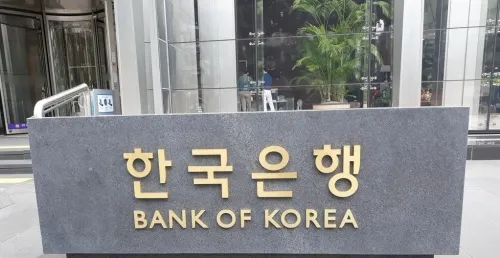
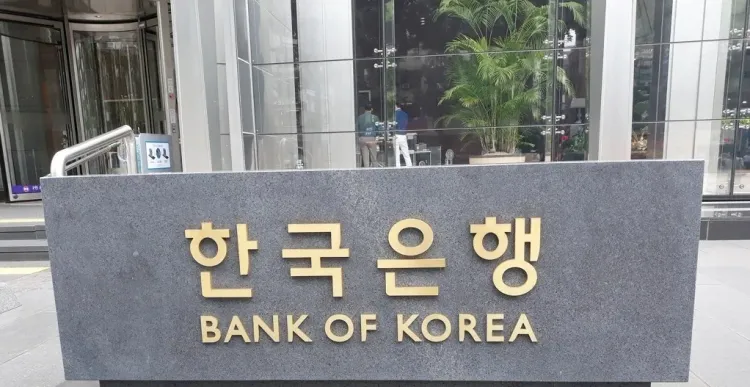
Seoul, Jan 23 (NationPress) The daily foreign exchange (FX) activity conducted by banks in South Korea reached a record high last year, spurred by a rise in cross-border stock trading, according to central bank data released on Friday.
The average daily FX turnover, which includes derivatives trading, soared to US$80.71 billion in 2025, reflecting a 17 percent increase from the previous year's $68.96 billion, as reported by the Bank of Korea (BOK), according to the Yonhap news agency.
This represented the highest annual figure since the BOK began compiling such statistics under current standards in 2008.
A BOK official noted, "With extended trading hours in the foreign exchange market, stock-related trading by both residents and foreign investors surged significantly."
The average daily spot FX turnover increased by 26.1 percent year-on-year to $32.38 billion, while derivatives trading rose by 11.6 percent to $48.33 billion during the same time frame.
South Korean residents' investment in overseas stocks totaled $129.4 billion in the first 11 months of the past year, already surpassing the previous year's $72.2 billion, according to the data.
Investment by foreign investors in South Korean stocks also surged, climbing 129 percent year-on-year to $50.4 billion in 2025, based on BOK data.
Moreover, a central bank survey revealed that more than one in four financial experts believe that heightened volatility in the foreign exchange (FX) market represents the greatest risk to the country's financial system.
Conducted by the Bank of Korea (BOK) among 75 financial experts domestically and internationally between November and December, the survey found that 26.7 percent identified increased volatility in the local FX market as the primary risk to the financial system in Asia's fourth-largest economy.
Approximately 16 percent cited high household debt as the second most significant threat.
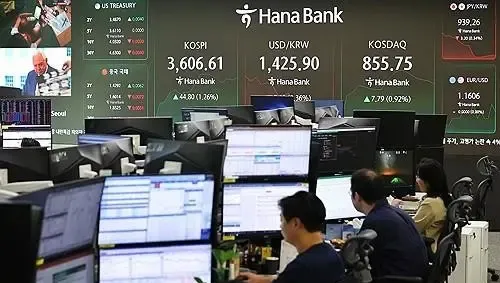
The South Korean won has consistently traded below the multiyear low of 1,450 won against the U.S. dollar, due to capital outflows driven by rising overseas stock investments and geopolitical risks from the Middle East and Europe.
Experts pointed to uncertainties in economic and monetary policies of major economies and adjustments in the global asset market as significant external factors that could negatively impact the financial system.
About 12 percent of respondents indicated a high likelihood of a short-term shock within a year that could undermine the financial system, according to the survey.
Point of View
It's vital to recognize that the surge in daily forex turnover reflects not only a robust trading environment but also signals potential challenges posed by market volatility. Our nation's financial stakeholders must remain vigilant and proactive in navigating these evolving dynamics to ensure sustained economic stability.
NationPress
9 Oct 2026
Frequently Asked Questions
What factors contributed to the record high in forex turnover?
The record high in forex turnover was largely driven by increased cross-border stock trading and extended trading hours in the foreign exchange market.
How much did the average daily FX turnover increase?
The average daily FX turnover increased to US$80.71 billion in 2025, marking a 17% rise from the previous year.
What risks do financial experts see in the forex market?
Financial experts identified heightened volatility in the forex market as the biggest risk to South Korea's financial system.
How has foreign investment in South Korean stocks changed?
Foreign investment in South Korean stocks surged by 129% year-on-year, reaching US$50.4 billion in 2025.
What is the significance of household debt in this context?
High household debt was cited by 16% of experts as the second-largest risk to the financial system, alongside forex market volatility.