Did South Korea's Foreign Reserves Decline for the First Time in Seven Months?

Synopsis
South Korea's foreign reserves have witnessed their first decrease in seven months as of December, raising concerns amid market volatility. This event has prompted authorities to stabilize the currency, reflecting the significant dynamics in the foreign exchange market. Stay informed on this crucial financial development.
Key Takeaways
First decline in seven months Foreign reserves at US$428.05 billion Currency volatility prompts intervention Foreign securities fell significantly South Korea ranks ninth globally in reserves
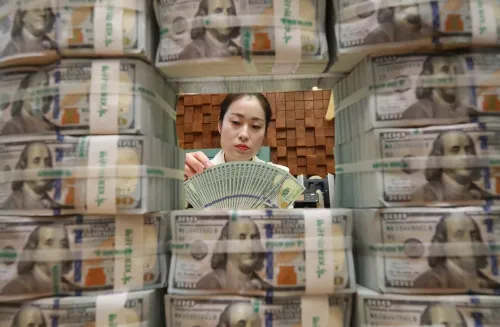
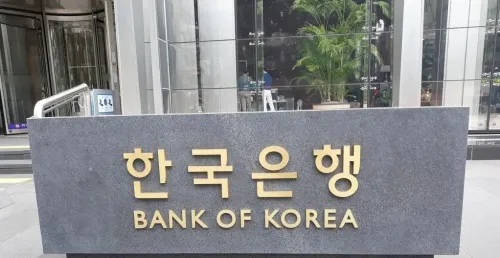
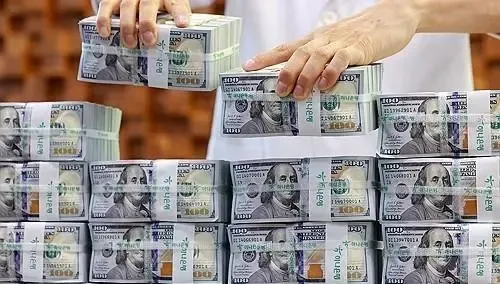
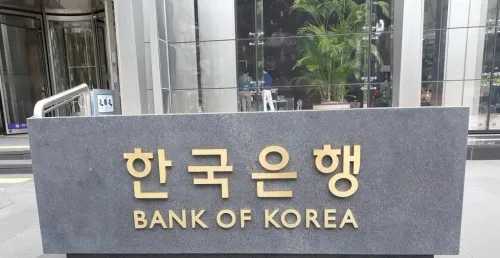
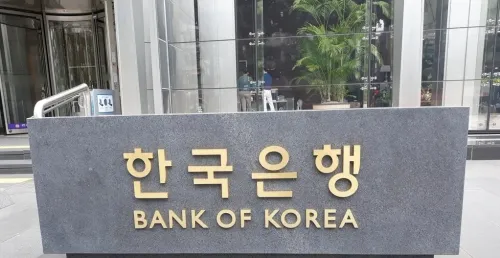
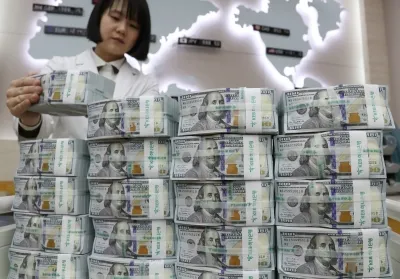
Seoul, Jan 6 (NationPress) In December, South Korea's foreign reserves experienced a decline for the first time in seven months, as reported by the central bank on Tuesday. This drop occurred amid heightened volatility in the foreign exchange market, leading authorities to implement various market stabilization measures. The country's foreign reserves stood at US$428.05 billion at the end of December, reflecting a decrease of $2.6 billion from the previous month, according to data from the Bank of Korea (BOK), as reported by Yonhap news agency.
This marked the first month-over-month drop since June, following six months of consecutive increases that had brought reserves to their highest point since August 2022 by the end of November.
According to a BOK official, “Measures aimed at curbing volatility in the foreign exchange market acted as a factor pulling foreign reserves down,” although further details were not provided.
In November, the local currency fell below the critical 1,450 won mark against the U.S. dollar for the first time since April and approached its weakest level in nearly 16 years, nearing 1,480 won last month.
In response to these fluctuations, authorities engaged in strong verbal interventions and took measures to support the currency. On December 30, the last trading day of 2025, the won was quoted at 1,439.0 per dollar, a decline of 9.2 won from the previous session.
Foreign securities, including U.S. Treasuries, decreased by $8.22 billion from the previous month, totaling $371.12 billion at the end of December, which accounted for 86.7 percent of total foreign reserves.
Conversely, the value of foreign currency deposits rose by $5.44 billion to reach $31.87 billion, while special drawing rights (SDRs) increased by $150 million to $15.89 billion.
The holdings of gold bullion remained stable at $4.79 billion.
Additionally, the country’s International Monetary Fund (IMF) reserve positions rose by $20 million from the previous month, reaching $4.37 billion at the end of December, according to the data.
As of the end of November, South Korea ranked as the world’s ninth-largest holder of foreign reserves, following China, Japan, Switzerland, Russia, and India, as reported by the BOK.
Point of View
It is crucial to approach the recent decline in South Korea's foreign reserves with a sense of responsibility. This trend highlights the ongoing challenges in the global financial landscape and the importance of strategic intervention by authorities. The nation must navigate these fluctuations to ensure stability and growth.
NationPress
27 Sept 2026
Frequently Asked Questions
What caused the decline in South Korea's foreign reserves?
The decline was primarily due to increased volatility in the foreign exchange market, prompting authorities to implement market stabilization measures.
How much did South Korea's foreign reserves decrease?
The foreign reserves decreased by $2.6 billion , bringing the total to US$428.05 billion at the end of December.
What is the current status of the South Korean currency?
The South Korean won has fallen below the critical 1,450 won level against the U.S. dollar, nearing its weakest point in almost 16 years.
How does South Korea's foreign reserves rank globally?
As of the end of November, South Korea is the ninth-largest holder of foreign reserves in the world.
What measures are being taken to stabilize the currency?
Authorities have engaged in verbal interventions and implemented various measures aimed at supporting the currency amid the recent volatility.