How Can AI Transform India’s Medicinal Plant Supply Chain?
Synopsis
Discover how AI and modern technologies are reshaping the medicinal plant supply chain in India. Experts discuss the importance of quality, traceability, and sustainability, highlighting the integration of traditional knowledge with cutting-edge practices. This seminar marks a pivotal moment for the future of India's medicinal plants, promising improved global competitiveness.
Key Takeaways
AI enhances quality assurance in the medicinal plant supply chain.
Integration of traditional knowledge with modern practices is essential.
Focus on sustainable cultivation and regenerative agriculture.
Importance of digital traceability in enhancing quality.
Capacity building is crucial for future advancements.
New Delhi, Jan 12 (NationPress) Artificial Intelligence (AI) and associated technologies play a vital role in overseeing, verifying, and documenting the quality and journey of medicinal plants from the farm-gate through the complete supply chain, according to specialists from the Ministry of Ayush.
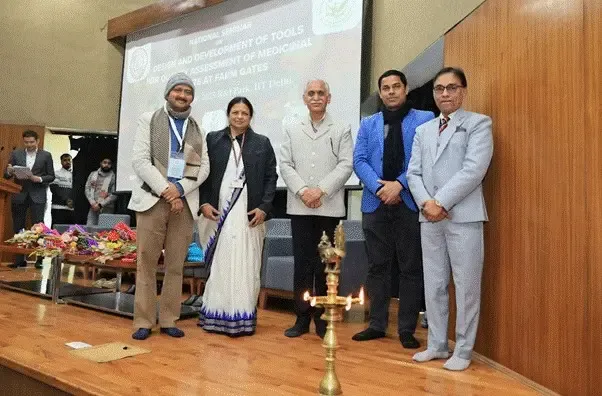
During a two-day national seminar titled “Design and Development of Tools for Quality Assessment of Medicinal Plants at Farm Gates” at the Indian Institute of Technology (IIT) Delhi, experts from the National Medicinal Plant Board (NMPB) and the Institute of Teaching and Research in Ayurveda (ITRA) emphasized this point.
This event drew national attention to India’s medicinal plant industry, ensuring quality, traceability, and standardization of raw materials at the point of origin.
Prof. Dr. Mahesh Kumar Dadhich, CEO of NMPB, along with Prof. Dr. Tanuja Nesari, Director of ITRA, highlighted the importance of merging innovation, regulation, and traditional knowledge to cultivate global trust in Indian medicinal plant raw materials.
The seminar brought together policymakers, scientists, technologists, industry leaders, and researchers to discuss enhancing farm-gate quality systems as a cornerstone for the sustainable advancement and global competitiveness of India’s Ayush and medicinal plant ecosystem.
Technical sessions explored the entire medicinal plant value chain, covering sustainable cultivation, regenerative agriculture, AI-integrated quality assessments, digital traceability, and supply chain integration.
Experts from ICAR-Directorate of Medicinal and Aromatic Plants Research (DMAPR), IIT Delhi, the World Health Organization (WHO), the Ministry of Ayush, and the Central Council for Research in Ayurvedic Sciences (CCRAS) shared data-backed insights and practical experiences.
The discussions underscored that India is well-equipped, both technically and institutionally, to implement AI diagnostics, digital phenotyping, and integrated quality frameworks, thereby bolstering the credibility of Indian medicinal plant raw materials in both domestic and international markets.
The seminar also showcased the incorporation of traditional knowledge systems such as Vriksha Ayurveda with contemporary quality-control frameworks, illustrating how India’s heritage can be scientifically validated and digitized to enhance global acceptance. There was a strong focus on capacity building, providing participants with exposure to advanced tools, standards, and emerging policy directions.
Point of View
I believe that the integration of AI into India's medicinal plant supply chain is not just a technological advancement but a necessary evolution. The seminar at IIT Delhi underscores our commitment to enhancing quality and traceability, ensuring that India remains a leader in the global medicinal plant industry. By embracing both innovation and tradition, we can secure a sustainable future for our rich heritage.
NationPress
1 Oct 2026
Frequently Asked Questions
What role does AI play in the medicinal plant supply chain?
AI is essential for monitoring, verifying, and documenting the quality and journey of medicinal plants from the farm-gate through the entire supply chain.
Who organized the seminar on medicinal plants?
The seminar was organized by experts from the Ministry of Ayush, including the National Medicinal Plant Board (NMPB) and the Institute of Teaching and Research in Ayurveda (ITRA).
What is the significance of the seminar?
The seminar aimed to strengthen farm-gate quality systems, ensuring sustainable growth and global competitiveness of India's Ayush and medicinal plant ecosystem.