Is Saraswati Puja Being Celebrated at Bhojshala Site Under High Security?
Synopsis
Saraswati Puja at the Bhojshala Temple-Kamal Maula Mosque complex in Dhar, Madhya Pradesh, is celebrated amid high security measures. Both Hindu devotees and Muslim community members are expected to participate in their respective religious observances.
Key Takeaways
Saraswati Puja commenced in Dhar amidst heavy security.
Both Hindu and Muslim communities will participate in their respective prayers.
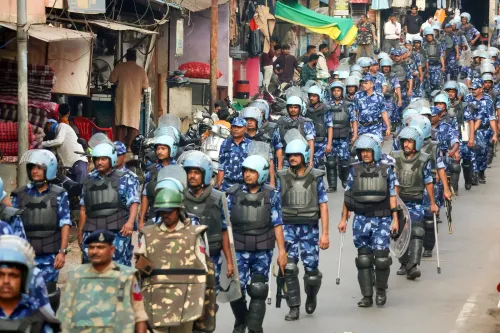
Over 8,000 police personnel have been deployed to maintain peace.
The site is a point of contention between Hindus and Muslims.
Authorities have warned against any incitement of communal tensions.
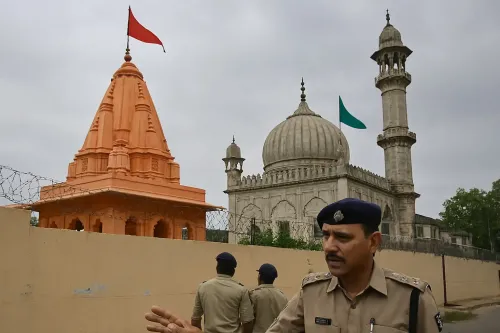
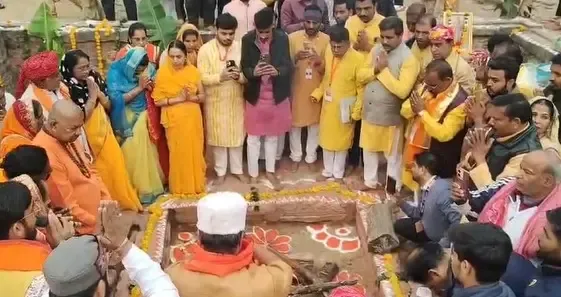
Dhar, Jan 23 (NationPress) The celebration of Saraswati Puja commenced on Friday at the contentious Bhojshala Temple-Kamal Maula Mosque complex in Dhar, Madhya Pradesh, amidst stringent security measures.
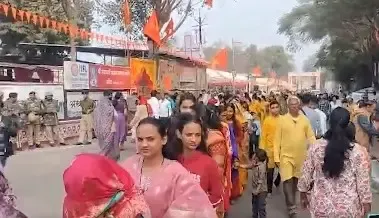
A significant number of Hindu followers of Baghichi Devi (Goddess Saraswati) began arriving at the location early in the morning to pay their respects. To prevent any potential communal tensions at this disputed site, extensive security has been arranged.
Members of the Muslim community are also expected to visit the site for their Namaz between 1 a.m. and 3 p.m.
Chief Minister Mohan Yadav, currently in Davos, conveyed his greetings for Basant Panchami via social media, extending his best wishes for the citizens of Madhya Pradesh.
"Warm wishes for Basant Panchami to everyone in the state and across the nation. May the blessings of Maa Saraswati, the goddess of letters, music, and knowledge, enrich all lives with wisdom, creativity, joy, and abundance. This is my sincere prayer," CM Yadav expressed on X.
On Thursday, the Supreme Court permitted Hindu prayers from sunrise to sunset on Basant Panchami (Friday), while allowing Muslims to perform Namaz from 1 p.m. to 3 p.m. at the disputed location.
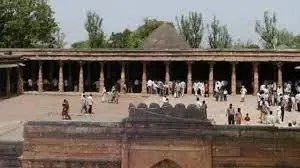
The Bhojshala Temple-Kamal Maula Mosque complex is a site of contention, as both Hindus and Muslims assert their religious ties to it.
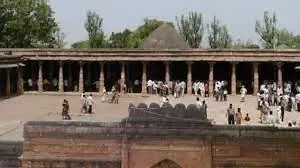
The controversy arises because Hindus regard Bhojshala, an Archaeological Survey of India (ASI)-protected 11th-century structure, as a temple dedicated to Vagdevi (Goddess Saraswati), whereas Muslims refer to it as the Kamal Maula Mosque.
Following the Supreme Court's directive, the Dhar district administration has bolstered security by deploying over 8,000 police personnel and Rapid Action Forces (RAF) around the area.
Dhar Collector Priyank Mishra stated on Thursday that the district administration and police have made necessary preparations, with a primary focus on maintaining law and order.
He also issued a stern notice that any content inciting religious enmity through newspapers, electronic media, or social media platforms like WhatsApp or Facebook would face strict repercussions under the Bharatiya Nyaya Samhita and the IT Act.
According to an arrangement made by the ASI on April 7, 2003, Hindus conduct puja on the Bhojshala premises on Tuesdays, while Muslims offer Namaz in the complex on Fridays.
Point of View
I emphasize the importance of respectful coexistence among diverse communities during significant religious events like Saraswati Puja at the Bhojshala complex. It is essential to foster dialogue and unity, ensuring that such occasions promote harmony rather than division.
NationPress
24 Sept 2026
Frequently Asked Questions
What is the significance of Saraswati Puja?
Saraswati Puja celebrates Goddess Saraswati, the deity of knowledge, music, and art, symbolizing wisdom and creativity.
Why is the Bhojshala site controversial?
The Bhojshala site is contested due to claims by both Hindus and Muslims regarding its religious significance, leading to communal tensions.
How are security measures implemented during the Puja?
Over 8,000 police personnel and Rapid Action Forces have been deployed to ensure safety and prevent any communal violence during the event.
What are the timings for prayers at the site?
Hindu prayers are allowed from sunrise to sunset, while Muslims can offer Namaz between 1 p.m. and 3 p.m.
What precautions are taken against incitement of violence?
Authorities have issued warnings against any content promoting religious hatred, with strict actions outlined under relevant laws.