How is the MP temple-mosque dispute being managed for peace?
Synopsis
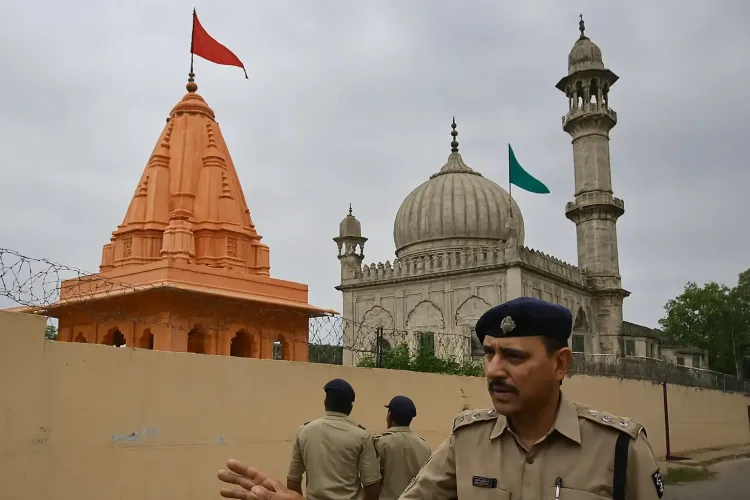
Tensions rise as both Hindu and Muslim communities prepare to gather at the disputed Bhojshala Temple-Kamal Maula Mosque complex. The Dhar district administration is taking significant measures to ensure safety and order during the religious observances scheduled for January 23, including deploying thousands of police personnel and advanced security technology.
Key Takeaways
Over 8,000 police personnel deployed for security No-fly zone established around the Bhojshala complex Supreme Court ruling allows specific prayer times for both communities Advanced technology including AI and drones used for monitoring Community meetings held to foster dialogue and trust
Dhar, Jan 22 (NationPress) With a significant turnout anticipated from both Hindu and Muslim communities for religious observances at the contested Bhojshala Temple-Kamal Maula Mosque complex on January 23, the Dhar district administration has enacted prohibitory measures under Section 163 of the Bharatiya Nagarik Suraksha Sanhita (BNS).
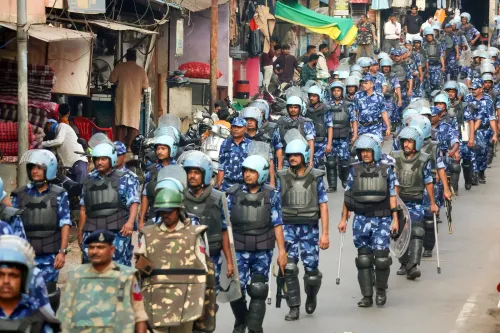
To maintain order, a robust security framework comprising over 8,000 police personnel and the Rapid Action Force (RAF) has been established, alongside a no-fly zone within a 300-metre radius of the Bhojshala complex, coinciding with the Basant Panchami festivities on Friday.
All aerial operations, including drones, UAVs, paragliding, and hot air balloons, are strictly prohibited.
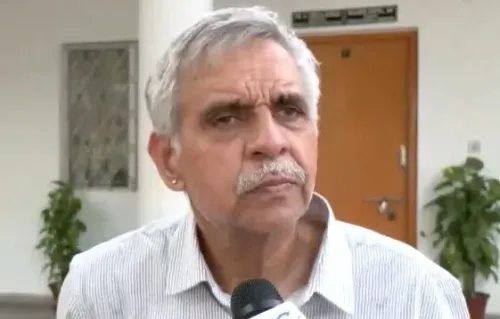
Dhar district collector Priyank Garg stated on Thursday that the administration and police are fully equipped to uphold law and order.
“Our main goal is to ensure enhanced law and order during the Basant Panchami festival,” Garg said during a media briefing.
He assured that the district administration is dedicated to adhering to the Supreme Court’s directives and requested media entities and social media platforms to avoid misinterpretations of the court's ruling regarding prayer permissions for both Hindus and Muslims at the site.
Garg cautioned that any material that fuels religious animosity, whether through newspapers, electronic media, or social media like WhatsApp or Facebook, will face stringent action under the Bharatiya Nyaya Samhita and the IT Act.
“We urge media representatives to abstain from interpreting the SC’s decision, as it could disrupt public peace. The district administration will provide media with updates on all developments,” Garg explained.
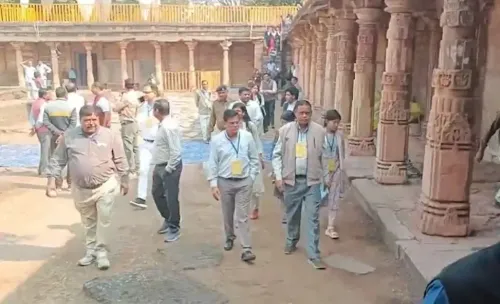
He noted that preparations for Basant Panchami began weeks ago, including extensive discussions with community leaders. To date, the administration has held 31 Mohalla Committee meetings and 21 meetings with Muslim community members to ease tensions and foster trust.
On security measures, Garg revealed that, in addition to personnel from the police and RAF, advanced technology including Artificial Intelligence, LiDAR, and 3D city mapping has been integrated into Dhar's law enforcement strategy, turning the area into a digitally monitored environment.
A central control room has been established for live surveillance throughout the city. Over 20 AI-enabled drones will monitor crowd sizes in real-time.
“The security team includes over a dozen SPs, 25 Additional Superintendents of Police, and 67 Deputy SPs. Additionally, 933 women police personnel and eight RAF platoons are on duty, with another 1,500 to 2,000 police personnel ready to reinforce sensitive areas if necessary,” he added.
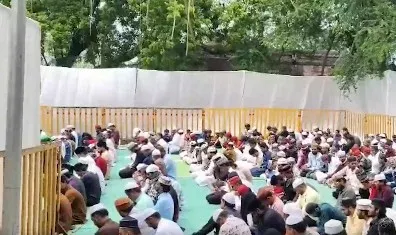
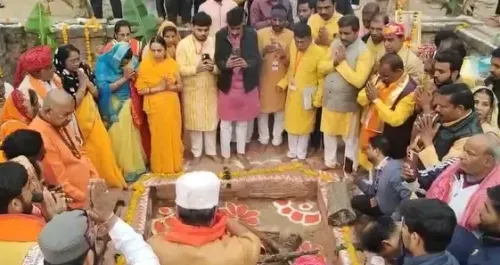
The Supreme Court ruled that Hindu prayers may be conducted from sunrise to sunset on Basant Panchami, while Muslims can offer namaz between 1 PM and 3 PM that day at the disputed site.
A bench consisting of Chief Justice of India Surya Kant and Justices Joymalya Bagchi and Vipul M Pancholi urged both groups to maintain mutual respect and collaborate with local and state authorities for preserving peace.
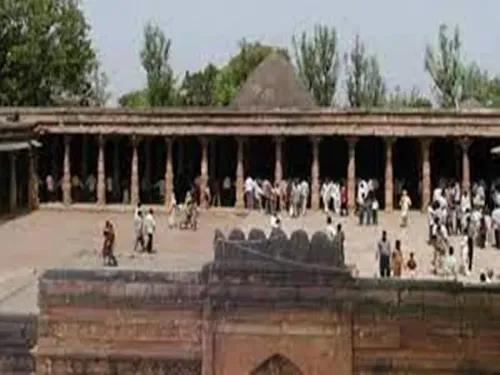
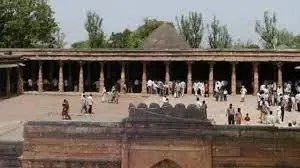
This dispute stems from the Hindu belief that Bhojshala, an Archaeological Survey of India (ASI)-protected 11th-century structure, is a temple dedicated to Vagdevi (Goddess Saraswati), while Muslims refer to it as the Kamal Maula mosque.
According to an arrangement made by the ASI on April 7, 2003, Hindus perform puja at Bhojshala on Tuesdays, while Muslims hold prayers on Fridays.
Point of View
It is crucial to approach the ongoing Bhojshala Temple-Kamal Maula Mosque dispute with a commitment to neutrality and understanding. The focus should remain on fostering dialogue and cooperation between communities while upholding the law. It is essential for all parties involved to respect the Supreme Court's rulings and work towards a peaceful resolution.
NationPress
28 Sept 2026
Frequently Asked Questions
What measures are being taken to ensure safety during the religious observances?
The Dhar district administration has deployed over 8,000 police personnel, established a no-fly zone, and implemented advanced security technology to maintain order during the events.
What is the significance of the Bhojshala Temple-Kamal Maula Mosque complex?
This site is historically significant as it is regarded by Hindus as a temple dedicated to Vagdevi, while Muslims recognize it as the Kamal Maula mosque, leading to ongoing disputes.
What does the Supreme Court's ruling state regarding prayers at the site?
The Supreme Court has allowed Hindu prayers from sunrise to sunset on Basant Panchami and permits Muslims to offer namaz from 1 PM to 3 PM on that day.
How has the district administration prepared for this event?
Preparations included holding numerous community meetings to foster dialogue, as well as the deployment of security resources and technology to monitor the situation.
What actions will be taken against inciting content on social media?
The collector has warned that any content inciting religious hatred will face strict action under the Bharatiya Nyaya Samhita and the IT Act.