SC Permits Worship on Basant Panchami and Friday Namaz at MP's Bhojshala Complex?
Synopsis
In a pivotal ruling, the Supreme Court allows both Basant Panchami worship and Friday Namaz at the contested Bhojshala complex in Madhya Pradesh. The decision aims to balance religious observances for both Hindus and Muslims, setting a precedent for coexistence amidst ongoing disputes.
Key Takeaways
Supreme Court allows both worship and prayers.
Specific time slots established for Namaz.
Separate area designated for Basant Panchami worship.
Mutual respect emphasized by the court.
Long-standing dispute remains under judicial review.
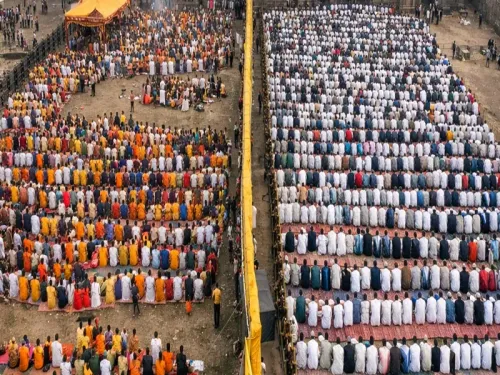
New Delhi, Jan 22 (NationPress) In a landmark ruling issued on Thursday, the Supreme Court has authorized both Basant Panchami worship and Friday namaz to take place at the contested Bhojshala Temple-Kamal Maula Mosque complex located in Dhar district of western Madhya Pradesh.
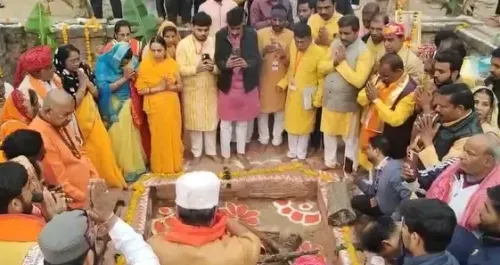
A Bench led by Chief Justice of India (CJI) Surya Kant was addressing an urgent petition submitted by the Hindu Front for Justice (HFJ), which requested exclusive rights for Hindus to conduct Saraswati Puja throughout the entirety of Basant Panchami, which falls on Friday, January 23.
The court laid down precise arrangements to facilitate both communities in conducting their respective religious practices. The Bench, which also included Justices Joymalya Bagchi and Justice Vipul M. Pancholi, ordered that namaz can be performed between 1 p.m. and 3 p.m. in a specifically designated area within the premises.
Moreover, the Supreme Court mandated that special passes be issued to those attending namaz.
Simultaneously, another area has been set aside for Basant Panchami worship, with no time limitations imposed.
During the proceedings, senior advocate Salman Khurshid, representing the mosque committee, noted that on at least three previous occasions—in 2006, 2013, and 2016—Basant Panchami coincided with Friday, and arrangements were made to accommodate both prayers and worship.
Khurshid further explained that Juma namaz occurs between 1 p.m. and 3 p.m., after which the Muslim community members will vacate the site. Conversely, counsel for the Hindu side, Vishnu Shankar Jain, contended that Basant Panchami worship is traditionally observed throughout the day and thus requested uninterrupted access for devotees from sunrise to sunset.
The CJI Kant-led Bench remarked that it would be prudent for the administration to implement arrangements allowing both communities to engage in their respective religious activities.
In its directive, the Supreme Court appealed to both parties to demonstrate mutual respect and collaborate with local authorities to uphold law and order.
The HFJ petition sought to prevent Muslims from conducting their Friday prayers at the site on January 23, advocating instead for exclusive Hindu worship on the occasion of Basant Panchami, alongside stringent security measures by the Archaeological Survey of India (ASI) and the state government.
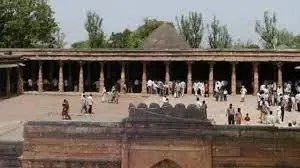
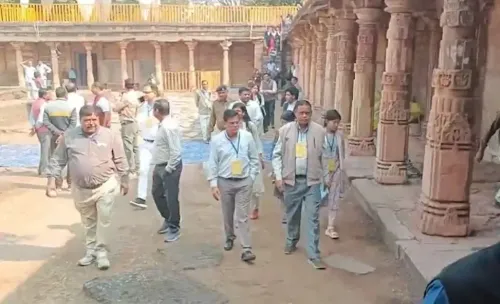
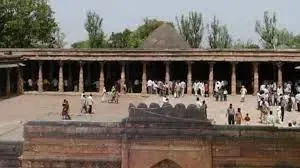
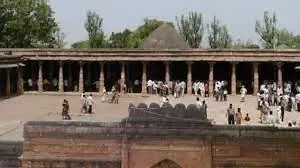
The Bhojshala complex, recognized as a protected monument by the ASI, has long been embroiled in controversy, with Hindus asserting it as an ancient temple dedicated to Goddess Vagdevi (Saraswati), while Muslims claim it as the Kamal Maula Mosque. The overarching case regarding the religious status of the site remains unresolved before the Supreme Court.
Point of View
This ruling by the Supreme Court underscores the importance of maintaining religious harmony in a diverse nation like India. It reflects the judiciary's role in mediating sensitive disputes while promoting coexistence among communities. Upholding mutual respect and cooperation is essential for the social fabric of our country.
NationPress
30 Sept 2026
Frequently Asked Questions
What is the Bhojshala complex?
The Bhojshala complex is a historically disputed site in Madhya Pradesh, claimed by both Hindus as a temple dedicated to Goddess Vagdevi and by Muslims as the Kamal Maula Mosque.
What did the Supreme Court rule regarding Basant Panchami and Friday Namaz?
The Supreme Court ruled that both Basant Panchami worship and Friday Namaz can be conducted at the Bhojshala complex, allowing arrangements for both communities.
What are the time arrangements for the prayers?
The Supreme Court specified that Friday Namaz can be offered between 1 p.m. and 3 p.m., while there are no time limitations for Basant Panchami worship.
What was the request from the Hindu Front for Justice?
The Hindu Front for Justice requested exclusive rights for Hindus to perform Saraswati Puja throughout the day of Basant Panchami.
What implications does this ruling have?
The ruling aims to promote coexistence between Hindus and Muslims at a historically significant site and sets a precedent for future arrangements in similar disputes.