Will the SC Hear the Plea for Exclusive Hindu Prayers on Basant Panchami at Bhojshala?
Synopsis
The Supreme Court will hear a crucial plea from the Hindu Front for Justice, advocating for exclusive Hindu prayers on Basant Panchami at the contentious Bhojshala Temple–Kamal Maula Mosque site. This decision could impact communal relations in Madhya Pradesh, making it a significant event to watch closely.
Key Takeaways
The Supreme Court will hear a plea for exclusive Hindu prayers on Basant Panchami.
The Bhojshala complex is a site of significant religious contention between Hindus and Muslims.
Local authorities are enhancing security measures in anticipation of the event.
Previous overlaps of Basant Panchami with Friday prayers have seen tensions.
The outcome of this case could influence communal relations in Madhya Pradesh.
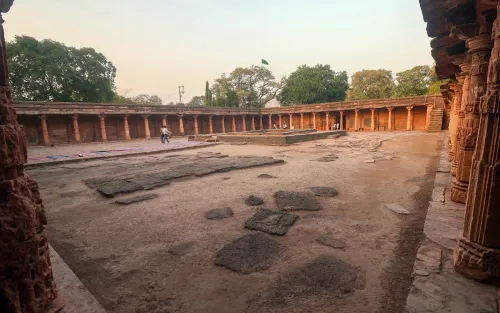
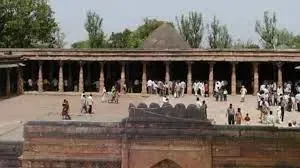
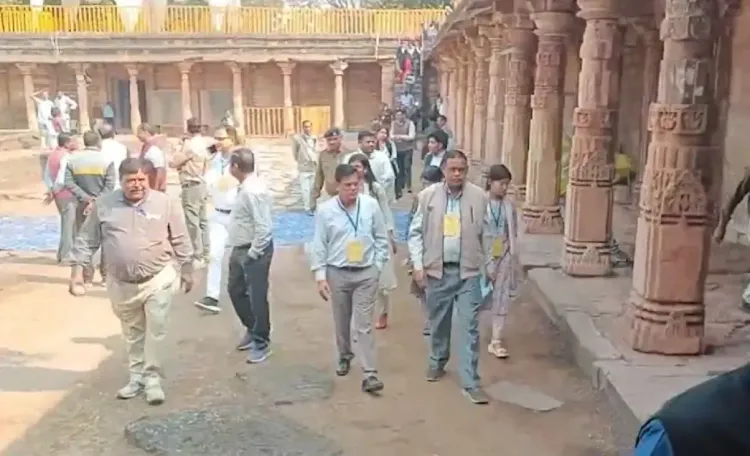
New Delhi, Jan 22 (NationPress) The Supreme Court is set to consider a petition on Thursday submitted by the Hindu Front for Justice (HFJ), which requests exclusive rights for Hindus to conduct prayers during Basant Panchami at the disputed Bhojshala Temple–Kamal Maula Mosque complex located in the Dhar district of western Madhya Pradesh.
The petition, filed on January 2, 2026, by advocate Vishnu Shankar Jain on behalf of the HFJ, was brought up urgently in front of the apex court on Tuesday. Responding to this urgency, the Supreme Court has scheduled a hearing for Thursday, January 22, just a day before Basant Panchami, which occurs on Friday.
Jain highlighted the urgency, stating that the Archaeological Survey of India (ASI) order dated April 7, 2003, does not cater to scenarios where Basant Panchami coincides with Friday prayers.
He is requesting uninterrupted worship rights for Hindus for the entire day on January 23.
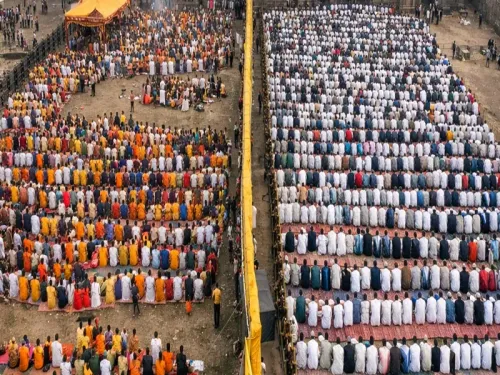
The 2003 ASI order allows Muslims to perform Friday namaz at the site from 1 p.m. to 3 p.m., while permitting Hindus to carry out traditional rituals on Basant Panchami and giving them exclusive access every Tuesday. However, it lacks specifics for years when Basant Panchami falls on a Friday.
Historical records indicate that such overlaps occurred in 2006, 2013, and 2016. In those instances, the ASI provided advance guidance that permitted namaz from 1 p.m. to 3 p.m. while allowing Hindu rituals from sunrise until noon and again from 3:30 p.m. to sunset, with limitations on the amount of flowers and rice brought for worship.
While similar directives were issued in advance on previous occasions, no new guidance has been shared for January 23 of this year.
In light of the lack of a recent ASI order, the Supreme Court's hearing has gained considerable significance, especially as the town of Dhar is known for its communal sensitivity.
Both Hindu and Muslim groups are firmly entrenched in their positions regarding access to the site.
The HFJ has called for exclusive access for Hindus to conduct the Goddess Saraswati puja throughout the day on Basant Panchami, along with stringent security measures set by the ASI and the state government.
The petition also seeks an expedited resolution of the primary dispute currently pending before the Supreme Court.
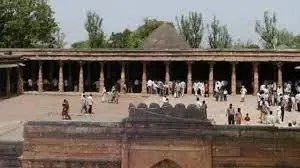
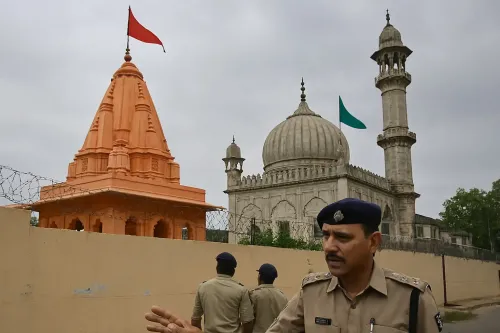
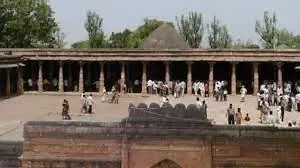
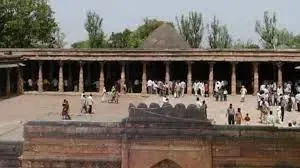
The Bhojshala complex, recognized as a protected monument by the ASI, is claimed by Hindus as an ancient temple dedicated to Goddess Vagdevi (Saraswati), believed to have been constructed by the Parmar ruler Raja Bhoja in the 11th century.
Conversely, Muslims maintain that the structure serves as the Kamal Maula Mosque and cite the continuity of Islamic worship at the site.
The petition further contends that allowing Friday namaz without a definitive determination of the site's religious character breaches the principles of the Ancient Monuments and Archaeological Sites and Remains (AMASR) Act.
It asserts that Basant Panchami holds profound religious significance in Sanatan Dharma and that overlapping observances on rare occasions have historically led to tension and disorder.
Previously, the Madhya Pradesh High Court decided on July 22, 2024, not to advance further in a related petition concerning the Bhojshala dispute, citing the Supreme Court's interim order dated April 1, 2024.
The High Court indicated it would await final directives from the apex court, where the main case addressing the religious character of the site and the ASI survey is still pending alongside matters related to the Places of Worship Act.
Meanwhile, local authorities in Dhar have intensified security measures, deploying thousands of personnel throughout the town to avert any untoward incidents on January 23.
Point of View
We recognize the importance of this case in the larger context of religious rights and communal harmony. This ongoing dispute highlights the need for dialogue and mutual respect among different faiths while ensuring that the rule of law prevails. We will continue to monitor developments closely.
NationPress
18 Oct 2026
Frequently Asked Questions
What is the significance of the Bhojshala complex?
The Bhojshala complex is claimed by Hindus as a historic temple dedicated to Goddess Vagdevi and is viewed by Muslims as the Kamal Maula Mosque, indicating a long-standing religious contention.
What does the HFJ seek in their petition?
The HFJ is asking for exclusive rights for Hindus to perform prayers on Basant Panchami, alongside security arrangements from the ASI and state government.
Why is January 23 significant?
January 23 is significant as it coincides with Basant Panchami, a major festival for Hindus, which this year overlaps with Friday prayers.
What has been the response from local authorities?
Local authorities in Dhar have heightened security measures in anticipation of potential tensions surrounding the events on January 23.
What historical occurrences have taken place during similar overlaps?
In 2006, 2013, and 2016, when Basant Panchami overlapped with Friday prayers, the ASI issued directives to manage worship schedules, emphasizing the need for careful arrangements.