What Steps Is the Government Taking to Improve Natural Gas Availability for Power Generation?
Synopsis
The Indian government is actively enhancing natural gas availability for power generation through initiatives like expanding the National Gas Grid and establishing LNG terminals. This strategic move aims to ensure a steady supply of energy, thereby promoting energy security and sustainability. Discover how these measures are set to impact the energy landscape in India.
Key Takeaways
Expansion of the National Gas Grid aims to enhance energy connectivity.
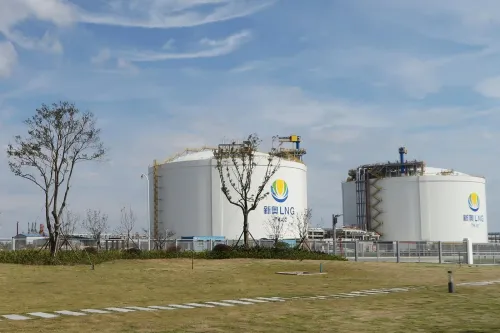
LNG terminals are being established to support power generation.
Domestic gas producers are granted pricing and marketing freedom .
Zero customs duty on LNG imports for electricity generation.
Government initiatives are focused on increasing the share of natural gas in the energy mix.
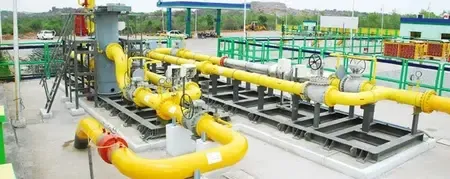
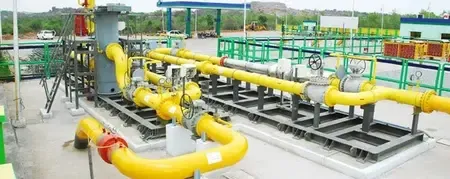
New Delhi, Dec 11 (NationPress) The government has implemented several initiatives to boost the availability of natural gas for power generation. These actions include the expansion of the National Gas Grid, which connects domestic gas sources and Liquefied Natural Gas (LNG) terminals to power plants, as informed to Parliament on Thursday.
Among the measures outlined by Minister of State for Petroleum and Natural Gas, Suresh Gopi, in a written reply to the Lok Sabha, are the introduction of a unified tariff, the establishment of LNG terminals, and enabling domestic gas producers with pricing and marketing freedom to sell up to 500 million standard cubic metres (mmscm) or 10% of their annual production from their contract area, whichever is greater, annually through gas exchanges authorized by the PNGRB.
He also mentioned that the government has categorized LNG under the Open General Licence (OGL), allowing buyers to import LNG freely based on mutually agreed terms with suppliers.
Furthermore, the government has eliminated customs duties on LNG imports used for electricity generation by companies defined under section 2(28) of the Electricity Act, 2003 (36 of 2003) for supplying energy to the grid.
Gas-based power plants have the liberty to import LNG, generate electricity, and sell it to consumers, the Minister stated.
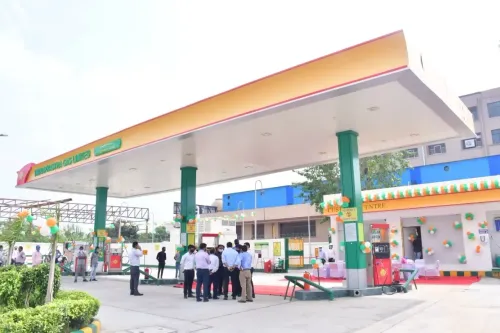
In addition, the government is pursuing various strategies to increase the proportion of Natural Gas in the primary energy mix. These strategies include the expansion of the National Gas Grid Pipeline, the growth of the City Gas Distribution (CGD) network, the establishment of LNG terminals, prioritizing domestic gas allocation for Compressed Natural Gas, and allowing marketing and pricing freedom with a ceiling for gas produced from high-pressure, high-temperature areas, deep water, ultra-deep water, and coal seams. The Sustainable Alternative Towards Affordable Transportation (SATAT) initiatives aim to promote Compressed Biogas (CBG).
Point of View
It is crucial to highlight the government's proactive measures in securing energy resources. The enhancement of natural gas availability reflects a commitment to energy stability and environmental sustainability. Such initiatives will not only benefit the power sector but also contribute to long-term economic growth.
NationPress
30 Sept 2026
Frequently Asked Questions
What measures has the government taken to improve natural gas availability?
The government has expanded the National Gas Grid, set up LNG terminals, and allowed domestic gas producers pricing freedom to increase natural gas availability for power generation.
How does the Open General Licence (OGL) affect LNG imports?
The OGL allows buyers to freely import LNG as per their requirements on mutually agreed commercial terms with suppliers.
Are there any customs duties on LNG imports for electricity generation?
Yes, the government has provisioned for nil customs duty on LNG imports used for electricity generation by specified companies.
What is the significance of the Sustainable Alternative Towards Affordable Transportation (SATAT) initiative?
SATAT aims to promote Compressed Biogas (CBG) as a sustainable alternative for affordable transportation, enhancing the role of natural gas in the energy mix.
What is the role of the PNGRB in this context?
The PNGRB authorizes gas exchanges where domestic gas producers can sell their gas, facilitating better market access.