Eastern Railway mock drill at Kankinara tests disaster response near Kolkata
Synopsis
Eastern Railway's Sealdah Division staged a full-scale train accident simulation at Kankinara on 28 August 2026 — with NDRF, state government, and over 200 personnel mobilised as if it were real. The drill exposed response gaps and clocked a controlled emergency within 86 minutes, a benchmark that will now shape future preparedness protocols.
Key Takeaways
Eastern Railway's Sealdah Division conducted a full-scale mock drill at Kankinara station, North 24-Parganas on 28 August 2026 .
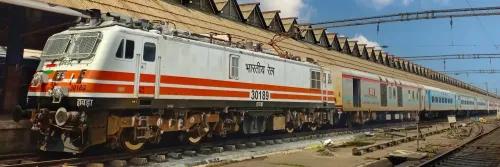
The drill simulated a collision involving the 00351 Sealdah-Lalgola Passenger train , with one coach derailed and another capsized .
A total of 20 dummy passengers were evacuated; the exercise recorded 1 simulated death, 5 serious injuries, and 7 minor injuries .
Over 200 personnel participated, including 35 NDRF , 75 RPF , 36 paramedical staff , and 8 fire brigade personnel.
The drill ran from 5 pm to 6:26 pm , with the emergency declared under control in 86 minutes .
Divisional Railway Manager Rajeev Saxena said such exercises are vital to ensure coordinated, timely response in real emergencies.
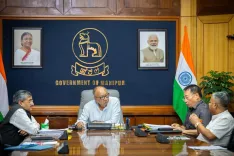
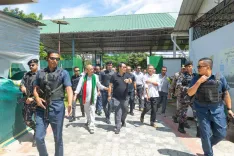
The Sealdah Division of Eastern Railway (ER) conducted a full-scale mock disaster drill at Kankinara station in North 24-Parganas district on Friday, 28 August 2026, in coordination with the National Disaster Response Force (NDRF) and the West Bengal government. The exercise was designed to test emergency response readiness and sharpen inter-agency coordination in the event of a major train accident.
How the Drill Unfolded
A realistic accident scenario was simulated involving the 00351 Sealdah-Lalgola Passenger train after it arrived on Line 1 at Kankinara station. In the scripted sequence, the on-duty station master failed to secure the point ahead of the station, a second train approached, its driver passed a red signal, and the two trains came into conflict — resulting in a simulated collision. One coach derailed and another capsized, requiring a coordinated rescue of passengers trapped inside damaged coaches.
Crucially, only a handful of officials — including the station master, drivers, and senior officers in charge — were aware it was a drill. All rescue and medical teams were alerted as though responding to a real emergency, ensuring authentic reaction times and decision-making under pressure.
Rescue Operations and Equipment Deployed
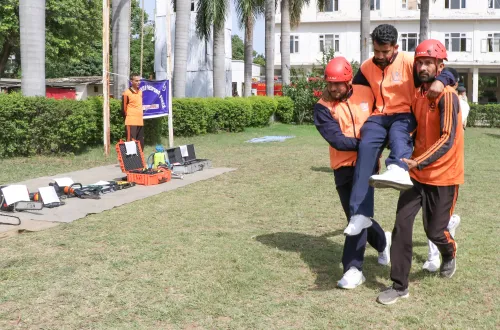
Immediately after the simulated 'accident', multi-agency rescue teams mobilised. A total of 20 dummy passengers were evacuated and given medical attention. Those designated as critically injured were transferred to Naihati, Jagaddal State General Hospital, and B.N. Bose Hospital. The exercise recorded one simulated death, five serious injuries, and seven minor injuries.
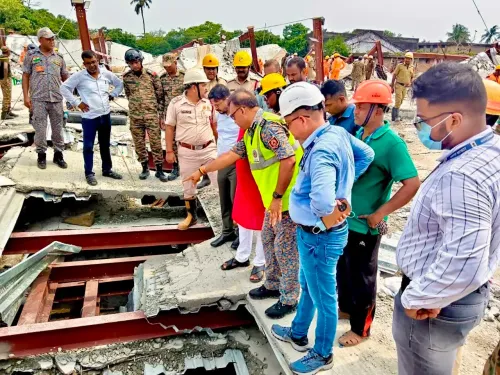
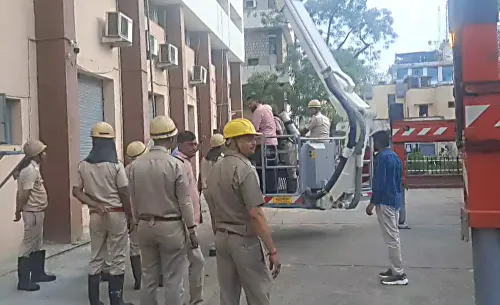
'A major focus was on rescuing passengers trapped inside badly damaged coaches. Teams demonstrated how modern rescue equipment can be used to cut through coach structures and create access points for evacuation,' an official said. High-capacity cutters, separators, and plasma cutting tools were deployed to replicate real-world conditions as closely as possible.
Scale of Participation
The joint exercise drew personnel from across agencies. Around 35 NDRF personnel, the Divisional Disaster Rescue Team, 23 Civil Defence personnel, 8 fire brigade personnel, 7 doctors, 36 paramedical staff, 29 members of St John Ambulance Association, 31 Scouts and Guides, and 75 RPF personnel participated. Every phase of the operation was clocked, photographed, and videographed for post-exercise review.
Timeline and Senior Oversight
The joint exercise commenced at 5 pm and moved through stages of rescue, medical assistance, evacuation, and restoration. At 6:26 pm, the emergency was declared under control and the drill formally concluded. Rajeev Saxena, Divisional Railway Manager, Sealdah, and Sujit Kumar Sinha, Senior Divisional Safety Officer, monitored the exercise throughout.
Saxena underlined that such full-scale drills are essential for railway safety preparedness, ensuring that rescue, evacuation, medical assistance, and track restoration can be carried out in a coordinated and timely manner when a real emergency strikes. The findings will be used to identify gaps in the current response mechanism and strengthen coordination among the Railway, NDRF, and partner agencies.
Point of View
Since it forces genuine reaction rather than rehearsed performance. The 86-minute window from simulated collision to declared control is a useful baseline, but the real test will be whether the post-exercise review translates into protocol changes rather than a filing-cabinet report. India's railway network runs over 13,000 passenger trains daily; the gap between drill frequency and network scale remains wide. Regular, unannounced exercises at high-density suburban nodes — not just district-level stations — would give a truer picture of system-wide readiness.
NationPress
28 Aug 2026
Frequently Asked Questions
What was the Eastern Railway mock drill at Kankinara about?
It was a full-scale disaster response simulation conducted by the Sealdah Division of Eastern Railway at Kankinara station in North 24-Parganas on 28 August 2026. The drill tested multi-agency readiness to respond to a major train accident, involving NDRF, West Bengal government teams, fire brigade, medical staff, and RPF personnel.
What accident scenario was simulated in the drill?
The drill simulated a collision involving the 00351 Sealdah-Lalgola Passenger train, in which a second train passed a red signal and struck it at Kankinara station. One coach derailed and another capsized, requiring rescue of passengers trapped inside damaged coaches.
How many personnel participated in the Eastern Railway drill?
More than 200 personnel took part, including 35 NDRF personnel, 75 RPF personnel, 36 paramedical staff, 23 Civil Defence personnel, 8 fire brigade personnel, 7 doctors, 29 St John Ambulance members, and 31 Scouts and Guides.
How long did the mock drill last?
The exercise began at 5 pm and the emergency was declared under control at 6:26 pm — a span of 86 minutes. It covered all phases: rescue, medical assistance, passenger evacuation, and track restoration.
Why are such railway mock drills important?
According to Divisional Railway Manager Rajeev Saxena, full-scale drills are essential to keep personnel ready for unforeseen situations and to identify gaps in the emergency response mechanism. The exercise findings will be used to strengthen coordination among the Railway, NDRF, and partner agencies.