Eastern Railway: 86 trains delayed by unauthorised alarm chain pulling in May
Synopsis
Eastern Railway's May data lays bare how trivially the emergency alarm chain is misused — passengers pulling it to stop near their villages, after dropping phones, or simply because they overslept. With 86 trains delayed and 58 arrests, the numbers reveal a systemic passenger-behaviour problem that enforcement alone may not fix.
Key Takeaways
86 trains were delayed due to unauthorised Alarm Chain Pulling (ACP) across Eastern Railway's four divisions in May 2025 .
58 individuals were arrested and 72 criminal cases registered during the month-long crackdown.
The Asansol and Howrah divisions were the worst affected; average delays reached up to 17 minutes per incident in Malda and Sealdah sections.
Reasons included passengers pulling chains to stop near native villages, after oversleeping past their stations, or following accidental luggage activation.
Unauthorised ACP is punishable under Section 141 of the Railways Act, 1989 with up to one year's imprisonment or a fine of up to ₹1,000 , or both.
RPF has intensified in-coach surveillance; six cases involving unidentified persons remain under investigation.
Eastern Railway (ER) has disclosed a detailed breakdown of Alarm Chain Pulling (ACP) incidents that disrupted 86 trains across its four divisions during May 2025, resulting in the arrest of 58 individuals for pulling emergency chains without justifiable cause. The data, compiled from Railway Protection Force (RPF) logs, exposes a pattern of misuse that is costing the network thousands of minutes in cumulative delays each month.
Worst-Affected Divisions
The Asansol and Howrah divisions bore the heaviest burden of disruptions, followed by the Malda and Sealdah divisions. Average detention times reached up to 13 minutes per incident in Asansol, 14 minutes in Howrah, and a steep 17 minutes per incident in sections of the Malda and Sealdah divisions, according to ER.
What the RPF Logs Revealed
The reasons behind the chain-pulling incidents range from careless to startling. Four passengers each in the Asansol and Malda divisions pulled the emergency chain simply because the train was passing near their native villages, bypassing scheduled halts entirely. Three passengers in Asansol and two in Howrah fell asleep and missed their destination stations — on waking, they pulled the chain to disembark.
In 10 cases, passengers claimed the activation was accidental — eight in Asansol and two in Sealdah. Two separate incidents in Asansol involved passengers hanging heavy luggage from the chains, triggering unintended activation. Another two cases in Asansol involved people who had boarded to see off relatives and could not exit before the train departed.
Four passengers in Asansol and two in Howrah resorted to ACP after boarding the wrong train. Ten passengers across Asansol, Howrah, and Malda pulled the chain after failing to board or deboard in time. One passenger in the Sealdah division admitted to pulling the chain after accidentally dropping a mobile phone from a window. Two cases in Howrah and Malda involved passengers who had left their luggage on the platform. While six cases involving unidentified persons remain under investigation, one incident involving military personnel using ACP during troop movement was also recorded.
Legal Consequences and the Crackdown
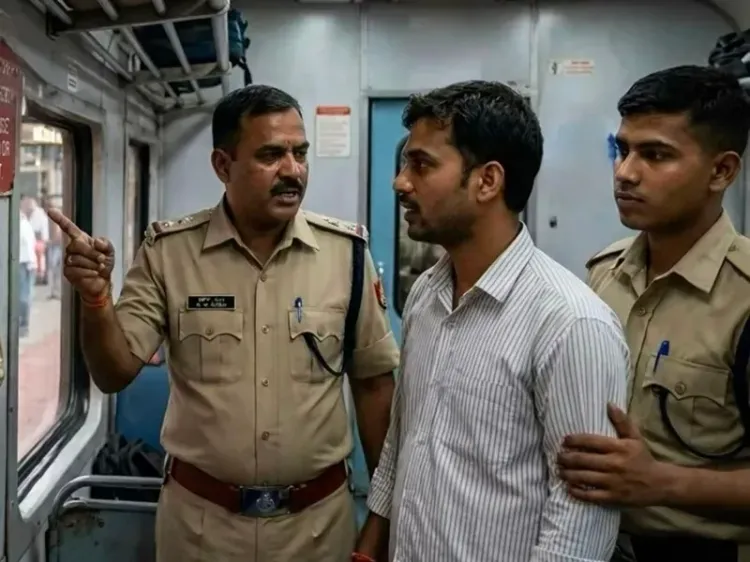
Unauthorised ACP is a criminal offence under Section 141 of the Railways Act, 1989. Penalties include imprisonment of up to one year, a fine of up to ₹1,000, or both. Throughout May, ER registered 72 criminal cases and arrested 58 individuals as part of an intensified enforcement drive. RPF teams have stepped up in-coach surveillance to apprehend offenders in the act.
Shibram Majhi, Chief Public Relations Officer (CPRO) of Eastern Railway, stated: 'Unauthorised chain pulling will have to stop to ensure punctuality.'
Why This Matters
This comes amid growing pressure on Indian Railways to improve on-time performance across its network. Each unscheduled halt not only delays the affected train but creates a cascading effect on following services sharing the same track. Notably, the sheer variety of reasons — from dropped phones to sleeping through stops — suggests that passenger awareness campaigns may need to accompany enforcement action to produce lasting results. RPF officials indicated that surveillance inside coaches will remain intensified going forward.
Point of View
000 set in 1989 — has not kept pace with inflation or deterrence needs; it is cheaper than many platform ticket fines. Arrests and criminal cases are necessary, but the 10 'accidental' claims and the dropped-phone incident suggest that awareness of what constitutes a valid emergency is itself a gap. Railways may need to pair enforcement with clearer in-coach communication on ACP consequences — and Parliament may need to revisit the penalty ceiling.
NationPress
19 Sept 2026
Frequently Asked Questions
What is Alarm Chain Pulling (ACP) and why is it illegal without cause?
Alarm Chain Pulling is an emergency facility on Indian trains allowing passengers to halt a train in genuine emergencies. Unauthorised use is a criminal offence under Section 141 of the Railways Act, 1989, punishable by up to one year's imprisonment, a fine of up to ₹1,000, or both.
How many trains were delayed by unauthorised ACP on Eastern Railway in May 2025?
A total of 86 trains were delayed across Eastern Railway's four divisions — Asansol, Howrah, Malda, and Sealdah — due to unauthorised alarm chain pulling in May 2025. The Asansol and Howrah divisions were the most affected.
What action did Eastern Railway take against offenders?
Eastern Railway, through the Railway Protection Force, registered 72 criminal cases and arrested 58 individuals during May 2025. RPF teams have also intensified in-coach surveillance to catch offenders in the act.
What were the most common reasons passengers pulled the alarm chain?
RPF logs revealed a wide range of reasons including stopping trains near native villages, oversleeping past destination stations, accidentally activating the chain with heavy luggage, boarding the wrong train, and — in one case — dropping a mobile phone out of a window.
How long were trains typically delayed due to each ACP incident?
Average detention times per incident reached up to 13 minutes in the Asansol division, 14 minutes in Howrah, and 17 minutes in sections of the Malda and Sealdah divisions, according to Eastern Railway.