EVM-VVPAT Randomisation Successfully Completed Ahead of Assam, Kerala, and Puducherry Elections
Synopsis
The Election Commission of India has successfully completed the first round of EVM-VVPAT randomisation for the upcoming Assembly elections in Assam, Kerala, and Puducherry. This crucial process ensures transparency and fairness in the electoral process.
Key Takeaways
First randomisation of EVM-VVPATs completed for Assam, Kerala, and Puducherry elections.
Process ensures transparency and security in electoral procedures.
Conducted in the presence of political party representatives.
Randomisation prevents tampering and human interference .
Lists of randomised machines shared with political parties.
New Delhi, March 21 (NationPress) The Election Commission of India (ECI) declared on Saturday that the initial randomisation of EVM-VVPATs for the forthcoming Assembly elections has been successfully finalized in Assam, Kerala, and Puducherry.
On March 15, the poll body had outlined the timeline for the General Election to the Legislative Assemblies of Assam, Kerala, Puducherry, Tamil Nadu, and West Bengal, along with bye-elections in six states.
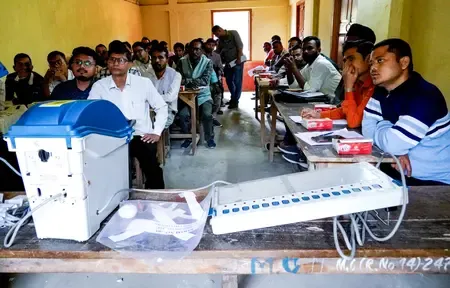
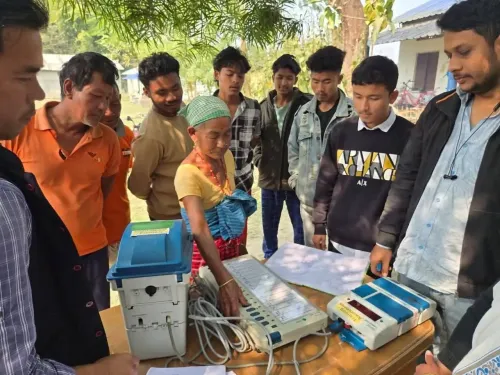
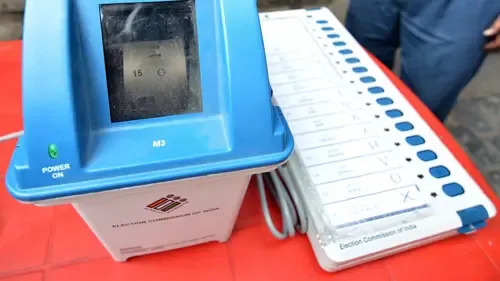
The randomisation of EVM and VVPAT is a secure, two-stage procedure performed by the election authority utilizing specialized software to assign machines randomly to polling stations and constituencies.
This approach helps to avert any tampering and human interference, thereby maintaining transparency by ensuring that the machines' locations remain undisclosed until shortly before the elections, with observations by political party representatives.
Electronic Voting Machines (EVMs) are allocated to their designated polling locations through a two-step randomisation process.
During the first stage, EVMs are randomly distributed from district-level storage facilities to Assembly constituencies. The second stage involves the random assignment of EVMs from the Assembly constituency level to individual polling stations.
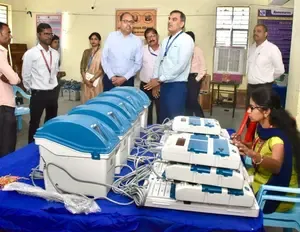
As per the ECI's directives, District Election Officers (DEOs) across all poll-bound States/UTs are required to complete the initial randomisation of EVM-VVPATs that have successfully undergone First Level Checking (FLC).
"The initial randomisation of EVMs has been completed for the general elections in Assam, Kerala, and the Union Territory of Puducherry, as well as for bye-elections in Goa, Karnataka, Nagaland, and Tripura, which are scheduled for April 9, 2026," the ECI stated.
The First Randomisation was executed via the EVM Management System (EMS) by the DEOs in the presence of representatives from National and State Recognised Political Parties, as per the ECI's statement.
Lists detailing the randomised EVMs and VVPATs have been distributed to representatives of all National and State Recognised Political Parties at their respective district headquarters.
According to the ECI, "These EVMs and VVPATs will be securely stored in the respective Assembly Strong Room under the supervision of representatives from National and State Recognised Political Parties."
"Upon the finalization of the list of contesting candidates, the details of the first and second randomised EVMs and VVPATs will also be shared with all the contesting candidates," it added.
Point of View
Our perspective is that the successful completion of the EVM-VVPAT randomisation by the ECI is a significant step towards ensuring free and fair elections. The meticulous process safeguards against potential tampering, thus enhancing public confidence in the electoral system. It's a necessary measure in maintaining the integrity of the democratic process.
NationPress
22 Sept 2026
Frequently Asked Questions
What is the purpose of EVM-VVPAT randomisation?
The EVM-VVPAT randomisation process aims to randomly assign voting machines to constituencies and polling stations to prevent tampering and ensure a fair electoral process.
When will the Assembly elections take place?
The Assembly elections are scheduled for April 9, 2026, in Assam, Kerala, and Puducherry, along with bye-elections in other states.
Who oversees the EVM randomisation process?
The randomisation process is overseen by District Election Officers (DEOs) in the presence of representatives from National and State Recognised Political Parties.
How many stages are there in the EVM randomisation?
There are two stages in the EVM randomisation process: the allocation of EVMs to Assembly constituencies and their subsequent assignment to individual polling stations.
What happens to the EVMs after randomisation?
After randomisation, the EVMs and VVPATs are stored securely in the Assembly Strong Room, monitored by political party representatives.