Ex-CBI officer says he refused 2010 'roving' probe against Modi
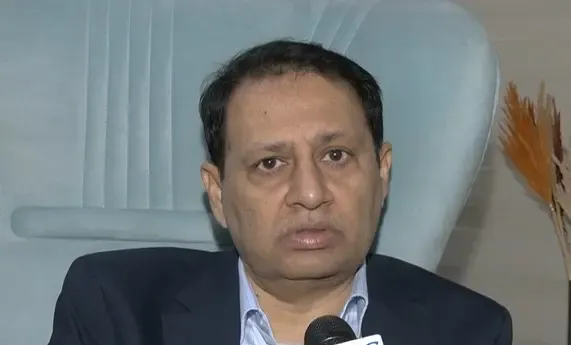
Synopsis
A former CBI officer says the agency's then chief, Ashwani Kumar, asked him in 2010 to hunt for evidence against Gujarat's then CM Narendra Modi within an unrelated MCI bribery case. Sanjay Kumar Singh says he refused, citing zero credible material, but stops short of alleging political interference.
Key Takeaways
Retired IPS officer Sanjay Kumar Singh says he refused a “fishing or roving inquiry” against Gujarat politicians in 2010 .
The request allegedly came during a CBI corruption probe against the then Medical Council of India chairman.
Singh named the then CBI Director Ashwani Kumar as the person who made the suggestion.
The then Gujarat CM, now PM Narendra Modi , was “certainly mentioned”; Amit Shah was alluded to but not explicitly named.
Singh said he could not confirm political interference, as he did not witness it firsthand.
Singh is the author of “Code of Honour: No Half Measures in the Indian Police Service” .
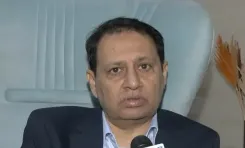
Retired IPS officer Sanjay Kumar Singh has said he refused to carry out a “fishing or roving inquiry” against political leaders in Gujarat, including then Chief Minister Narendra Modi, during a 2010 Central Bureau of Investigation (CBI) corruption probe involving the Medical Council of India (MCI). Speaking in New Delhi, the former CBI officer said there was no credible evidence or material to justify widening the investigation. He named the then CBI Director, Ashwani Kumar, as the official who made the suggestion.
Key Developments
Singh is the author of “Code of Honour: No Half Measures in the Indian Police Service”. He said an investigation should not be expanded into a fishing exercise unless there is sufficient factual material to support the allegations.
Recalling his time handling several high-profile corruption cases at the CBI, Singh said he was asked to look for material that could implicate the then Gujarat Chief Minister, now Prime Minister.
“I did not come across any case file concerning the then Chief Minister of Gujarat. However, I was instructed to look for evidence -- within the scope of the case I was handling -- that might implicate the then Chief Minister of Gujarat. My response at the time was that we possessed no credible facts or material to support such an inquiry... When I was asked to pursue this, I refused. I stated that I could not conduct such a roving or fishing inquiry without a factual basis,” Singh said.
Background of the 2010 MCI Case
According to Singh, the CBI had registered a major corruption case against the then chairman of the Medical Council of India. A separate case was also registered against the same official over allegations of possessing assets disproportionate to his known sources of income.
During the investigation, the agency decided to search the premises of the chairman's Chartered Accountant (CA). Singh said it was at this stage that the then CBI Director suggested gathering evidence against certain political leaders as well.
“As I mentioned earlier, I raised two objections: first, this had no connection to our case; and second, we lacked any credible facts or material that would justify expanding the scope of our investigation. When pressure was applied, I made it clear that I would not engage in such a 'fishing' or 'roving' inquiry,” he said.
Names Mentioned in the Discussion
Asked which leaders were discussed, Singh said: “In a 2010 case, there was a discussion involving certain senior politicians from Gujarat, including the then-Chief Minister of Gujarat.” He confirmed the then Chief Minister was “certainly mentioned”, along with other senior politicians from the state.
Asked whether Union Home Minister Amit Shah had been alluded to, Singh replied, “Yes, but his name was not explicitly mentioned.”
Notably, Singh said Kumar did not indicate he was acting on instructions from higher authorities. “No, he did not say that. He did not disclose whether he had received this information from a specific source or if an order had come from elsewhere,” he said.
What Singh Did Not Claim
This comes amid Prime Minister Modi's earlier remarks that investigative agencies allegedly targeted him during the tenure of the United Progressive Alliance (UPA) government. Singh, however, declined to generalise.
“I cannot speak for the agencies as a whole. I can only discuss the specific incident I experienced during my own investigation. I cannot claim whether or not investigative agencies were being misused; I can only recount what happened to me, and that is precisely what I am sharing,” he said.
He added that he could not say whether political interference took place, as he did not witness it firsthand, though it “was indeed mentioned in the context of the case I was investigating.” Singh also said he faced pressure on several occasions, including as a Superintendent of Police (SP), and that he “never made a decision under pressure.”
The account is likely to revive debate over the independence of central investigative agencies, an issue that continues to shape political exchanges between the government and the Opposition.
Point of View
Yet his own careful caveats are the most important part of the story: he alleges an improper suggestion, not proven political direction. The account also remains one-sided until Ashwani Kumar responds. The deeper lesson cuts across party lines, because a system that relies on individual officers saying no is not an independent system. Agency autonomy has become a charge every Opposition levels and every government dismisses, and that underlines the need for structural safeguards rather than memoir-era revelations.
NationPress
29 Nov 2026
Frequently Asked Questions
What did former CBI officer Sanjay Kumar Singh claim?
Singh said he refused to conduct a “fishing or roving inquiry” against Gujarat political leaders, including then CM Narendra Modi, during a 2010 CBI probe. He said there was no credible evidence to justify widening the investigation.
Who asked Singh to look for evidence against Gujarat leaders?
Singh named the then CBI Director, Ashwani Kumar. He said Kumar did not indicate whether he was acting on instructions from anyone else.
What was the 2010 MCI case about?
The CBI had registered a corruption case against the then chairman of the Medical Council of India, along with a separate disproportionate assets case. The suggestion to look into political leaders reportedly came before a search of the chairman's Chartered Accountant's premises.
Was Amit Shah named in the 2010 discussion?
According to Singh, Amit Shah was alluded to but his name was not explicitly mentioned. The then Gujarat Chief Minister was, however, “certainly mentioned.”
Did Singh allege political interference in the CBI?
No, Singh said he could not say whether political interference took place because he did not witness it firsthand. He said he could only recount what happened during his own investigation.