India-Israel must deepen counterterror ties to check Pakistan-Hamas nexus: Experts
Synopsis
A new report by the Usanas Foundation has mapped Hamas' expanding operational footprint in Pakistan and South Asia — from rallies in Pakistan-occupied Kashmir to ideological alliances with Jaish-e-Mohammed and Lashkar-e-Taiba. Israeli Ambassador Reuven Azar and former Lt. Gen. Raj Shukla are now calling for an urgent deepening of India-Israel security ties, including joint drone-missile forces and shared ISR capabilities, as experts warn of a potential transnational 'Islam East' bloc.
Key Takeaways
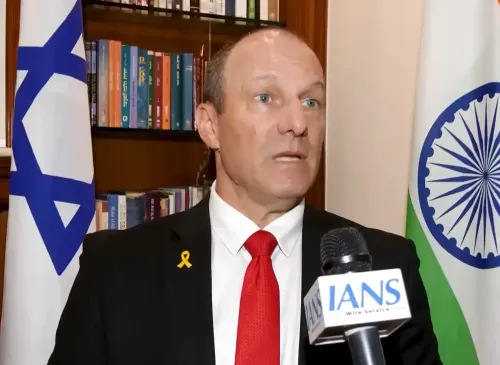
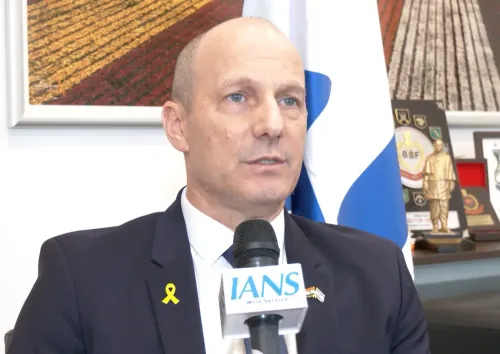
Israeli Ambassador Reuven Azar called for stronger India-Israel counterterrorism cooperation at a New Delhi panel on 25 August .
The Usanas Foundation released a report documenting Hamas' growing operational and ideological links with Jaish-e-Mohammed and Lashkar-e-Taiba in South Asia.
Hamas leaders Naji Zaheer and Khaled Qaddoumi have reportedly addressed gatherings in Pakistan-occupied Kashmir .
Raj Shukla urged operationalisation of space surveillance commands and a dedicated drone-missile force for India.
Analyst Michael Barak warned of an emerging transnational 'Islam East' bloc involving Pakistan, Bangladesh, Libya and Somalia, facilitated partly by Turkey .
Experts called for deeper intelligence sharing , ISR investment and joint frameworks between India and Israel to counter evolving terror networks.
Israeli Ambassador to India Reuven Azar on 25 August called for significantly stronger counterterrorism cooperation between India and Israel, citing the expanding footprint of Hamas in South Asia and its deepening operational links with Pakistan-based militant networks in the aftermath of the 7 October attacks. The call came at a high-level panel discussion in New Delhi organised by the Usanas Foundation following the release of its report, 'The Hamas-Pakistan Nexus: Examining Networks, Operations, and Strategic Convergence in South Asia.'
What the Report Reveals
The Usanas Foundation report documents Hamas' growing presence across Pakistan and South Asia through public rallies, alliances with local militant outfits, and the deliberate exploitation of Kashmir-Palestine solidarity narratives. Hamas leaders, including Naji Zaheer and Khaled Qaddoumi, have reportedly addressed gatherings in Pakistan-occupied Kashmir, while forging ideological ties with proscribed groups such as Jaish-e-Mohammed and Lashkar-e-Taiba.
The report flags the potential transfer of operational knowledge — particularly tunnel warfare tactics — from Hamas to South Asian terror networks as a critical emerging concern. It also details Hamas' use of liberal democratic rhetoric in English-language materials and links with mainstream religious institutions, tactics that analysts say complicate conventional counterterrorism responses.
Key Assessments from the Panel
Retired Lt. Gen. Raj Shukla, in his special remarks, described the Hamas-Pakistan nexus as a serious and fast-evolving threat. He pointed to Pakistan's long-standing use of terrorism as an instrument of statecraft and noted the rapid integration of advanced drone and missile capabilities into its terror toolkit, alongside constitutional changes that have consolidated the Pakistani Army's control over nuclear and missile forces.
Lt. Gen. Shukla called for the immediate operationalisation of space and silent surveillance commands, the development of a dedicated drone-missile force capable of stand-off precision strikes, and sustained investment in cyber and persistent Intelligence, Surveillance and Reconnaissance (ISR) capabilities. He also flagged the growing strategic significance of China's BeiDou-3 satellite system and its implications for India's technological preparedness.
Retired Col. Miri Eisin offered a forward-looking assessment of West Asia, describing Hamas as a sophisticated terror-state actor employing extensive underground networks and urban warfare. She warned that Hamas' growing legitimisation in countries such as Pakistan and Malaysia is altering recruitment dynamics and regional threat perceptions.
The Transnational Islamist Dimension
Michael Barak elaborated on Hamas' efforts to cultivate relationships with global Islamist networks, including the Muslim Brotherhood, and its use of the Kashmir cause as a unifying symbol for transnational recruitment. He pointed to Turkey's role in facilitating connections between Hamas and Islamist groups across South Asia.
Barak warned of a broader transnational Sunni Islamist axis and raised the prospect of an emerging 'Islam East' bloc — potentially combining Pakistan, Bangladesh, Libya and Somalia — that could pose challenges well beyond the Middle East, extending into South Asia and Africa. He stressed that addressing these networks would require sustained international cooperation.
Strategic Implications for India and Israel
Abhinav Pandya, founder of the Usanas Foundation, outlined broader strategic implications for India-Israel cooperation, including greater engagement across the Middle East and South Caucasus and stronger coordination across strategic, military and intelligence domains. The discussion concluded with a consensus on the urgent need to deepen intelligence sharing, counterterrorism preparedness and joint frameworks to address the increasingly transnational character of modern terrorist networks.
As Hamas continues to expand its ideological and operational influence beyond West Asia, the pressure on New Delhi and Jerusalem to formalise and accelerate bilateral security cooperation is likely to intensify.
Point of View
But the report's documentation of operational convergence — tunnel tactics, drone integration, shared recruitment narratives — elevates it from a diplomatic talking point to a verifiable security challenge. What is underreported is the Turkey dimension: Ankara's facilitation of Hamas-Islamist linkages in South Asia sits awkwardly with its NATO membership and is rarely addressed directly by Western partners. For India, the strategic calculus is sharper than it appears — a closer India-Israel security architecture is also, implicitly, a hedge against China's BeiDou-enabled influence in Pakistan's military modernisation.
NationPress
9 Oct 2026
Frequently Asked Questions
What is the Hamas-Pakistan nexus report released by the Usanas Foundation?
It is a research report titled 'The Hamas-Pakistan Nexus: Examining Networks, Operations, and Strategic Convergence in South Asia,' released by the Usanas Foundation in New Delhi on 25 August. The report documents Hamas' growing operational and ideological footprint in Pakistan and South Asia, including alliances with Jaish-e-Mohammed and Lashkar-e-Taiba, and the exploitation of Kashmir-Palestine solidarity narratives.
Why is Hamas' presence in South Asia considered a threat to India?
Experts at the panel discussion warned that Hamas leaders have addressed gatherings in Pakistan-occupied Kashmir and are forging ties with Pakistan-based militant groups. The potential transfer of Hamas' tunnel warfare and drone tactics to South Asian terror networks was flagged as a critical concern for India's internal and border security.
What did Israeli Ambassador Reuven Azar say about India-Israel cooperation?
Ambassador Reuven Azar stressed the importance of stronger counterterrorism cooperation between India and Israel, noting that the 7 October attacks had increased Hamas' influence and appeal within global terrorist circles. He highlighted the report's value in improving understanding of terror convergence between South Asia and West Asia.
What specific security measures did Lt. Gen. Raj Shukla recommend?
Lt. Gen. Raj Shukla called for the immediate operationalisation of space and silent surveillance commands, the creation of a dedicated drone-missile force capable of stand-off precision strikes, and sustained investment in cyber and ISR capabilities. He also flagged China's BeiDou-3 satellite system as a growing strategic concern for India.
What is the 'Islam East' bloc that experts warned about?
Analyst Michael Barak raised the prospect of an emerging transnational Sunni Islamist axis — referred to as a potential 'Islam East' bloc — that could combine Pakistan, Bangladesh, Libya and Somalia, with Turkey playing a facilitating role. Experts warned this configuration could pose security challenges well beyond the Middle East, extending into South Asia and Africa.