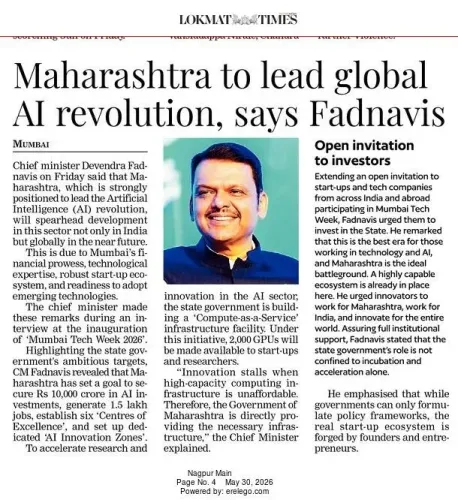
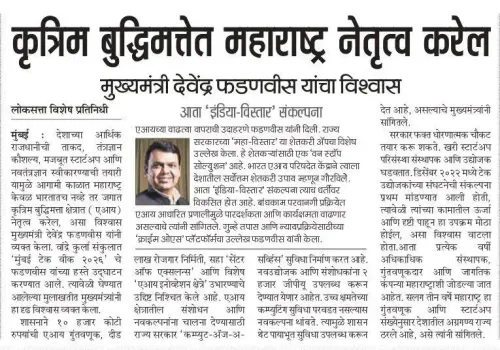
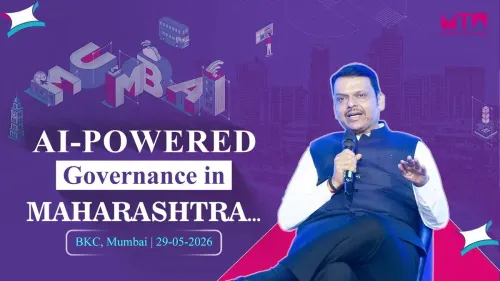
CM Fadnavis Chairs AI-Digital Governance Meet in Mumbai
Synopsis
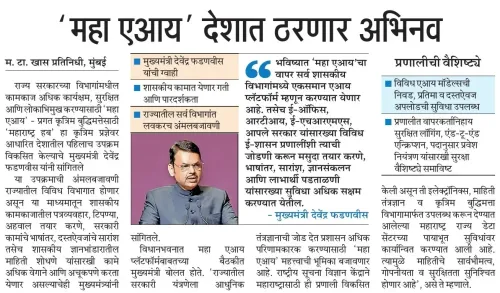
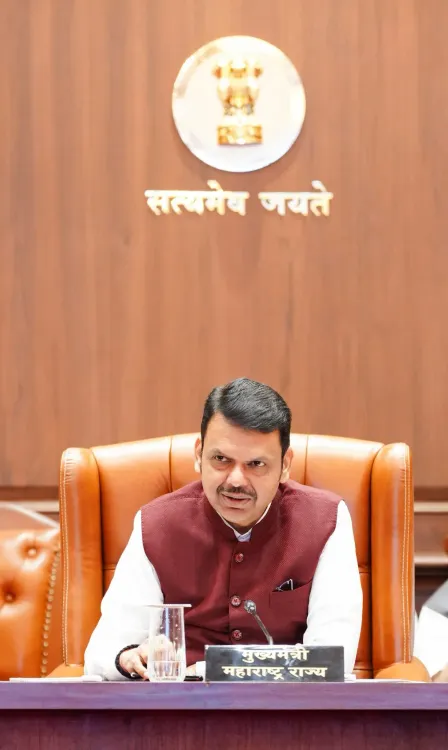
Chief Minister Devendra Fadnavis chaired a meeting at Vidhan Bhavan, Mumbai on 23 June 2026 to strengthen digital governance through AI. Deputy CM Eknath Shinde, Ministers Girish Mahajan and Ashish Shelar, and senior officials attended. The move aligns with India's Digital India programme and National AI Strategy.
Key Takeaways
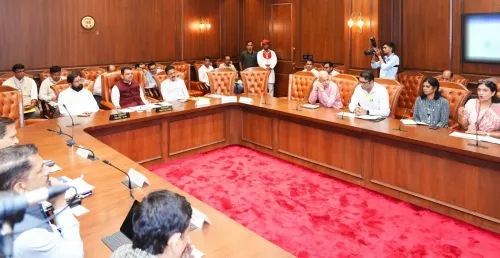
CM Devendra Fadnavis chaired a meeting on AI-driven digital governance at Vidhan Bhavan, Mumbai on 23 June 2026 at 2:55 PM .
Deputy CM Eknath Shinde , Minister Girish Mahajan , and Minister Adv.
Ashish Shelar attended alongside senior officials.
The meeting's stated focus was 'strengthening digital governance through artificial intelligence' — communicated officially in English, Marathi, and Hindi.
Maharashtra's initiative aligns with the national Digital India programme (2015) and NITI Aayog's National Strategy for AI (2018) .
Departments such as revenue, health, and grievance redressal are potential areas for AI-based pilots, impacting crores of Maharashtra citizens.
The Chief Minister's Office of Maharashtra announced on 23 June 2026 that Chief Minister Devendra Fadnavis chaired a high-level meeting at Vidhan Bhavan, Mumbai focused on strengthening digital governance through artificial intelligence. The meeting, held at 2:55 PM, was attended by Deputy Chief Minister Eknath Shinde, Minister Girish Mahajan, Minister Adv. Ashish Shelar, and senior government officials.
Context
The official post, shared in English, Marathi, and Hindi, confirmed the meeting's agenda as 'कृत्रिम बुद्धिमत्तेच्या माध्यमातून डिजिटल गव्हर्नन्सचे सक्षमीकरण' — 'strengthening digital governance through artificial intelligence.' The trilingual communication signals the state government's intent to reach a broad public audience across Maharashtra's linguistic communities. The presence of the Deputy CM and two cabinet ministers alongside senior bureaucrats underscores the seniority of the deliberation.
Policy Backdrop
Maharashtra's push on AI-driven governance fits within the national Digital India programme, launched in 2015, which has progressively encouraged states to integrate digital tools into public administration. At the national level, NITI Aayog released India's National Strategy for Artificial Intelligence in 2018, laying out a framework for AI adoption in sectors including governance, health, and agriculture. CM Fadnavis, across his tenures as Chief Minister, has consistently positioned Maharashtra as a frontrunner in e-governance and technology-led administrative reform.
Minister Adv. Ashish Shelar, who oversees higher and technical education in the state, and Minister Girish Mahajan, holding portfolios including water resources and sanitation, are among the ministers whose departments could be early candidates for AI-based interventions. Their inclusion in the meeting suggests a cross-departmental approach rather than a single-sector pilot.
Stakeholders and Impact
The primary stakeholders are Maharashtra's state government departments and the citizens who depend on public services ranging from revenue administration and land records to health and grievance redressal. AI integration in these areas has the potential to reduce processing times, flag anomalies in data, and improve last-mile service delivery — outcomes that affect crores of residents across the state. Civil servants and district-level administrators would also be directly impacted as any AI rollout would require capacity building and process redesign.
Vidhan Bhavan in Mumbai, the official seat of the Maharashtra Legislative Assembly, served as the venue, lending institutional weight to the discussions and indicating these are formal policy-level deliberations rather than informal working sessions.
What's Next
Observers will watch for follow-up announcements detailing specific AI pilots in Maharashtra departments such as revenue, health, or citizen grievance systems, and whether the state aligns formally with the National AI Mission. The composition of the meeting — spanning technology-adjacent portfolios and senior bureaucracy — suggests that concrete departmental mandates or pilot project approvals could follow. Maharashtra's scale, as India's most industrialised state with a population exceeding 12 crore, means any successful AI governance model here could serve as a template for other states.
Point of View
With the Chief Minister personally steering the agenda. Convening the Deputy CM and ministers from education and infrastructure portfolios alongside senior bureaucrats suggests a whole-of-government approach, not a siloed tech experiment. This fits a pattern where large states use high-visibility technology meetings to signal reform intent ahead of budget cycles or central scheme alignments. The real test will be whether the deliberations translate into funded, time-bound pilots rather than remaining a consultative exercise.
NationPress
22 Sept 2026
Frequently Asked Questions
What was the AI meeting chaired by CM Fadnavis about?
CM Devendra Fadnavis chaired a meeting on 23 June 2026 at Vidhan Bhavan, Mumbai, focused on strengthening Maharashtra's digital governance through artificial intelligence, with the Deputy CM and two cabinet ministers in attendance.
Who attended the Maharashtra AI governance meeting on 23 June 2026?
Deputy Chief Minister Eknath Shinde, Minister Girish Mahajan, Minister Adv. Ashish Shelar, and senior government officials attended the meeting chaired by CM Devendra Fadnavis.
Where was the Maharashtra AI digital governance meeting held?
The meeting was held at Vidhan Bhavan in Mumbai, the official seat of the Maharashtra Legislative Assembly, on 23 June 2026 at 2:55 PM.
How does Maharashtra's AI governance push relate to national policy?
It aligns with the central government's Digital India programme launched in 2015 and NITI Aayog's National Strategy for Artificial Intelligence released in 2018, which guide AI adoption across state administrations.
Which Maharashtra departments could see AI implementation after this meeting?
Based on the portfolios of ministers present and broader governance patterns, departments such as revenue, health, and citizen grievance redressal are potential areas for AI-based pilots, though no specific decisions have been officially announced.