CM Fadnavis Launches Maha AI for Maharashtra Governance
Synopsis
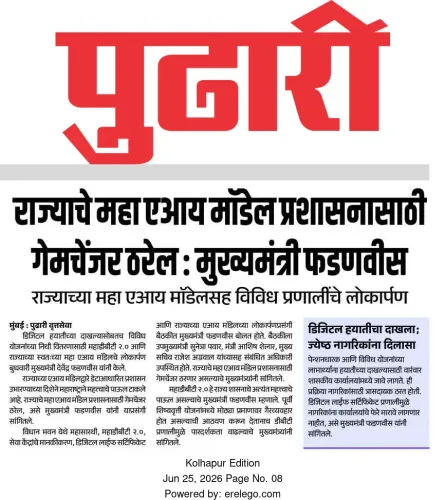
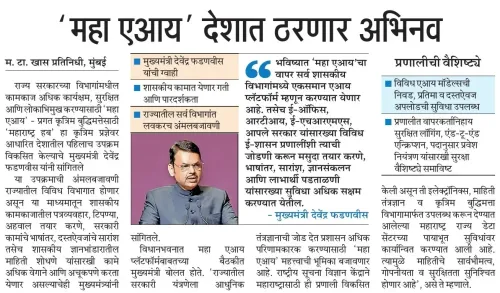
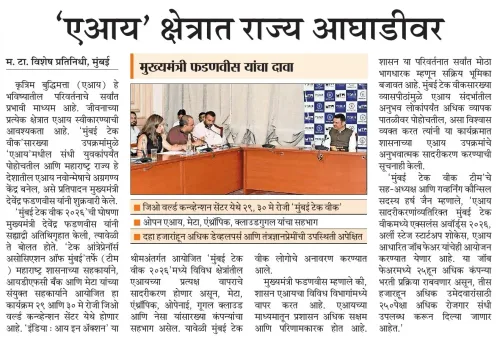
Chief Minister Devendra Fadnavis chaired a meeting at Vidhan Bhavan on 23 June 2026 to launch 'Maha AI', described as India's first state-level AI governance hub. Built by NIC on Maharashtra's sovereign data centre, the platform will automate drafting, translation, document summarisation, and beneficiary verification across all state departments.
Key Takeaways
Maha AI — Maharashtra Hub for Advanced AI — is described as India's first AI-based governance hub for a state government.
The platform was developed by the National Informatics Centre (NIC) and runs on the Maharashtra State Data Centre , ensuring data sovereignty.
Key functions include drafting official letters and notes, document translation and summarisation, retrieval of government rules and circulars, and AI-assisted beneficiary verification to eliminate duplication.
The system features end-to-end encryption, role-based access control, and user-level secure logging to protect sensitive government data.
Maha AI will be integrated with e-Office, RTI portals, e-HRMS, and Aaple Sarkar as part of a phased rollout across all state departments.
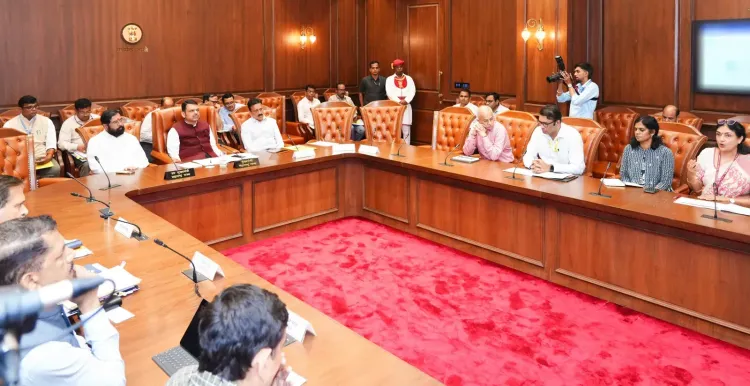
Deputy CM Eknath Shinde , Minister Girish Mahajan , and Minister Ashish Shelar attended the meeting at Vidhan Bhavan, Mumbai on 23 June 2026 .
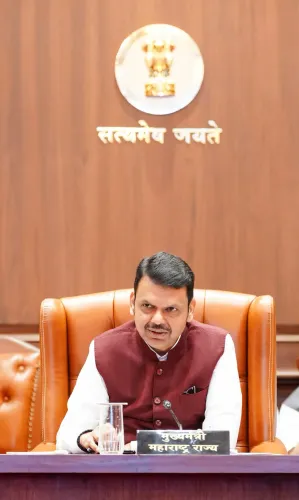
The Chief Minister's Office of Maharashtra announced on Tuesday, 23 June 2026 that Chief Minister Devendra Fadnavis chaired a high-level meeting at Vidhan Bhavan, Mumbai to advance the deployment of 'Maha AI' — described as the country's first AI-based hub for advanced artificial intelligence in state administration.
The meeting focused on empowering digital governance through artificial intelligence across Maharashtra's government departments. Speaking at the meeting, CM Fadnavis said: 'महा एआय' ('Maha AI') — the 'Maharashtra Hub for Advanced AI' — has been developed to make the functioning of various state government departments 'more efficient, secure and citizen-centric,' and its implementation across departments will begin shortly.
What Is Maha AI?
Maha AI is a sovereign artificial intelligence platform built specifically for Maharashtra's government machinery. The National Informatics Centre (NIC), the premier technology arm of the Union government under the Ministry of Electronics and Information Technology, developed the system. It runs on the infrastructure of the Maharashtra State Data Centre, provided by the state's Department of Electronics, Information Technology and Artificial Intelligence.
Because the platform operates entirely within state-controlled infrastructure, CM Fadnavis emphasised that the sovereignty, confidentiality, and security of all government data will be ensured. The system incorporates user-level secure logging, end-to-end encryption, and role-based access controls to protect sensitive government documents.
Context: What the Platform Does
Maha AI is designed to automate a range of routine but time-consuming administrative tasks. These include drafting official letters, emails, and notes; summarising, explaining, and translating documents; retrieving contextual information from government rules, acts, government resolutions (शासन निर्णय), and circulars; and generating reports in natural language.
The platform also supports AI-assisted beneficiary verification to eliminate duplication of welfare scheme recipients — a significant administrative challenge across Maharashtra's vast public delivery system. Multiple AI models can be selected within the system, and it allows image and document uploads for processing.
Policy Backdrop
The initiative builds on Maharashtra's updated Information Technology Policy of 2023, which explicitly promoted AI adoption in administration, and aligns with the national Digital India programme launched in 2015. The broader national IndiaAI Mission framework has been encouraging states to establish sovereign AI hubs for governance use-cases rather than depending on external commercial platforms.
Several Indian states have begun deploying AI tools on state-owned data infrastructure to automate administrative functions while retaining data sovereignty. Maharashtra's move positions it as a frontrunner by deploying what officials describe as the country's first such integrated AI governance hub.
Stakeholders and Impact
Maha AI is intended for use by officials across all state government departments. In the near term, it will be integrated with existing e-governance platforms including e-Office, RTI portals, e-HRMS, and Aaple Sarkar — Maharashtra's flagship citizen services portal. These integrations are expected to strengthen drafting, translation, summarisation, knowledge retrieval, and beneficiary verification across the board.
Deputy Chief Minister Eknath Shinde, Minister Girish Mahajan, Minister Ashish Shelar, and senior officials were present at the meeting, signalling cross-departmental political ownership of the rollout.
What's Next
CM Fadnavis stated that Maha AI will eventually serve as a uniform AI platform across all government departments. The phased rollout will begin with pilot integrations into e-Office and RTI systems before expanding statewide. The platform's possible inclusion in Maharashtra's upcoming IT policy revision is also being watched closely. If the implementation proceeds as announced, it could set a template for other Indian states building sovereign AI infrastructure for public administration.
Point of View
Directly echoing the IndiaAI Mission's emphasis on keeping government data within domestic, state-controlled systems rather than commercial clouds. For CM Fadnavis, the initiative reinforces his administration's identity as a technology-forward government, building on the e-governance momentum he championed during his earlier tenure from 2014 to 2019. The inclusion of beneficiary verification as a core use-case signals that the platform is designed to address real administrative pain points — particularly welfare duplication — rather than serve as a purely symbolic tech announcement. Whether the rollout meets its stated ambition of covering all departments will be the true test of Maha AI's governance impact.
NationPress
22 Sept 2026
Frequently Asked Questions
What is Maha AI Maharashtra?
Maha AI, or Maharashtra Hub for Advanced AI, is a state government AI platform developed by the National Informatics Centre that automates administrative tasks such as drafting official documents, translating and summarising files, retrieving government rules, and verifying welfare beneficiaries. It runs on Maharashtra's own State Data Centre to ensure data security.
Who launched Maha AI in Maharashtra?
Chief Minister Devendra Fadnavis chaired the meeting at Vidhan Bhavan, Mumbai on 23 June 2026 where the Maha AI initiative was formally announced for phased rollout across all state government departments.
Is Maha AI India's first government AI platform?
Officials described Maha AI as the country's first AI-based hub for advanced artificial intelligence in state administration, though it is part of a broader national pattern of states deploying sovereign AI tools aligned with the IndiaAI Mission framework.
How will Maha AI protect government data?
Maha AI operates entirely on the Maharashtra State Data Centre's infrastructure, which is under state government control. It includes end-to-end encryption, role-based access controls, and user-level secure logging so that sensitive government documents and data remain confidential.
Which platforms will Maha AI be integrated with?
Maha AI is planned for integration with e-Office, RTI portals, e-HRMS, and Aaple Sarkar — Maharashtra's flagship citizen services portal — to enhance drafting, translation, summarisation, and beneficiary verification across departments.