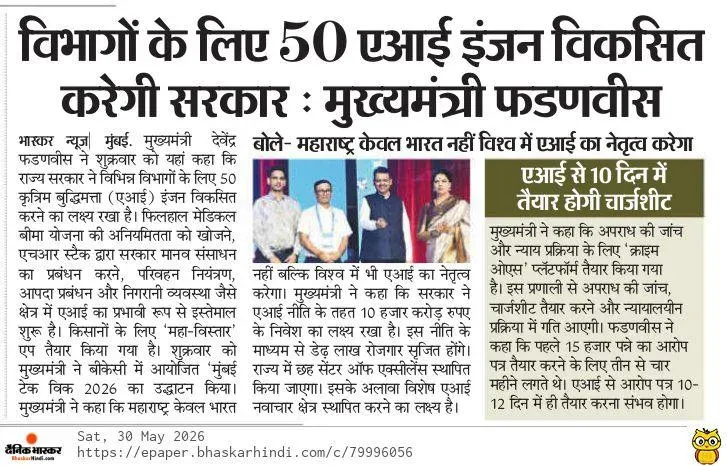
CM Fadnavis: Maharashtra to Build 50 AI Engines for Departments
Synopsis
Chief Minister Devendra Fadnavis announced that the Maharashtra government will develop 50 artificial intelligence engines for its administrative departments, marking one of the most structured state-level AI integration efforts under India's broader Digital India and AI-for-governance push.
Key Takeaways
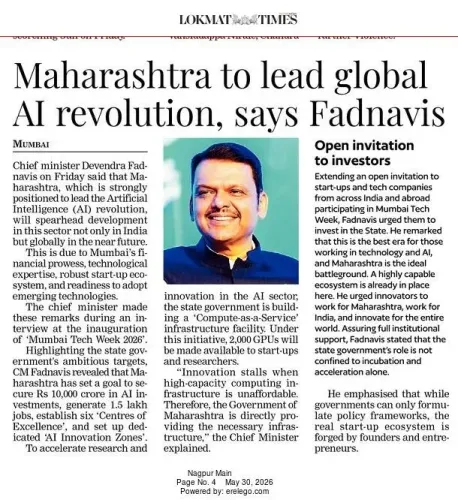
Chief Minister Devendra Fadnavis announced on 30 May 2026 that Maharashtra will develop 50 AI engines for state government departments.
The initiative aims to embed purpose-built AI tools across individual administrative departments rather than deploying a single centralised system.
The move aligns with NITI Aayog's National Strategy for Artificial Intelligence (2018) , which called on states to adopt AI in governance and public services.
Potential beneficiaries include departments covering revenue, health, agriculture, and urban development, as well as Maharashtra's citizens who use those services.
Rollout timelines, budget allocations, and technology partnership models have not yet been publicly detailed and remain key variables to watch.
The programme could position Maharashtra as a model for AI-driven governance among India's larger states.
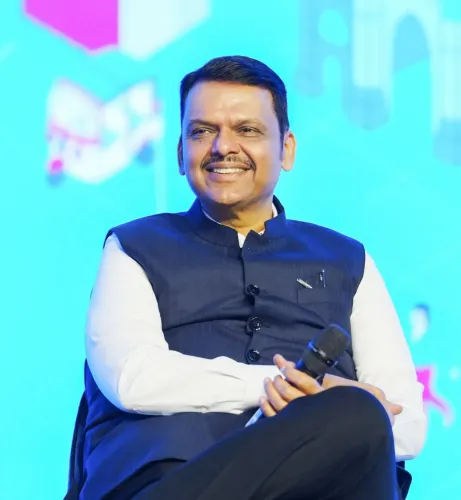
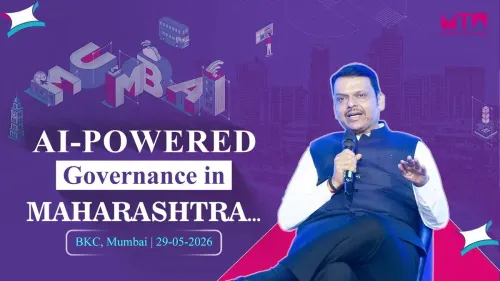
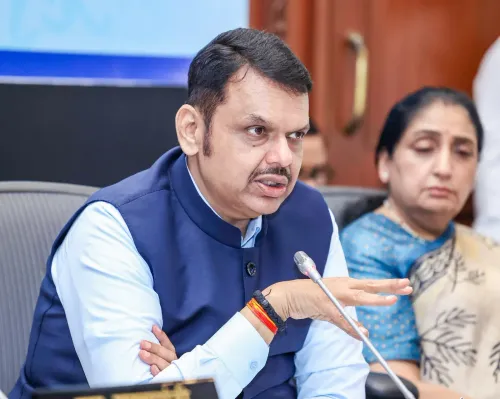
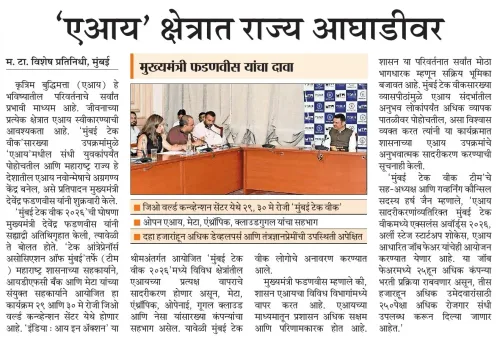
The Chief Minister's Office of Maharashtra announced on Saturday, 30 May 2026 that the state government plans to develop 50 artificial intelligence engines for its various administrative departments, with Chief Minister Devendra Fadnavis making the declaration.
Context
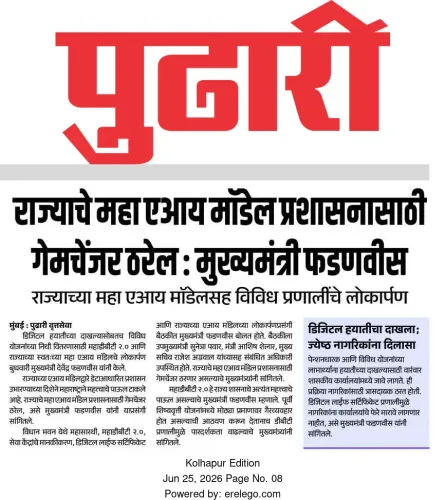
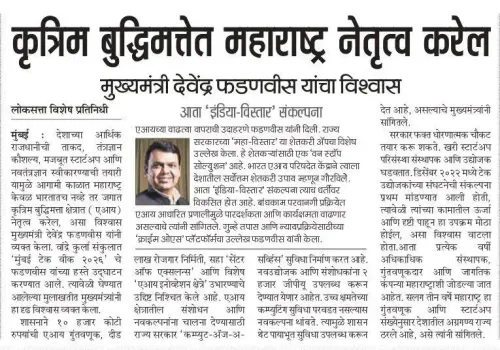
Chief Minister Fadnavis stated, 'विभागों के लिए 50 एआई इंजन विकसित करेगी सरकार' ('The government will develop 50 AI engines for departments'), signalling an ambitious push to embed artificial intelligence directly into the machinery of state governance. The announcement positions Maharashtra among the more proactive Indian states in integrating AI-driven tools into public administration.
Fadnavis, who has long championed digital governance initiatives during his tenures as Chief Minister, framed the move as a structural upgrade to how departments function — not merely a pilot or an advisory exercise, but a department-by-department rollout of purpose-built AI tools.
Policy Backdrop
The announcement aligns with the national trajectory set in 2018 when NITI Aayog released India's National Strategy for Artificial Intelligence, branded #AIforAll, which explicitly called on state governments to adopt AI in public service delivery and administrative processes. That strategy identified governance modernisation as one of the five core sectors for AI deployment.
Maharashtra's initiative fits squarely within the broader Digital India framework, under which multiple states have experimented with AI-assisted grievance redressal, crop advisory systems, and revenue administration tools. A dedicated suite of 50 AI engines — one or more per department — would represent a more systematic and granular commitment than most state-level programmes seen so far.
Stakeholders and Impact
The primary beneficiaries of the proposed AI engines would be Maharashtra's state government departments — spanning revenue, health, agriculture, urban development, and others — and, by extension, the citizens who depend on those services. Faster processing, reduced manual bottlenecks, and data-driven decision-making are among the operational gains typically cited in comparable deployments.
For the state's technology and startup ecosystem — particularly in Mumbai and Pune, both established tech hubs — the programme could open procurement and co-development opportunities. Departmental staff will require reskilling, making training pipelines a critical parallel investment.
What's Next
Key details that will determine the programme's credibility and pace include rollout timelines, the identification of which departments receive AI engines first, any budget allocations earmarked in the state's fiscal plan, and whether the government pursues in-house development, third-party partnerships, or a hybrid model. Departmental adoption metrics and independent audits of AI engine performance will be the markers to watch as the initiative moves from announcement to implementation.
If executed at the scale announced, Maharashtra's 50-AI-engine programme could set a template that other large Indian states look to replicate, reinforcing the competitive dynamic among states to lead on governance technology.
Point of View
Structural target. It reflects Maharashtra's sustained effort under Fadnavis to use technology as a governance differentiator, building on earlier digital initiatives during his previous term. The announcement also arrives at a moment when Indian states are in quiet competition to demonstrate AI readiness, partly to attract investment and partly to signal administrative modernity to a tech-aware electorate. Whether the ambition survives contact with procurement cycles and departmental inertia will be the real test of this initiative's substance.
NationPress
14 Oct 2026
Frequently Asked Questions
What did CM Devendra Fadnavis announce about AI in Maharashtra?
Chief Minister Devendra Fadnavis announced that the Maharashtra government will develop 50 artificial intelligence engines specifically for its various administrative departments, aiming to modernise state governance.
Which departments in Maharashtra will get AI engines?
The announcement does not specify individual departments, but the initiative is intended to cover the range of Maharashtra's state government departments. Departments such as revenue, health, agriculture, and urban development are among those that typically benefit from AI integration in governance programmes.
How does Maharashtra's AI plan connect to India's national AI strategy?
Maharashtra's initiative aligns with the National Strategy for Artificial Intelligence released by NITI Aayog in 2018 under the #AIforAll programme, which encouraged state governments to adopt AI across public administration and service delivery.
What is the significance of developing 50 AI engines for government departments?
Developing 50 department-specific AI engines represents a more systematic and granular commitment than most state-level AI programmes in India, potentially setting a replicable model for other large states.
What details about the Maharashtra AI engine programme are still awaited?
Rollout timelines, specific departmental allocations, state budget provisions, and whether the government will develop the engines in-house or through technology partnerships have not yet been publicly disclosed.