CM Fadnavis attends Maha Arogya Shibir, 31,000 examined in Nagpur
Synopsis
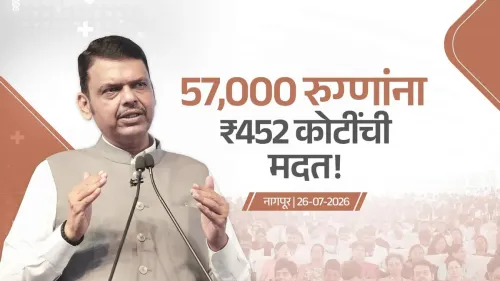
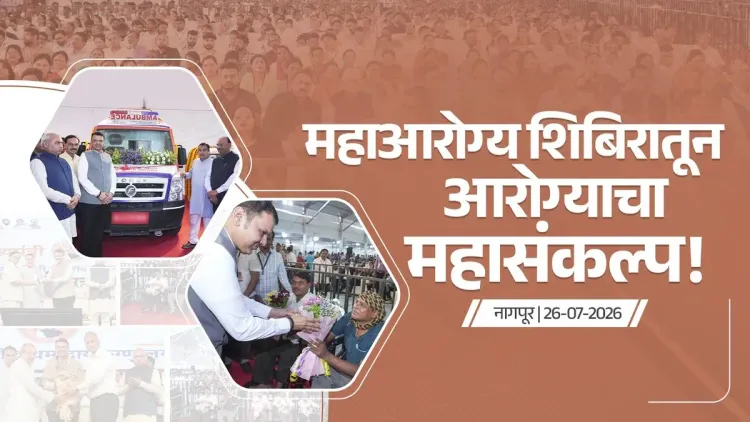
Maharashtra CM Devendra Fadnavis attended the Maha Arogya Shibir in Nagpur alongside Union Minister Nitin Gadkari on 26 July 2026. Over 31,000 patients were examined at the camp. In the next phase, 5,000 patients will receive free surgeries under a scheme covering 2,300 ailments with up to ₹5 lakh in coverage and ₹35 lakh for critical procedures.
Key Takeaways
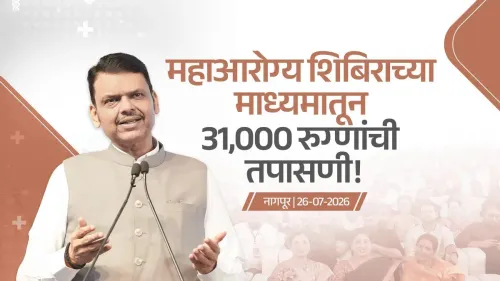
31,000+ patients were examined at the Maha Arogya Shibir held in Nagpur on 26 July 2026 .
5,000 patients requiring surgeries and specialised treatment will receive free care in the camp's next phase.
The initiative combines the Pradhan Mantri Jan Arogya Yojana , Mahatma Jyotirao Phule Jan Arogya Yojana , and the Chief Minister's Relief Fund on a single platform.
Coverage now extends to 2,300 ailments with free treatment of up to ₹5 lakh ; critical procedures attract up to ₹35 lakh in financial assistance.
The camp pooled government hospitals, medical colleges, charitable institutions, and specialist doctors in Nagpur , Maharashtra's winter capital and a major medical education hub.
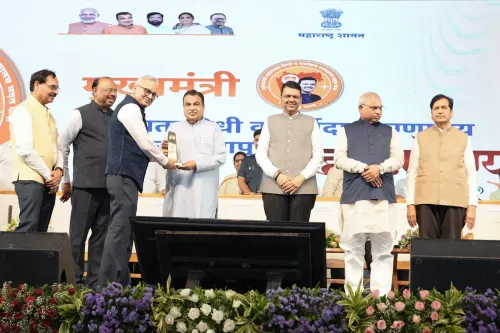
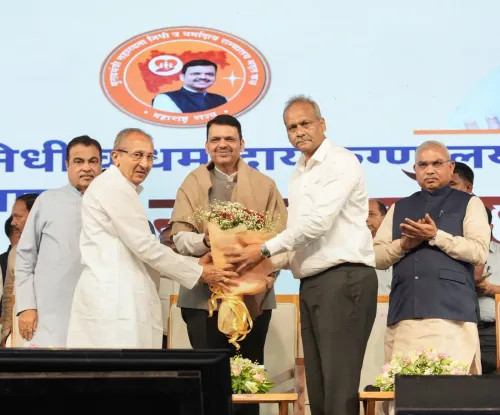
Union Minister Nitin Gadkari co-attended, alongside senior state ministers, the Nagpur Mayor, and other civic dignitaries.
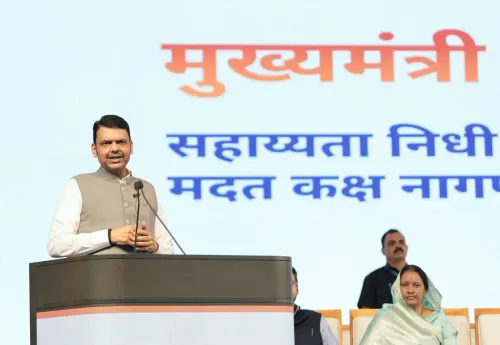
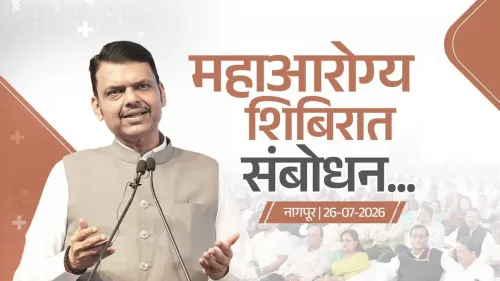
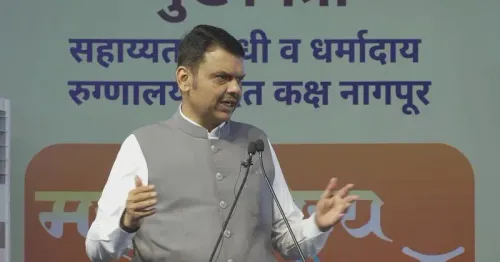
Maharashtra Chief Minister Devendra Fadnavis attended the Maha Arogya Shibir in Nagpur on Sunday, 26 July 2026, alongside Union Minister Nitin Gadkari, marking what he described as 'a new milestone in public healthcare.' The mega health camp, organised in coordination with the Chief Minister's Relief Fund and the Charitable Hospital Desk, brought together government hospitals, medical colleges, charitable institutions, and specialist doctors on a single platform to deliver advanced medical care to underserved citizens.
What happened at the camp
More than 31,000 patients were examined during the Maha Arogya Shibir, according to CM Fadnavis. In the next phase of the initiative, 5,000 patients requiring surgeries and specialised treatment will receive free care. The camp represented a convergence of public health infrastructure — pooling state hospitals, medical colleges, and charitable bodies — to reduce barriers to tertiary-level treatment for low-income residents of Nagpur and surrounding areas.
Policy backdrop
The event draws on a layered architecture of health coverage schemes. The Pradhan Mantri Jan Arogya Yojana (PMJAY), launched nationally in 2018 under the Ayushman Bharat umbrella, provides up to ₹5 lakh in coverage for secondary and tertiary care to eligible low-income families. Maharashtra's own Mahatma Jyotirao Phule Jan Arogya Yojana has been integrated with PMJAY to extend cashless treatment for listed procedures to the state's economically weaker households.
Together, these schemes now cover 2,300 ailments with free treatment of up to ₹5 lakh, while the Chief Minister's Relief Fund provides additional financial assistance of up to ₹35 lakh for select critical procedures. This hybrid model — combining central insurance, state coverage, and a discretionary top-up fund — reflects Maharashtra's approach to bridging gaps in high-cost tertiary care that standard scheme limits cannot address.
Stakeholders and impact
The camp's primary beneficiaries are patients from low-income households who would otherwise face significant out-of-pocket expenditure for diagnostics, specialist consultations, and surgical procedures. The initiative is designed to reduce financial distress caused by catastrophic health expenditure, a persistent challenge in India's public health landscape.
Senior political and civic leaders were present at the event, including BJP National Joint General Secretary ShivPrakash, Minister Chandrashekhar Bawankule, Minister Mangal Prabhat Lodha, MP Dr. Ajeet Gopchade, Nagpur Mayor Neetatai Thakre, Deputy Mayor Leelatai Hathibed, Standing Committee Chairman Shivani Dani-Wakhare, and former MLC Sandeep Joshi. The high-profile attendance signals the political importance the ruling dispensation attaches to the initiative in Nagpur, which is also the home constituency of Union Minister Gadkari.
What's next
Attention will now turn to the execution of the announced second phase, in which 5,000 patients identified during the camp will be taken up for free surgeries and specialised procedures. Progress on this target, and any expansion of the ailment list or revision of the ₹35 lakh critical care ceiling, will be key indicators of whether the Maha Arogya Shibir model translates from a one-time event into a replicable public health delivery mechanism across Maharashtra.
If the surgical pipeline is delivered at scale, the initiative could strengthen the case for institutionalising such multi-stakeholder camps as a regular feature of Maharashtra's public health calendar — a model that other states have also experimented with under the broader Ayushman Bharat framework.
Point of View
Where central insurance schemes, state top-ups, and discretionary funds are layered to address the gaps that no single programme can fill alone. Holding the event in Nagpur — Union Minister Gadkari's political base — also carries clear electoral optics, reinforcing the BJP's outreach in a city that anchors its Maharashtra strategy. The announced 5,000-surgery pipeline is the real test: delivery at that scale would validate the camp model as a replicable public health tool rather than a high-visibility one-off. Institutionalising such multi-stakeholder camps could meaningfully reduce out-of-pocket expenditure in tertiary care, but only if the follow-through on surgical queues is tracked and reported transparently.
NationPress
25 Oct 2026
Frequently Asked Questions
What is the Maha Arogya Shibir in Nagpur?
The Maha Arogya Shibir is a large-scale public health camp organised in Nagpur in coordination with the Chief Minister's Relief Fund and Charitable Hospital Desk, bringing together government hospitals, medical colleges, charitable institutions, and specialist doctors on a single platform to provide free advanced medical treatment to those in need.
How many patients were examined at the Maha Arogya Shibir?
According to CM Devendra Fadnavis, more than 31,000 patients were examined during the Maha Arogya Shibir held on 26 July 2026 in Nagpur.
What free treatment is available under Maharashtra health schemes?
Under the combined coverage of the Pradhan Mantri Jan Arogya Yojana, Mahatma Jyotirao Phule Jan Arogya Yojana, and the Chief Minister's Relief Fund, 2,300 ailments are covered with free treatment of up to ₹5 lakh, while financial assistance of up to ₹35 lakh is available for select critical procedures.
Who attended the Maha Arogya Shibir with CM Fadnavis?
Union Minister Nitin Gadkari attended alongside BJP National Joint General Secretary ShivPrakash, Ministers Chandrashekhar Bawankule and Mangal Prabhat Lodha, MP Dr. Ajeet Gopchade, Nagpur Mayor Neetatai Thakre, Deputy Mayor Leelatai Hathibed, Standing Committee Chairman Shivani Dani-Wakhare, and former MLC Sandeep Joshi.
What is the next phase of the Maha Arogya Shibir?
In the next phase, 5,000 patients identified during the camp who require surgeries and specialised treatment will receive free care under the initiative.