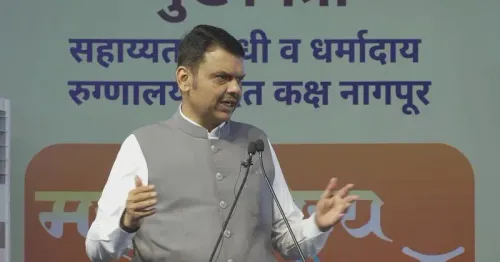
CM Fadnavis Inaugurates Maha Arogya Shibir; 31,000 Screened in Nagpur
Synopsis
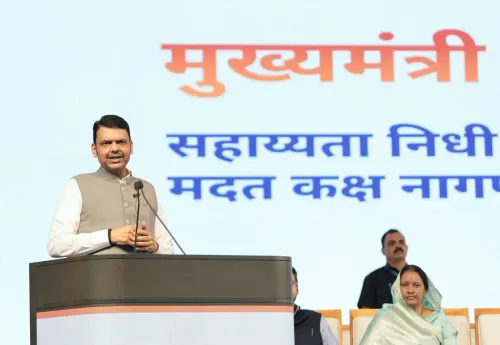
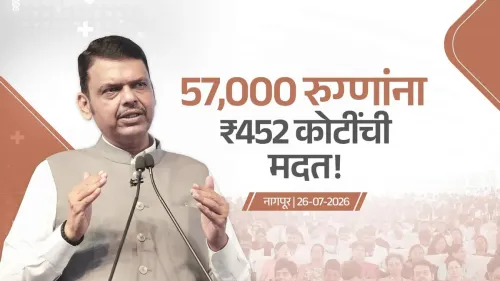
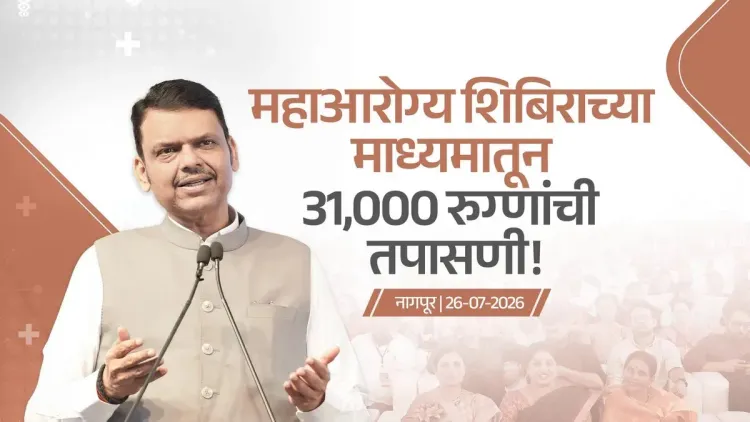
Maharashtra CM Devendra Fadnavis inaugurated the Maha Arogya Shibir in Nagpur on 26 July 2026. The camp screened 31,000 patients, with 4,500 to 5,000 set to receive free medical treatment — marking a significant state-run health outreach for the Vidarbha region.
Key Takeaways
31,000 patients were screened at the Maha Arogya Shibir in Nagpur on 26 July 2026 .
Approximately 4,500 to 5,000 of those screened will receive free medical treatment .
The camp was inaugurated by Maharashtra Chief Minister Devendra Fadnavis .
The event is part of Maharashtra's long-running tradition of state-organised free health camps under schemes including the Mahatma Jyotiba Phule Jan Arogya Yojana .
Nagpur serves as a flagship venue for Vidarbha-region health outreach by the state government.
Free treatment referrals are expected to link into insurance-backed programmes such as Ayushman Bharat or equivalent state schemes.
Maharashtra Chief Minister Devendra Fadnavis inaugurated the Maha Arogya Shibir in Nagpur on 26 July 2026, announcing that 31,000 patients had been screened through the state-organised health camp. Of those screened, approximately 4,500 to 5,000 patients will receive free medical treatment under the initiative.
Context
Addressing the inauguration ceremony, Fadnavis stated — in both Marathi and Hindi — that the camp had achieved wide reach: 'महाआरोग्य शिबिराच्या माध्यमातून 31,000 रुग्णांची तपासणी करण्यात आली' ('Through the Maha Arogya Shibir, 31,000 patients have been screened'). He added that of these, roughly 4,500 to 5,000 would be provided treatment at no cost. The event was held in Nagpur, the largest city in the Vidarbha region of eastern Maharashtra, which the state government has increasingly used as a flagship venue for public health outreach.
Policy Backdrop
The Maha Arogya Shibir is part of a broader tradition of state-run free health camps in Maharashtra, which have been conducted periodically since at least the early 2010s under the National Health Mission and state schemes including the Mahatma Jyotiba Phule Jan Arogya Yojana, launched in 2012. These camps typically combine mass diagnostic screening with referral pathways for procedures covered under insurance-linked programmes such as Ayushman Bharat or equivalent state equivalents. The dual-language announcement — in both Marathi and Hindi — reflects the government's intent to communicate the initiative's reach to diverse audiences across Maharashtra.
Stakeholders and Impact
The primary beneficiaries are low-income residents of Nagpur and the surrounding Vidarbha region, many of whom face barriers to accessing specialist medical care. With 31,000 screenings conducted, the camp represents a large-scale diagnostic exercise; the conversion of roughly 15–16 per cent of those screened into free treatment recipients signals a targeted approach to directing care toward those with identified medical needs. Nagpur's position as a regional hub means the camp's outcomes are likely to influence planning for similar initiatives in other districts across Maharashtra.
What's Next
The immediate focus will be on the delivery of free treatment to the identified 4,500 to 5,000 patients, including the logistics of referrals, hospital capacity, and follow-up care. The state government may announce further editions of the Maha Arogya Shibir in other Maharashtra districts, particularly in underserved rural areas of Vidarbha, Marathwada, and North Maharashtra. The scale of the Nagpur camp is likely to serve as a benchmark for subsequent events in the current political and administrative calendar.
Point of View
A region that has historically demanded greater state attention on health and agrarian issues. By screening 31,000 residents in a single camp and committing free treatment to a targeted cohort, the BJP-led government is reinforcing its social welfare credentials ahead of any future electoral cycle in Maharashtra. The dual-language announcement in Marathi and Hindi also suggests a deliberate effort to broaden the political messaging beyond regional audiences. Whether the promised treatments are delivered efficiently will determine how much durable goodwill the initiative generates.
NationPress
26 Oct 2026
Frequently Asked Questions
What is the Maha Arogya Shibir in Nagpur?
The Maha Arogya Shibir is a state-organised free health camp inaugurated by Maharashtra CM Devendra Fadnavis in Nagpur on 26 July 2026, where 31,000 patients were screened and up to 5,000 will receive free treatment.
How many patients were screened at the Maha Arogya Shibir?
A total of 31,000 patients were screened at the Maha Arogya Shibir in Nagpur during the 26 July 2026 event.
Who will get free treatment at the Maha Arogya Shibir?
Approximately 4,500 to 5,000 of the 31,000 patients screened at the Nagpur camp will receive free medical treatment, as announced by CM Devendra Fadnavis.
What health schemes back Maharashtra's free health camps?
Maharashtra's free health camps are supported by the National Health Mission and state schemes such as the Mahatma Jyotiba Phule Jan Arogya Yojana (launched 2012), alongside central programmes like Ayushman Bharat.
Why is Nagpur chosen for the Maha Arogya Shibir launch?
Nagpur is the largest city in the Vidarbha region of eastern Maharashtra and serves as a flagship venue for state government health and development initiatives targeting the region's residents.