CM Fadnavis chairs Ichalkaranji water supply review
Synopsis
Chief Minister Devendra Fadnavis chaired a high-level meeting in Mumbai on 18 June 2026 to resolve Ichalkaranji's chronic water shortage. The state will study storage augmentation options on the Krishna River without harming co-riparian states, and promises to announce a funded decision soon.
Key Takeaways
CM Devendra Fadnavis chaired a dedicated water-supply review for Ichalkaranji at Varsha, Mumbai on 18 June 2026 .
The state government will study multiple options to increase water storage capacity on the Krishna River before announcing a final decision.
Fadnavis assured that the project will face no funding shortfall ; interest-free long-term loans are under consideration.
The Krishna River is shared by Maharashtra, Karnataka, and Telangana ; the CM pledged that no co-riparian state will be harmed.
Local bodies were directed to improve tax collection and enforce construction regulations to support cost recovery.
Senior elected representatives including MP Dhairyasheel Mane and MLA Dr.
Rahul Awade attended the meeting.
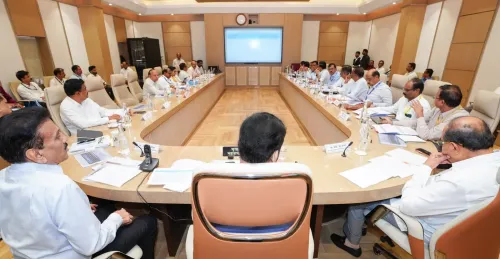
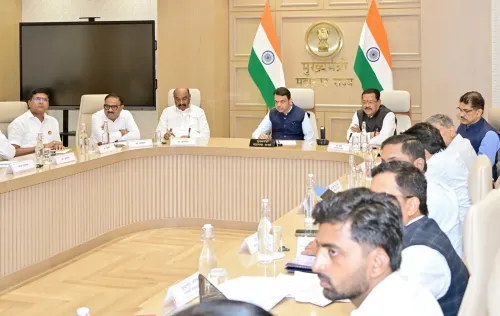
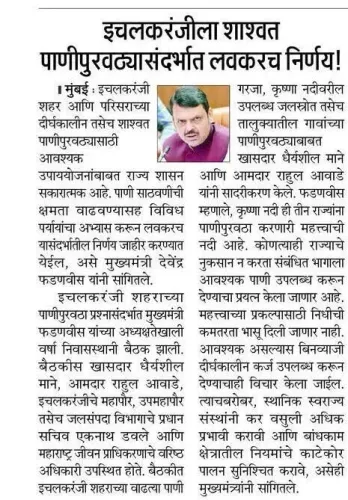
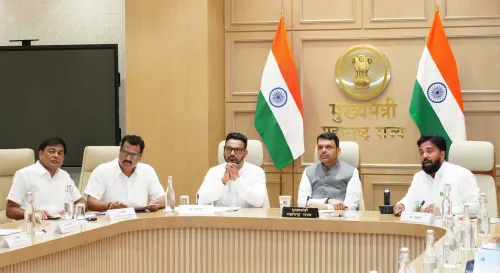
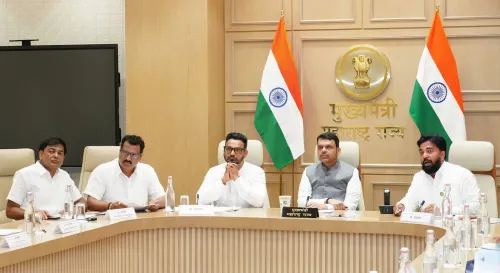
The Chief Minister's Office of Maharashtra announced on Thursday, 18 June 2026 that Chief Minister Devendra Fadnavis chaired a high-level meeting at Varsha, his official Mumbai residence, to address the long-standing water supply crisis in Ichalkaranji, a major textile town in Kolhapur district. The state government signalled it would announce a decision soon after completing a technical, administrative, and financial review of options to augment storage capacity.
Context
Ichalkaranji has faced recurring seasonal water shortages despite its status as one of Maharashtra's most productive industrial centres. The city depends heavily on the Krishna River for its raw water supply, but downstream availability fluctuates with seasonal flows and upstream withdrawals. The meeting on 18 June was convened to accelerate solutions that have been discussed at the administrative level for several years.
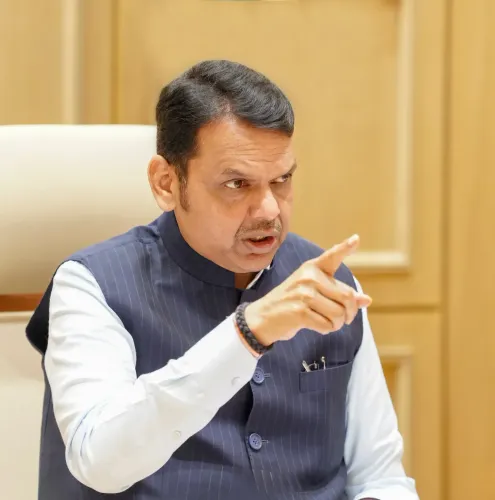
CM Fadnavis was quoted as saying the state government is 'सकारात्मक' (positive) about the measures needed for the long-term and sustainable water supply of Ichalkaranji and its surrounding areas. He added that various options, including increasing water storage capacity, would be studied and a decision announced shortly.
Policy Backdrop
The Krishna River is a shared resource among Maharashtra, Karnataka, and Telangana, with volumetric allocations fixed under a tribunal framework. CM Fadnavis explicitly acknowledged this constraint, stating that water would be made available to the region 'without causing loss to any state.' This language mirrors the standard inter-state coordination posture Maharashtra has maintained on all Krishna basin projects.
Maharashtra has previously pursued storage augmentation programmes — including the Jalyukt Shivar Abhiyan launched in 2016 — to shore up water availability for rural and semi-urban areas. The Ichalkaranji review extends that approach to an industrially significant urban agglomeration where water security directly affects livelihoods in the textile sector.
Stakeholders and Impact
CM Fadnavis assured that funding will not be a constraint for a project of this importance, and that interest-free long-term loans could be considered if required. He also directed local self-government bodies — specifically the Ichalkaranji Municipal Corporation — to improve tax collection efficiency and ensure strict compliance with construction-sector regulations, signalling an expectation of local cost-recovery alongside state support.
The meeting was attended by MP Dhairyasheel Mane, MLA Dr. Rahul Awade, Mayor Uday Dhatunde, Deputy Mayor Adv. Anil Dalya, and senior officials. The presence of elected representatives from across levels of government underlines the political salience of the water issue for the region's residents and its approximately 5 lakh textile-dependent workers.
What's Next
Officials have been directed to examine multiple options for increasing water storage capacity. Once the study is complete, the government will conduct a comprehensive review of technical, administrative, and financial aspects before making a formal announcement. The publication of that technical-financial study and any subsequent order from the irrigation or urban development department will be the key milestone to watch.
The state's commitment to an interest-free long-term loan mechanism, if activated, could serve as a model for other water-stressed industrial towns in Maharashtra that face similar inter-state river allocation constraints.
Point of View
Fadnavis is positioning the state as a responsible steward of the Krishna basin while simultaneously reassuring a textile-belt constituency. The promise of interest-free long-term loans, paired with directives on local tax collection, reflects Maharashtra's standard playbook of state-backed capital with strings attached on fiscal discipline. If the technical study leads to a funded project order, it will validate the government's claim that urban industrial towns can be water-secure within existing tribunal allocations — a precedent with implications for several other Krishna-dependent towns in western Maharashtra.
NationPress
19 Sept 2026
Frequently Asked Questions
Why is Ichalkaranji facing a water shortage?
Ichalkaranji relies on the Krishna River for its water supply, but seasonal fluctuations and upstream withdrawals reduce availability. The city's rapid growth as a textile hub has outpaced its existing water storage and distribution infrastructure.
What did CM Devendra Fadnavis decide at the 18 June 2026 meeting?
CM Fadnavis directed officials to study multiple options for increasing water storage capacity and promised a final decision after a technical, administrative, and financial review. He also assured that funding would not be a constraint.
How does the Krishna River water dispute affect Ichalkaranji?
The Krishna River is shared among Maharashtra, Karnataka, and Telangana under a tribunal award. Any new water project for Ichalkaranji must stay within Maharashtra's allocated share so that the other two states are not adversely affected.
Will the Maharashtra government provide financial assistance for Ichalkaranji's water project?
Yes. CM Fadnavis stated that there will be no funding shortfall for the project and that interest-free long-term loans could be extended if required.
Who attended the Ichalkaranji water supply meeting in Mumbai?
The meeting was attended by MP Dhairyasheel Mane, MLA Dr. Rahul Awade, Ichalkaranji Municipal Corporation Mayor Uday Dhatunde, Deputy Mayor Adv. Anil Dalya, and senior government officials.