CM Fadnavis pays tribute to Sant Kabir Das on Jayanti
Synopsis
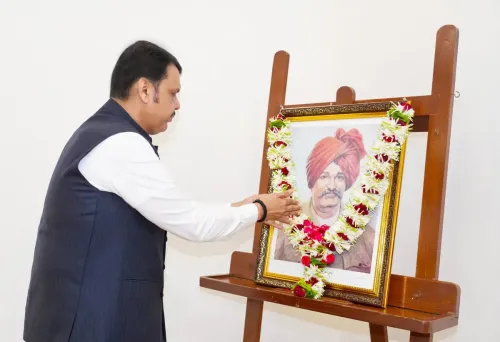
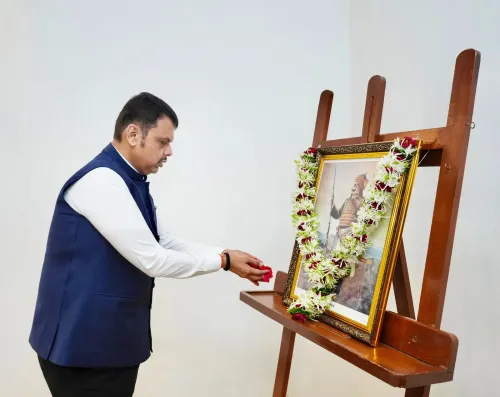
Maharashtra Chief Minister Devendra Fadnavis on 29 June 2026 paid tribute to Sant Kabir Das on his birth anniversary, honouring the 15th-century poet-saint whose vernacular dohas championed social reform, spiritual equality, and devotion across India.
Key Takeaways
Maharashtra Chief Minister Devendra Fadnavis posted a tribute to Sant Kabir Das on 29 June 2026 , marking the saint's birth anniversary.
Fadnavis offered koti koti vandan (countless salutations) in both English and Marathi, highlighting Kabir's role in social reform through dohas.
Sant Kabir Das , traditionally born around 1440 CE in Varanasi , used simple vernacular couplets to challenge caste hierarchy and religious orthodoxy.
Kabir Jayanti is observed on the full moon of the Hindu month of Jyeshtha and is marked by governments and communities across India.
The tribute reflects Maharashtra's own strong tradition of saint-poets and the state's continued engagement with Bhakti-era social reform heritage.
Maharashtra Chief Minister Devendra Fadnavis on Monday, 29 June 2026, paid homage to the 15th-century poet-saint Sant Kabir Das on his birth anniversary, honouring the mystic whose dohas — couplets in simple vernacular — became enduring instruments of social reform and spiritual inquiry across the Indian subcontinent.
Context
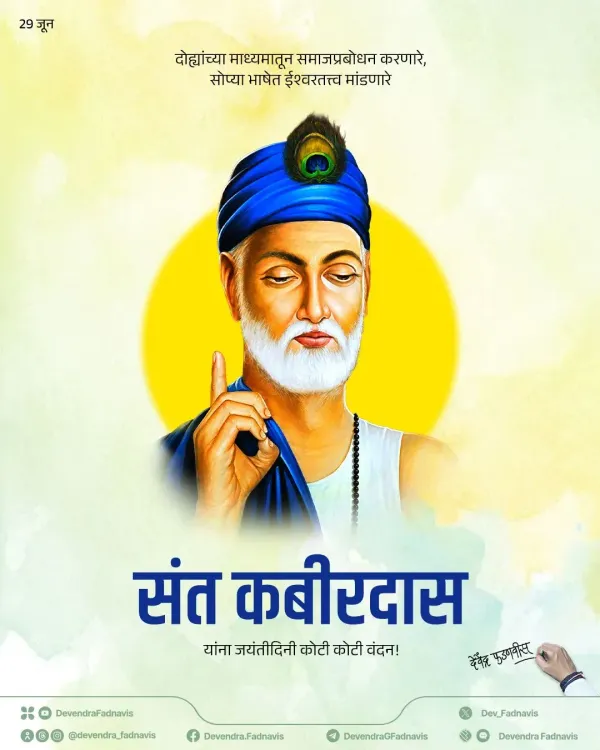
In his post, Fadnavis offered what he described as 'koti koti vandan' (countless salutations) to the saint, writing in both English and Marathi. He recalled Kabir Das as one 'whose dohas inspired social reform and conveyed the deeper meaning of life and devotion,' adding in Marathi that the saint articulated the essence of the divine in simple language — 'सोप्या भाषेत ईश्वरतत्त्व मांडणारे' (one who presented the concept of God in simple words). The tribute was accompanied by an image and was posted from the Chief Minister's official handle.
Policy Backdrop
Sant Kabir Das, believed to have been born in Varanasi in the 15th century (traditionally dated around 1440 CE), was a weaver-poet whose teachings challenged caste hierarchy, religious orthodoxy, and ritualism. His dohas, composed in a dialect accessible to ordinary people, are taught in school curricula across India and remain central to the Bhakti and Sufi traditions. Kabir Jayanti is observed on the full moon day of the Hindu month of Jyeshtha and is commemorated by governments, cultural institutions, and communities nationwide. Political leaders across the spectrum regularly mark the occasion, as Kabir's legacy of social equality and interfaith harmony carries broad resonance in contemporary public discourse.
Stakeholders and Impact
For Maharashtra, a state with a rich tradition of saint-poets including Sant Tukaram and Sant Dnyaneshwar, tributes to figures like Kabir Das connect to a deep cultural vein of Varkari devotionalism and social reform movements. Fadnavis, as Chief Minister, addressing the anniversary in both English and Marathi signals an intent to reach audiences across linguistic communities within the state. Kabir's message of caste-blind devotion also holds particular resonance in a state where social equity and community harmony remain active policy concerns.
What's Next
Observances of Kabir Jayanti typically include readings, cultural programmes, and community gatherings organised by state governments, educational institutions, and Kabir Panth communities across India. The Chief Minister's public tribute is likely to be followed by state-level cultural events in Maharashtra commemorating the saint's legacy. Kabir's teachings on equality and social conscience continue to be invoked in policy conversations around education, communal harmony, and inclusive governance.
Point of View
English-reading public and Maharashtra's Marathi-speaking heartland. Invoking Kabir, a figure revered across caste and religious lines, allows the Chief Minister to align with a broad, non-partisan tradition of social reform. In a state with its own powerful legacy of saint-poets, such tributes also serve to reinforce a governing party's cultural credentials. The choice of Kabir — whose message explicitly transcended religious identity — carries a quiet signal about inclusive governance at a time when communal harmony remains a live political variable.
NationPress
27 Sept 2026
Frequently Asked Questions
Why did CM Fadnavis post about Sant Kabir Das?
Maharashtra Chief Minister Devendra Fadnavis posted a tribute to Sant Kabir Das on 29 June 2026 to mark Kabir Jayanti, the saint's birth anniversary, honouring his legacy of social reform and spiritual devotion through dohas.
When is Kabir Jayanti celebrated in 2026?
Kabir Jayanti in 2026 falls on 29 June, observed on the full moon day of the Hindu month of Jyeshtha, commemorating the birth anniversary of the 15th-century poet-saint Sant Kabir Das.
Who was Sant Kabir Das?
Sant Kabir Das was a 15th-century mystic poet-saint, traditionally born around 1440 CE in Varanasi, who composed dohas in simple vernacular language challenging caste discrimination and religious orthodoxy, influencing both the Bhakti and Sufi traditions.
What does 'koti koti vandan' mean?
'Koti koti vandan' is a Marathi and Hindi phrase meaning 'countless salutations' or 'salutations from millions,' commonly used in India to express deep reverence when paying tribute to revered figures.
What are Kabir Das dohas?
Dohas are rhyming couplets composed by Sant Kabir Das in a simple, accessible dialect. They addressed themes of devotion, social equality, and the nature of God, and are still taught in Indian school curricula and recited widely today.