CM Fadnavis Launches Drug Free Mumbai Awareness Drive

Synopsis
Chief Minister Devendra Fadnavis on 30 July 2026 launched the 'Drug Free Mumbai' campaign — a public awareness and mass oath-taking drive targeting substance abuse in Maharashtra's capital, building on the national Nasha Mukt Bharat Abhiyan framework.
Key Takeaways
Chief Minister Devendra Fadnavis personally presided over the launch of the 'Drug Free Mumbai' campaign on 30 July 2026 .
The campaign combines public awareness drives with a mass community oath-taking format to build social accountability around drug prevention.
The initiative is rooted in the national Nasha Mukt Bharat Abhiyan framework launched in 2020 , adapted for Mumbai's urban context.
Mumbai's youth are the primary target demographic, given their elevated risk profile in urban substance abuse data.
A dedicated digital handle @drugfreemumbai_ and a live-streamed launch signal a sustained, multi-platform campaign arc beyond a single event.
Possible extension to other Maharashtra cities — including Pune, Nagpur, and Thane — is anticipated as the campaign scales.
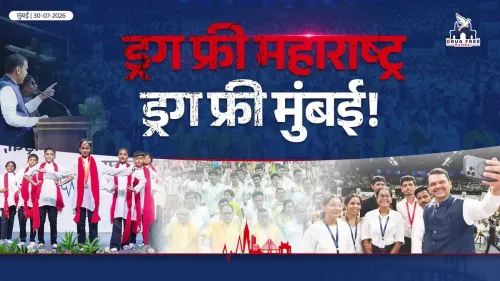
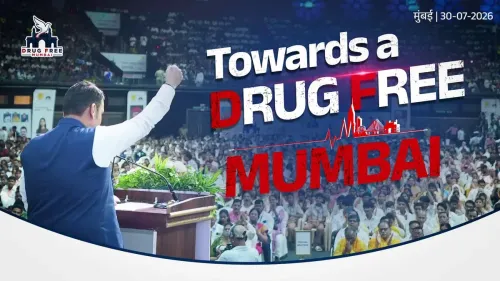
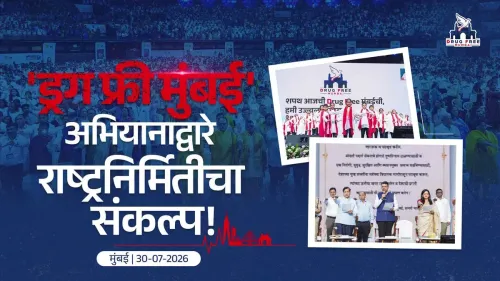
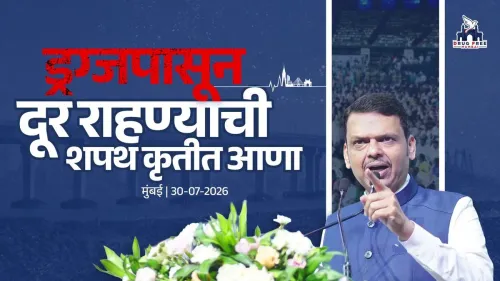
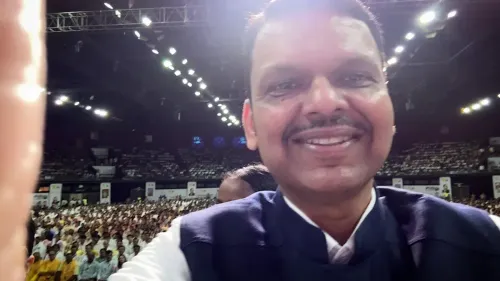
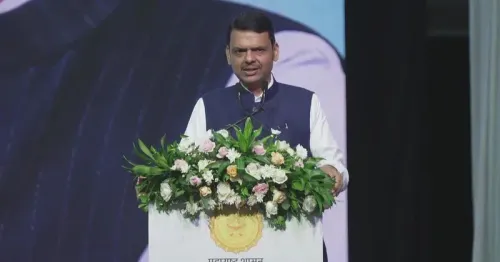
Mumbai has a drug problem — and Chief Minister Devendra Fadnavis is putting his name on the fight to fix it. On Thursday, 30 July 2026, the Chief Minister's Office of Maharashtra announced the formal launch of the 'Drug Free Mumbai' (नशामुक्त मुंबई) public awareness and mass oath-taking campaign, with Fadnavis personally presiding over the inaugural event.
The campaign, tagged with the rallying call 'नशामुक्त मुंबई, आपली जबाबदारी!' — 'A drug-free Mumbai, our responsibility!' — centres on community pledges and public awareness drives aimed at curbing substance abuse in India's most populous city. The Chief Minister's Office live-streamed the launch, signalling a push to maximise public reach from day one.
Mumbai's urban drug challenge and why this moment matters
Mumbai, India's financial capital, has long grappled with substance abuse concentrated in dense urban pockets — from coastal fishing communities to inner-city neighbourhoods. The scale and anonymity of the metropolis make enforcement alone insufficient; public campaigns that shift social norms are seen by health administrators as an essential complement to policing.
The Drug Free Mumbai initiative draws from the architecture of the Nasha Mukt Bharat Abhiyan, the national de-addiction awareness programme launched in 2020, which tasked state governments with running localised drives combining awareness, community pledges, and coordination between police and health departments. Maharashtra's campaign follows that playbook but places the Chief Minister visibly at the centre — a deliberate choice to elevate political accountability for outcomes.
Mass oath-taking as a community mobilisation tool
The collective oath-taking format — saamuhik shapath — is a proven instrument in Indian public-health campaigns, most notably in alcohol and tobacco awareness drives. By asking citizens to pledge publicly, organisers aim to create social accountability that outlasts a single event. Mumbai's youth are the primary target demographic, given that urban adolescents represent the most at-risk cohort in substance abuse data across Indian metros.
Maharashtra has run periodic anti-drug awareness pushes before, but anchoring this one to a live broadcast and a dedicated handle — @drugfreemumbai_ — suggests a longer campaign arc is planned, with digital outreach built in from the start.
What comes next for the campaign
Authorities may extend the Drug Free Mumbai model to other major Maharashtra cities, including Pune, Nagpur, and Thane, in coordination with central ministry guidelines on de-addiction centres. The state police and health departments are expected to be key operational partners as the campaign moves from awareness into enforcement and rehabilitation phases.
A Chief Minister standing at the podium for an anti-drug oath is a statement as much as a ceremony. The real test will be whether the pledge translates into measurable reductions in substance abuse — and whether Maharashtra sustains the momentum past the launch-day headlines.
Point of View
The visible association with an urban welfare cause serves both governance and political optics in a city that is simultaneously Maharashtra's economic engine and its most complex social battleground. The mass oath-taking format reflects a broader Indian administrative tradition of mobilising community norms as a policy instrument, particularly where enforcement capacity is stretched. Whether the campaign produces durable outcomes will depend on the institutional follow-through — de-addiction infrastructure, police coordination, and sustained funding — that tends to determine whether such launches become movements or mere moments.
NationPress
13 Sept 2026
Frequently Asked Questions
What is the Drug Free Mumbai campaign?
'Drug Free Mumbai' is a public awareness and mass oath-taking initiative launched by Maharashtra Chief Minister Devendra Fadnavis on 30 July 2026, aimed at reducing substance abuse in Mumbai through community pledges and awareness drives.
Who launched the Drug Free Mumbai campaign?
Chief Minister Devendra Fadnavis launched the campaign, with the event organised and announced by the Chief Minister's Office of Maharashtra.
What is Nasha Mukt Bharat Abhiyan and how does it relate?
The Nasha Mukt Bharat Abhiyan is a national de-addiction awareness programme launched in 2020 that tasked state governments with running localised drug-prevention drives. Maharashtra's Drug Free Mumbai campaign builds on this national framework.
Who is the target audience of the Drug Free Mumbai campaign?
The campaign primarily targets Mumbai's urban youth , who represent the most at-risk demographic for substance abuse in major Indian metros, alongside the broader city population.
Will the Drug Free Mumbai campaign expand to other cities?
Authorities may extend the campaign model to other Maharashtra cities such as Pune, Nagpur, and Thane , in coordination with central ministry guidelines on de-addiction centres, though no formal announcement has been made yet.