CM Fadnavis Breaks Ground on Free Homes for Sanitation Workers in Nagpur
Synopsis
Maharashtra CM Devendra Fadnavis broke ground on the Swapnapurti Sadanika project in Nagpur on 12 July 2026, announcing that the state government will provide free housing to sanitation workers across Maharashtra under the PMAY-Urban framework — a significant expansion of targeted welfare beyond standard scheme provisions.
Key Takeaways
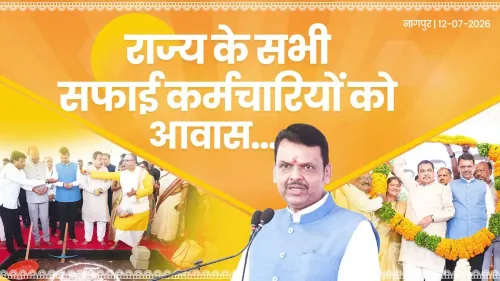
Maharashtra CM Devendra Fadnavis announced free housing for sanitation workers ( Safai Karmacharis ) across the state on 12 July 2026 .
The groundbreaking of the Swapnapurti Sadanika project was held in Nagpur , the state's winter capital and Fadnavis's home constituency.
The initiative is tagged under PMAY-Urban , the Central government's flagship urban housing scheme launched in June 2015 .
Free housing — rather than subsidised or credit-linked units — marks a notable step beyond standard PMAY-Urban provisions for this occupational group.
State budget allocations and possible replication in other Maharashtra municipal corporations such as Mumbai , Pune , and Thane are the key developments to watch.
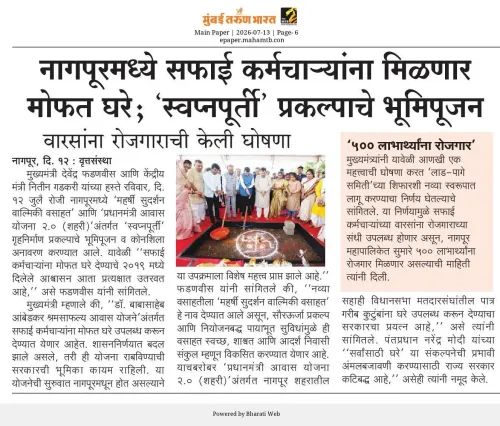
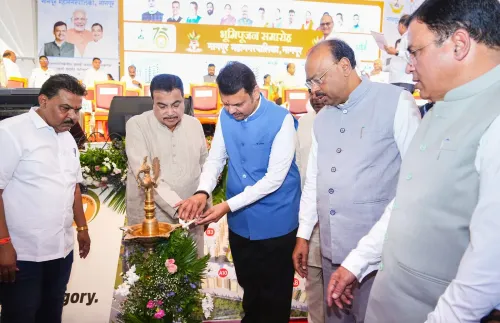
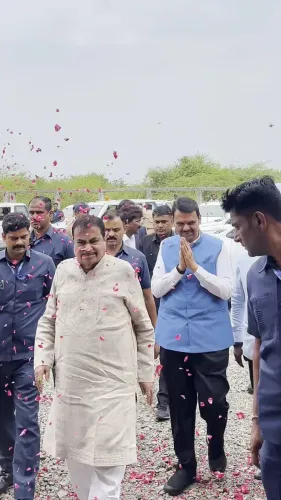
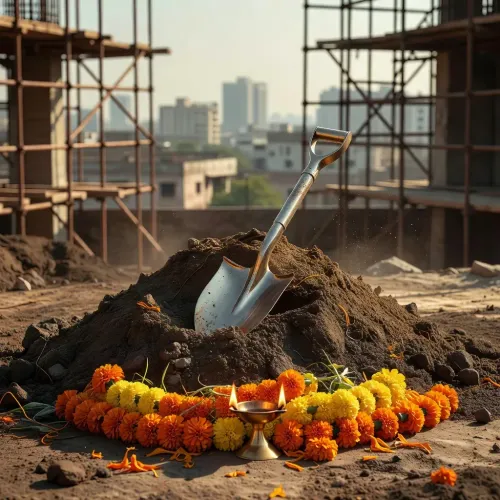
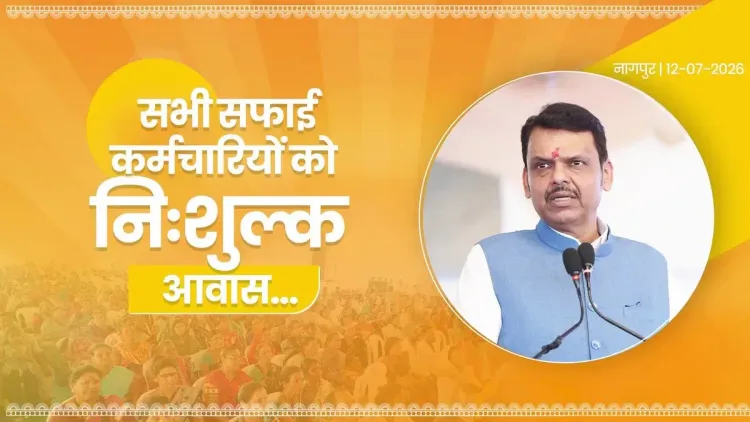
Maharashtra Chief Minister Devendra Fadnavis announced on Sunday, 12 July 2026 that the state government has decided to provide free housing to sanitation workers across Maharashtra, marking the occasion with the groundbreaking of the Swapnapurti Sadanika (Dream-Fulfilment Homes) project in Nagpur.
Context
Posting on X in both Marathi and Hindi, Fadnavis stated: 'Amacha sarkarni rajyatil safai karmacharyanna mofat ghare denyacha nirnay ghetal' — 'Our government has decided to provide free homes to sanitation workers in the state.' The bilingual post underscored the administration's intent to communicate the welfare measure to both Marathi- and Hindi-speaking audiences across Maharashtra.
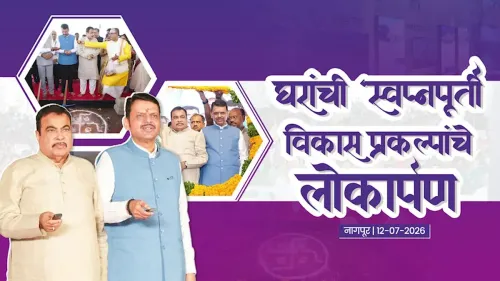
The groundbreaking ceremony was held in Nagpur, the winter capital of Maharashtra and the Chief Minister's home constituency, on 12 July 2026. The project was tagged under #PMAYUrban, signalling its alignment with the Centre's flagship housing scheme.
Policy Backdrop
The Pradhan Mantri Awas Yojana – Urban (PMAY-Urban) was launched by the Government of India in June 2015 with the objective of providing pucca housing to eligible urban households through in-situ slum redevelopment, credit-linked subsidies, and affordable housing partnerships. The scheme was originally targeted at housing for all urban poor by 2022 and has since been extended with additional verticals.
Maharashtra governments have periodically announced supplementary benefits under PMAY-Urban for specific occupational groups. Sanitation workers — known as Safai Karmacharis — have been a recurring focus of such targeted announcements, consistent with the broader Swachh Bharat Mission's emphasis on the dignity and welfare of those employed in municipal sanitation. Similar targeted housing measures have been announced for municipal workers and informal-sector employees in other states as well.
Stakeholders and Impact
Sanitation workers in Maharashtra's urban areas stand as the primary beneficiaries of this initiative. This occupational group has historically faced precarious housing conditions despite performing essential civic services, and free housing — as opposed to subsidised or credit-linked units — represents a significant step beyond standard PMAY-Urban provisions.
Nagpur, as the site of the first groundbreaking, is positioned as the pilot location. Urban poor households in other Maharashtra municipal corporations may also be watching for replication announcements, particularly as the state budget cycle progresses.
What's Next
Attention will now shift to state budget allocations earmarked for the Swapnapurti Sadanika project and the timeline for delivery of completed units in Nagpur. The government's decision to brand the initiative separately — rather than route it purely through PMAY-Urban's existing verticals — suggests an intent to give the sanitation-worker component a distinct political and administrative identity.
If the Nagpur project proceeds on schedule, it could serve as a template for similar groundbreakings in Mumbai, Pune, Thane, and other large Maharashtra municipal corporations, expanding the welfare footprint of the Fadnavis administration ahead of future electoral cycles.
Point of View
Numerically significant, and historically underserved — in this case, sanitation workers whose daily labour underpins urban civic life. By branding the initiative separately from the standard PMAY-Urban framework, the Fadnavis administration is crafting a distinct political identity around Safai Karmachari welfare rather than simply riding on Central scheme credit. Choosing Nagpur — the CM's own constituency and Maharashtra's winter capital — as the launch site maximises both administrative symbolism and local political dividend. The broader arc here is one of competitive welfare politics: as multiple state governments race to extend housing benefits to informal and occupational groups, the test will be whether project delivery matches the groundbreaking optics.
NationPress
11 Oct 2026
Frequently Asked Questions
What is the Swapnapurti Sadanika project in Nagpur?
Swapnapurti Sadanika is a housing project launched by the Maharashtra government to provide free homes to sanitation workers in the state. Its groundbreaking was held in Nagpur on 12 July 2026 by Chief Minister Devendra Fadnavis.
Who will benefit from Maharashtra's free housing scheme for sanitation workers?
Sanitation workers — Safai Karmacharis — employed in Maharashtra's urban areas are the primary beneficiaries. The scheme aims to provide them with free housing units under the PMAY-Urban framework.
Is this scheme connected to PMAY-Urban?
Yes. The Maharashtra government has tagged the initiative under PMAY-Urban, the Central government's Pradhan Mantri Awas Yojana for urban households, though it is being given a distinct branding as the Swapnapurti Sadanika project.
What did CM Devendra Fadnavis say about the housing scheme?
Fadnavis stated in both Marathi and Hindi that 'our government has decided to provide free homes to sanitation workers in the state,' announcing the decision alongside the Nagpur groundbreaking ceremony on 12 July 2026.
Will the free housing scheme for sanitation workers expand to other Maharashtra cities?
The Nagpur project is the first groundbreaking under the initiative. State budget allocations and possible replication in other Maharashtra municipal corporations such as Mumbai, Pune, and Thane are being closely watched.