Marathi to become language of AI and knowledge: CM Fadnavis at Classical Language Week
Synopsis
Marathi has over 1.1 million words in its encyclopaedic tradition — nearly double the Oxford English Dictionary — yet its official government dictionary lists only 300,000. At the launch of Classical Marathi Language Week, CM Fadnavis framed closing that gap, and building 'Marathi AI', as the next frontier for a language that just earned classical status from the Centre.
Key Takeaways
CM Devendra Fadnavis launched 'Classical Marathi Language Week' and 'Classical Marathi Language Honour Day' in Mumbai on 3 October 2026 .
Marathi has recently been granted classical language status by the Central Government under PM Narendra Modi .
The Marathi Gnyankosh and Shabdaratnakar together contain 1.1–1.3 million words , compared to 600,000 in the Oxford English Dictionary.
Fadnavis called for developing 'Marathi AI' and integrating the language with quantum computing, space technology, and biotechnology .
A 'Global Marathi Centre' in London , a Centre of Excellence at Deccan University, Pune , and nine Marathi Skill Development Centres are planned.
Marathi ranks 13th among the most spoken languages in the world , according to Fadnavis.
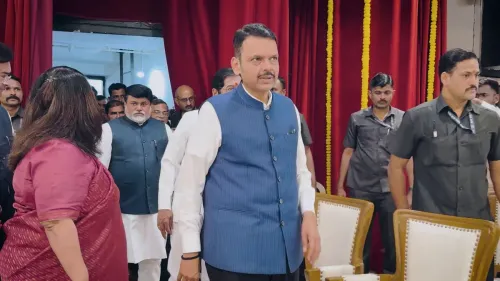
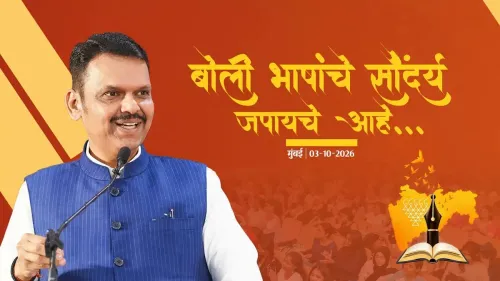
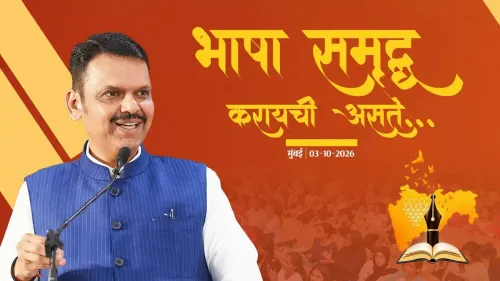
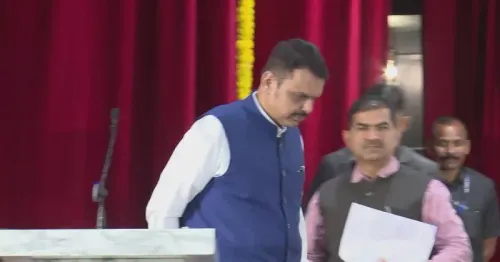
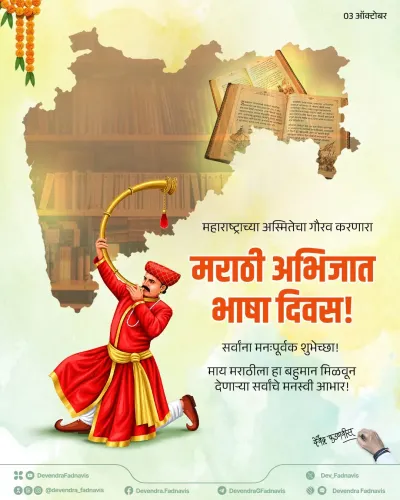
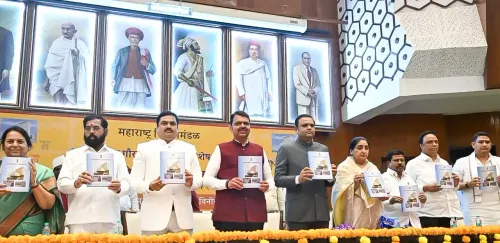
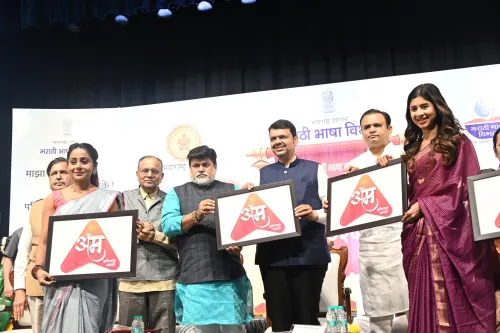
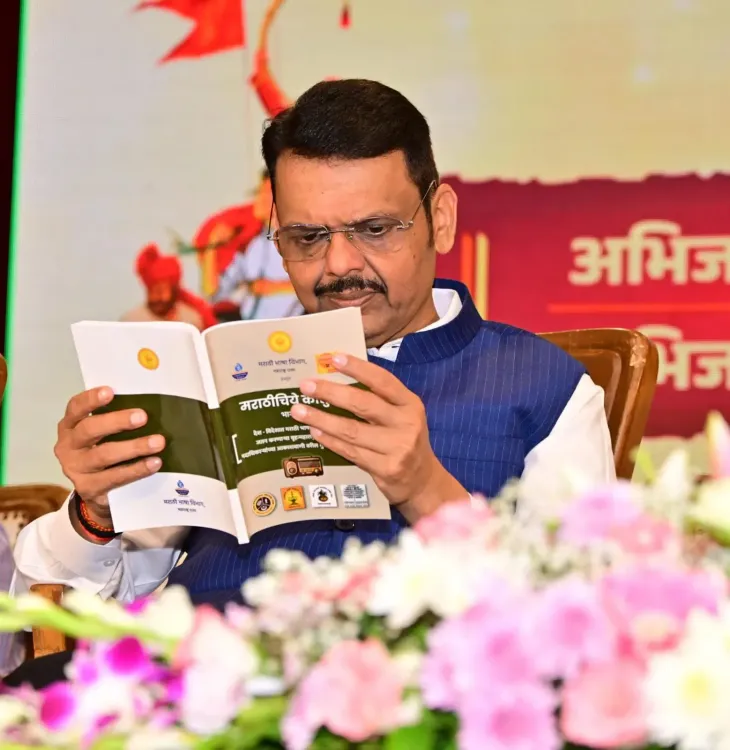
Maharashtra Chief Minister Devendra Fadnavis on Saturday, 3 October 2026, declared that Marathi will be transformed into a language of knowledge for the 21st century, urging its integration with cutting-edge domains including Artificial Intelligence (AI), quantum computing, space technology, and biotechnology. Speaking at the launch of 'Classical Marathi Language Week' and 'Classical Marathi Language Honour Day' in Mumbai, Fadnavis framed the event as a milestone moment following Marathi's recent conferral of classical language status by the Central Government.
Classical Status and Cultural Pride
Fadnavis described Marathi as 'inherently ancient and classical', stating that the Central Government's formal recognition under Prime Minister Narendra Modi has elevated Maharashtra's linguistic and cultural heritage to the national stage. He invoked the legacy of Chhatrapati Shivaji Maharaj, who had championed Marathi in state administration alongside his vision of Swarajya, drawing a line of continuity from historical precedent to the present push for modernisation.
The Chief Minister noted that Marathi ranks 13th among the most spoken languages in the world, underlining its global reach beyond Maharashtra's borders.
A Vocabulary That Rivals the World
Fadnavis cited striking lexicographical data to make the case for Marathi's depth. The Marathi Encyclopedia (Gnyankosh) and Shabdaratnakar, both compiled in the 20th century, together contain between 1.1 million and 1.3 million words. By comparison, the Oxford English Dictionary holds around 600,000 words, while languages such as Mandarin, Spanish, and French carry roughly 300,000 to 350,000 words each.
The official Marathi dictionary currently published by the Maharashtra state government contains approximately 300,000 words. Fadnavis stressed the need to work on subsequent editions to bring this count up to 1.3 million words, arguing that the language's vast lexical wealth must be mobilised for modern knowledge creation — not preserved merely as a matter of pride.
The Digital and AI Roadmap
Fadnavis called for developing 'Marathi AI' to expand the language's footprint across digital platforms, social media, and OTT content. He argued that integrating Marathi with new technology — rather than confining it to traditional use — is essential to ensure the language remains relevant to younger generations. Making science, technology, economics, education, and research resources accessible in Marathi, he said, would be the true measure of elevating it to a language of knowledge.
This comes amid a broader national conversation about regional languages in the digital era, with states such as Tamil Nadu and Karnataka also pressing for stronger technological infrastructure for their classical languages.
What the Deputy CM and Ministers Said
Deputy Chief Minister Eknath Shinde said Marathi is not merely Maharashtra's identity but its 'self-respect', tracing the language's journey from Saint Dnyaneshwar to Chhatrapati Shivaji Maharaj and its spread across oceans in the modern era. He pledged to accelerate Marathi's global expansion, highlighting digital media, social networks, podcasts, gaming, and coding as priority domains for outreach to younger speakers.
Minister of Marathi Language Uday Samant outlined several concrete initiatives already underway: a 'Centre of Excellence' for Marathi at Deccan University in Pune; a 'Global Marathi Centre' named after Chhatrapati Shivaji Maharaj in London; 100 dictionaries covering various regional dialects across Maharashtra; and nine 'Marathi Skill Development Centres' across the state.
What Comes Next
With institutional infrastructure being built — from the Pune centre of excellence to the London global hub — the Maharashtra government is signalling a sustained, multi-front effort rather than a one-off celebration. The extent to which these initiatives translate into usable digital and AI resources for Marathi speakers will be closely watched by linguistic communities and technology stakeholders alike.
Point of View
But India's track record of language-tech initiatives is patchy: Telugu and Tamil have had classical status for years with modest digital-resource outcomes. The vocabulary gap Fadnavis himself flagged — a 300,000-word official dictionary against a 1.3-million-word encyclopaedic tradition — is the more urgent problem, and closing it requires sustained funding and scholarly coordination, not just a week-long celebration. Whether these announcements are backed by budget allocations will be the real test of intent.
NationPress
3 Oct 2026
Frequently Asked Questions
What is the 'Classical Marathi Language Week' launched by CM Fadnavis?
'Classical Marathi Language Week' is a state government initiative launched in Mumbai on 3 October 2026 to celebrate and promote Marathi following its recognition as a classical language by the Central Government. The event also marked the launch of 'Classical Marathi Language Honour Day' and outlined a roadmap for integrating Marathi with AI and digital technology.
When did Marathi get classical language status?
Marathi was conferred classical language status by the Central Government under Prime Minister Narendra Modi, with CM Fadnavis describing it as a moment of pride for all Marathi speakers. The exact date of the Centre's gazette notification was not specified at the event, but the Maharashtra government launched the celebratory week on 3 October 2026.
How many words does Marathi have compared to English?
According to CM Fadnavis, the Marathi Gnyankosh (Encyclopedia) and Shabdaratnakar — both compiled in the 20th century — together contain between 1.1 million and 1.3 million words, compared to around 600,000 in the Oxford English Dictionary. However, the official state government Marathi dictionary currently lists only about 300,000 words.
What is 'Marathi AI' and why is the government pushing for it?
'Marathi AI' refers to the development of artificial intelligence tools and digital resources in the Marathi language, as proposed by CM Fadnavis. The government sees it as essential to keeping Marathi relevant for younger generations and expanding its presence on digital platforms, OTT services, and social media.
What new institutions are being set up for the Marathi language?
Minister of Marathi Language Uday Samant announced four key initiatives: a Centre of Excellence for Marathi at Deccan University in Pune; a Global Marathi Centre named after Chhatrapati Shivaji Maharaj in London; 100 dictionaries covering regional dialects across Maharashtra; and nine Marathi Skill Development Centres across the state.