CM Fadnavis Attends Nagpur Airport Handover Ceremony

Synopsis
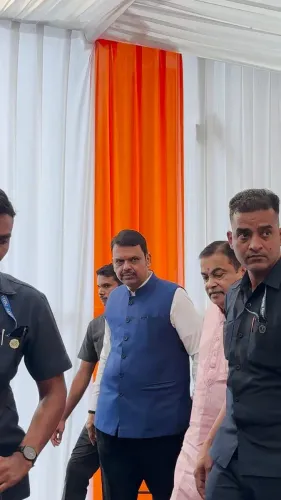
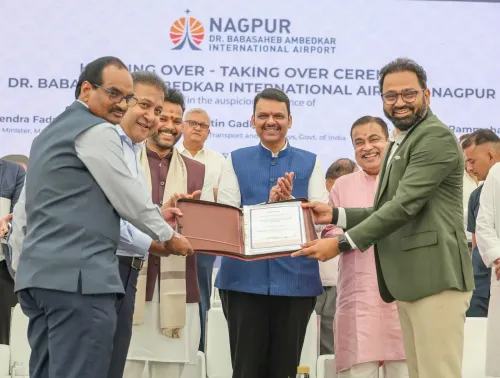
Maharashtra CM Devendra Fadnavis and Union Minister Nitin Gadkari attended the handing over-taking over ceremony of Dr. Babasaheb Ambedkar International Airport in Nagpur on 25 June 2026, marking a key operational transition for the central India aviation hub built under the MIHAN project.
Key Takeaways
Maharashtra CM Devendra Fadnavis attended the handing over-taking over ceremony of Dr.
Babasaheb Ambedkar International Airport, Nagpur on 25 June 2026 .
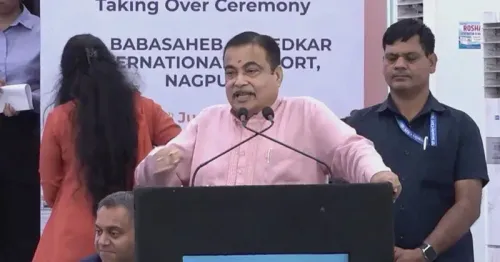
Union Minister Nitin Gadkari , who represents the Nagpur constituency, was also present at the ceremony.
The airport is central to the MIHAN project, which positions Nagpur as a multi-modal international cargo hub in central India.
The operational handover is expected to precede announcements on capacity expansion, service upgrades, or changes in managing authority.
The joint presence of state and central leadership signals strong political backing for Nagpur's continued development as a regional aviation hub.
Maharashtra Chief Minister Devendra Fadnavis attended the handing over-taking over ceremony of Dr. Babasaheb Ambedkar International Airport in Nagpur on 25 June 2026, marking a significant operational transition for the city's primary aviation gateway. The event, held at 11:58 AM, was also attended by Union Minister Nitin Gadkari, who represents the Nagpur constituency and has long championed regional connectivity projects in central India.
Context
Dr. Babasaheb Ambedkar International Airport is Nagpur's principal airport, named in honour of Dr. B.R. Ambedkar, and has been developed as part of sustained efforts to establish an international aviation hub in central India. The handover ceremony signals a formal change in operational responsibility — a procedural milestone that typically precedes expanded services, upgraded facilities, or a shift in the managing authority's mandate. CM Fadnavis live-streamed the event on X, underlining the state government's intent to keep citizens directly informed of infrastructure milestones.
Policy Backdrop
The ceremony fits within the broader arc of Nagpur's transformation as a multi-modal logistics and connectivity hub, anchored by the MIHAN (Multi-modal International Cargo Hub and Airport at Nagpur) project initiated in the mid-2000s. MIHAN was designed to leverage Nagpur's near-geographic-centre position in India to attract aviation, logistics, and manufacturing investments. Successive state and central governments have treated the airport and its surrounding special economic zone as a flagship example of balanced regional development — channelling infrastructure investment beyond the country's established metro corridors.
India's broader aviation expansion programme has prioritised second-tier and regional airports, with operational transitions and capacity upgrades forming a recurring pattern across the country. Coordination between state governments and central ministries — exemplified here by the joint presence of CM Fadnavis and Union Minister Gadkari — has been the standard model for advancing such projects.
Stakeholders and Impact
The most immediate beneficiaries of any post-handover improvements will be air passengers using Nagpur as an origin, destination, or transit point, as well as businesses in the Vidarbha region that depend on cargo and passenger connectivity. Nagpur's central location makes it a natural node for both domestic and international routes, and any capacity or service enhancement at the airport has downstream effects on trade, tourism, and investment in the wider region. Local industry bodies and logistics operators are likely to watch post-transition announcements closely for signals on expanded flight schedules or terminal upgrades.
What's Next
The formal handover sets the stage for follow-up announcements on operational changes, including potential shifts in the managing authority's service standards, new route additions, or phased infrastructure upgrades. Stakeholders will look to both the Maharashtra state government and the Union civil aviation ministry for a roadmap on how the transition translates into tangible improvements for passengers and cargo operators. The involvement of senior political leadership at the ceremony suggests that further policy or investment announcements tied to Dr. Babasaheb Ambedkar International Airport may follow in the near term.
Point of View
Blurring the line between governance and political communication. The handover also fits a national pattern in which the Centre and state governments jointly claim credit for aviation investments, reinforcing the cooperative federalism narrative. Longer term, how quickly tangible improvements follow the ceremony will determine whether the optics translate into durable public confidence in Nagpur's aviation ambitions.
NationPress
24 Sept 2026
Frequently Asked Questions
What happened at Nagpur airport on 25 June 2026?
A formal handing over-taking over ceremony was held at Dr. Babasaheb Ambedkar International Airport in Nagpur on 25 June 2026, marking an operational transition for the airport. Maharashtra CM Devendra Fadnavis and Union Minister Nitin Gadkari attended the event.
Who is Dr. Babasaheb Ambedkar International Airport named after?
The airport is named after Dr. B.R. Ambedkar, the principal architect of the Indian Constitution and a towering figure in Indian social and political history.
What is the MIHAN project in Nagpur?
MIHAN stands for Multi-modal International Cargo Hub and Airport at Nagpur. Initiated in the mid-2000s, it is a large-scale project designed to develop Nagpur as an international aviation and logistics hub, leveraging the city's near-central location in India.
Why is Nitin Gadkari associated with Nagpur airport?
Nitin Gadkari is the Union Minister representing the Nagpur Lok Sabha constituency and has been a long-standing advocate for infrastructure and connectivity projects in the region, making him a key political stakeholder in the airport's development.
What changes can passengers expect after the Nagpur airport handover?
Specific post-handover changes have not yet been announced. Typically, such transitions are followed by updates on flight schedules, passenger facility upgrades, or shifts in the managing authority's operational mandate, which are expected to be detailed in subsequent announcements.