Gadkari attends Nagpur airport handover to GMR Group
Synopsis
Union Minister Nitin Gadkari attended the formal handover of Dr. Babasaheb Ambedkar International Airport in Nagpur to GMR AERO on 25 June 2026, marking a key step in India's airport privatisation drive and Central India's push to become a major trade and logistics hub.
Key Takeaways
Babasaheb Ambedkar International Airport, Nagpur was formally handed over to GMR AERO on 25 June 2026 under a public-private partnership model.
Union Minister Nitin Gadkari , Maharashtra CM Devendra Fadnavis , MP Praful Patel , and GMR Group Chairman GBS Raju were among dignitaries present at the ceremony.
GMR AERO is described as Asia's largest private airport operator, already managing airports in Delhi and Hyderabad .
Nagpur is positioned at India's geographic centre and is a key node for trade, logistics, manufacturing, and commerce.
The handover aligns with the government's policy of transferring select AAI airports to private operators for modernisation and capacity expansion, a direction set since 2014 .
Integration with the MIHAN multi-modal logistics project and launch of new air routes are the next milestones to watch.
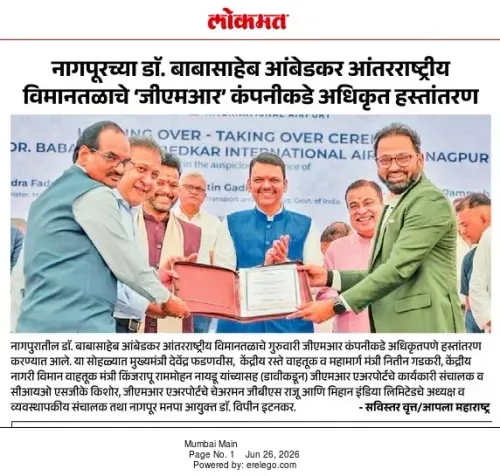
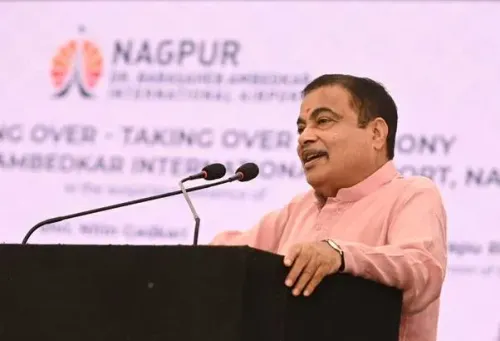
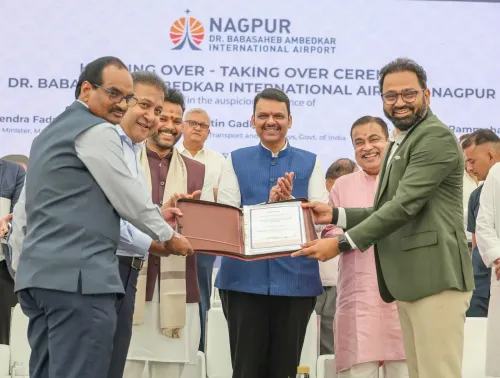
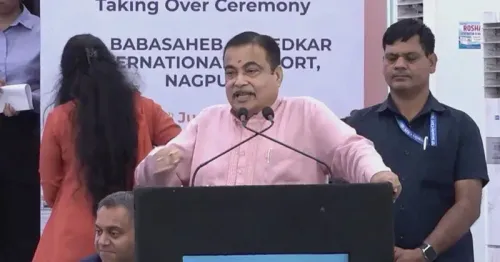
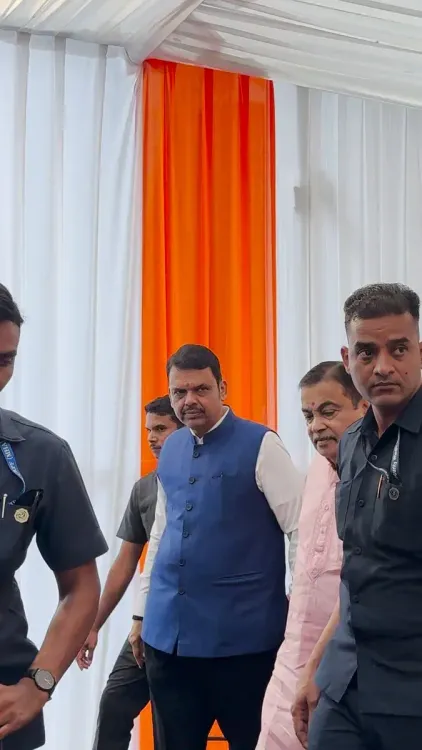
Union Road Transport and Highways Minister Nitin Gadkari on Thursday, 25 June 2026 attended the Handing Over–Taking Over Ceremony of Dr. Babasaheb Ambedkar International Airport, Nagpur, marking the formal transfer of the airport's operations to GMR AERO under a public-private partnership model. The event was held in the presence of Maharashtra Chief Minister Devendra Fadnavis, Union Minister Ram Mohan Naidu, Member of Parliament Praful Patel, and GMR Group Chairman GBS Raju, among other senior officials and elected representatives.
Context
Gadkari described the development as 'a major step forward in enhancing aviation connectivity in Central India,' noting that Nagpur is 'strategically positioned at the heart of the country' and serves as 'a key centre for trade, logistics, manufacturing, and commerce.' The ceremony formalised the handover of the airport from the Airports Authority of India (AAI) to GMR AERO, Asia's largest private airport operator, which already manages major facilities in Delhi and Hyderabad.
The minister expressed gratitude to Prime Minister Narendra Modi and Union Civil Aviation Minister K. Rammohan Naidu for their 'steadfast commitment to world-class infrastructure, fostering inclusive growth and enhancing the quality of life for citizens across the nation.'
Policy Backdrop
The transfer is consistent with a policy direction established under the 2016 National Civil Aviation Policy, which set targets for regional airport development and encouraged PPP-based modernisation. Since 2014, the central government has progressively handed select AAI-managed airports to private operators to improve capacity, efficiency, and passenger experience.
Nagpur holds particular strategic importance as it sits near the geographic centre of India, making it a natural node for both domestic air traffic and freight movement. The city is also home to the Multi-modal International Hub Airport at Nagpur (MIHAN) project, a long-running initiative to develop the region into a logistics and manufacturing corridor.
Stakeholders and Impact
The modernisation and expansion of Dr. Babasaheb Ambedkar International Airport is expected to benefit aviation passengers, logistics firms, and manufacturers across Central India by improving connectivity and reducing transit times. GMR AERO has committed to sustained investments in community welfare and CSR initiatives alongside its infrastructure development mandate, according to Gadkari's remarks at the ceremony.
For GMR Group, the Nagpur concession adds a strategically located inland airport to its portfolio and reinforces its position as a leading global airport infrastructure developer. Elected representatives including Mayor of Nagpur Nita Thakre and Shyam Kumar Barve were present, signalling broad local stakeholder engagement in the transition.
What's Next
Attention will now turn to the phased expansion timeline for the airport, including the launch of new domestic and international routes that could deepen Nagpur's role as a secondary aviation hub complementing coastal gateways such as Mumbai and Chennai. Integration with the broader MIHAN logistics project will also be closely watched as a measure of whether the PPP handover translates into tangible regional economic growth.
The Nagpur handover adds momentum to India's broader airport privatisation programme at a time when the country is positioning itself as one of the world's fastest-growing aviation markets, with inland cities increasingly seen as the next frontier for capacity expansion.
Point of View
With inland tier-two cities now firmly in the crosshairs. Gadkari's presence at what is technically a civil aviation event underscores the government's framing of airport infrastructure as inseparable from road, logistics, and manufacturing corridors — a whole-of-government pitch for Nagpur's economic centrality. The optics of having Maharashtra CM Fadnavis, a sitting MP of Praful Patel's stature, and the GMR chairman on the same stage signal that this handover carries political weight beyond a routine administrative transfer. For GMR, securing Nagpur deepens its inland footprint and hedges against the saturation risks at its existing metro hubs.
NationPress
24 Sept 2026
Frequently Asked Questions
What happened at Nagpur airport on 25 June 2026?
Dr. Babasaheb Ambedkar International Airport in Nagpur was formally handed over to GMR AERO from the Airports Authority of India at a ceremony attended by Union Minister Nitin Gadkari, Maharashtra CM Devendra Fadnavis, and GMR Group Chairman GBS Raju, among others.
Who is GMR AERO and why is it significant?
GMR AERO is the airport infrastructure arm of GMR Group, described as Asia's largest private airport operator. It already manages major airports in Delhi and Hyderabad, and the Nagpur concession expands its footprint to a strategically located inland city.
Why is Nagpur airport important for Central India?
Nagpur sits at India's geographic centre, making it a natural hub for domestic aviation, freight movement, and trade. It is also linked to the MIHAN multi-modal logistics project, which aims to develop the region into a major manufacturing and logistics corridor.
What is India's policy on airport privatisation?
Since 2014, the central government has progressively transferred select AAI-managed airports to private operators under PPP concessions to improve capacity and efficiency. The 2016 National Civil Aviation Policy formalised targets for regional airport development and encouraged private participation.
What are the next steps after the Nagpur airport handover?
Key milestones include the rollout of a phased expansion plan, launch of new domestic and international routes, and deeper integration with the MIHAN logistics project, all of which will determine whether the handover delivers tangible economic benefits for Central India.