CM Fadnavis Pushes to Name Navi Mumbai Airport After D.B. Patil
Synopsis
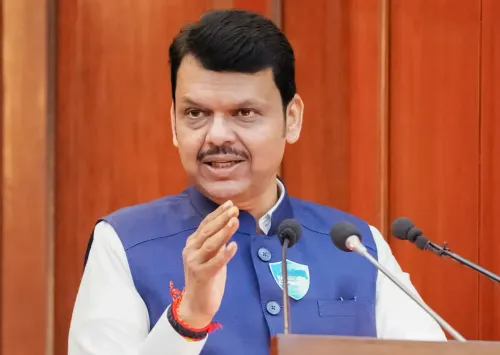
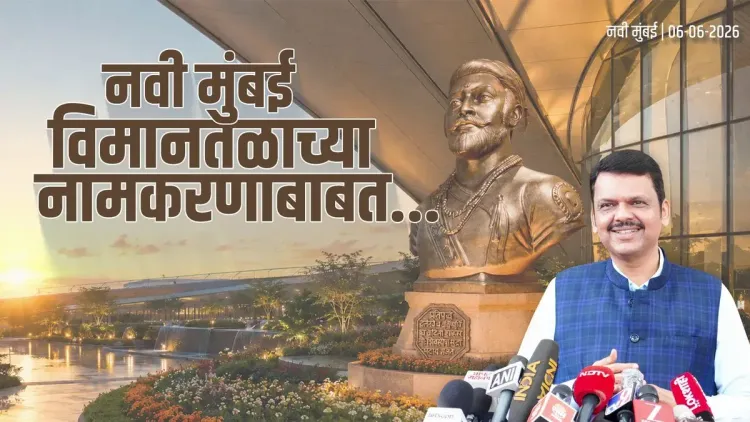
Maharashtra Chief Minister Devendra Fadnavis on 6 June 2026 publicly insisted that the Navi Mumbai International Airport be named after late Konkan leader Loknete D.B. Patil, posting the demand in both Marathi and Hindi at a Navi Mumbai event.
Key Takeaways
CM Devendra Fadnavis on 6 June 2026 publicly demanded that Navi Mumbai International Airport be named after late leader Loknete D.B.
The demand was posted bilingually — in Marathi and Hindi — signalling an effort to build broad regional consensus.
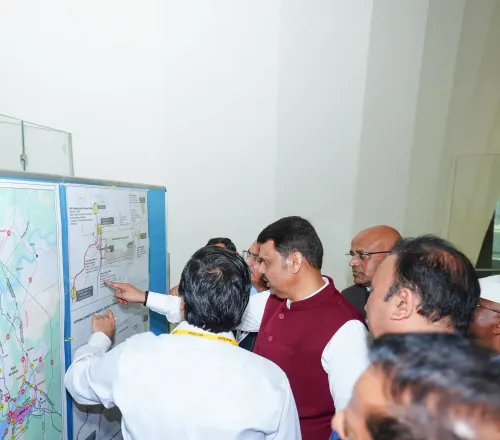
The Navi Mumbai International Airport is a long-pending greenfield project meant to relieve congestion at Mumbai's existing airport .
Patil was a prominent political figure from the Konkan region , the area the new airport will primarily serve.
A formal naming decision requires coordination between the Maharashtra state government and the Union Ministry of Civil Aviation .
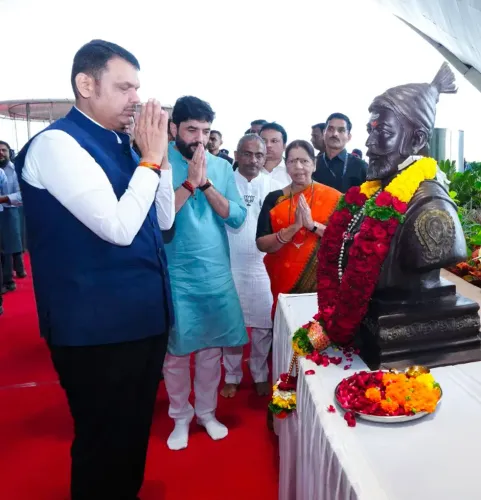
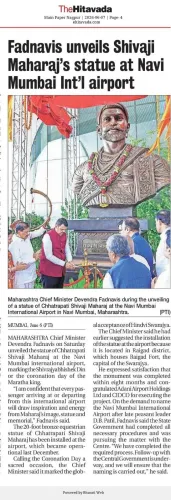
The announcement was made at a public event that also referenced a Chhatrapati Shivaji Maharaj statue unveiling , linking infrastructure and cultural commemoration.
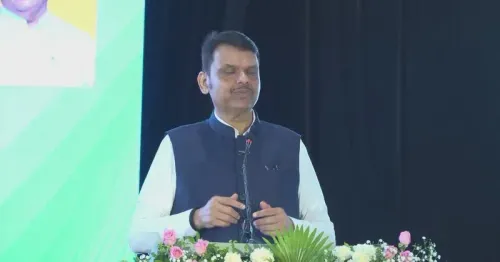
Maharashtra Chief Minister Devendra Fadnavis on Saturday, 6 June 2026, publicly reiterated his demand that the upcoming Navi Mumbai International Airport be named after the late regional leader Loknete D.B. Patil, underscoring the state government's firm stance on the issue at an event in Navi Mumbai.
Context
Posting in both Marathi and Hindi for maximum reach, Fadnavis wrote: 'नवी मुंबई आंतरराष्ट्रीय विमानतळाला लोकनेते स्व. दि. बा. पाटील यांचेच नाव दिले जावे, यासाठी आम्ही आग्रही' — 'We are insistent that the Navi Mumbai International Airport be named after the late Loknete Di. Ba. Patil.' The bilingual post signals an attempt to build consensus across Maharashtra's Marathi- and Hindi-speaking communities on the naming demand.
The post was made on the occasion of a public event in Navi Mumbai on 6 June 2026, which also carried references to Chhatrapati Shivaji Maharaj and a statue unveiling, linking infrastructure commemoration with cultural assertion — a pattern common to Maharashtra's public-event calendar.
Policy Backdrop
The Navi Mumbai International Airport is a major greenfield project designed to ease the severe congestion at Mumbai's existing Chhatrapati Shivaji Maharaj International Airport and serve the broader Mumbai Metropolitan Region. The project received initial central government in-principle approval in the mid-2000s, making it one of India's longest-gestating airport infrastructure proposals.
Naming public infrastructure after political figures or historical icons is a well-established practice across Indian states. Maharashtra has a particularly active tradition of such commemorations, running parallel to large-scale infrastructure drives in the Konkan region and the Mumbai Metropolitan Region. D.B. Patil, known as Loknete (People's Leader), was a prominent figure associated with the Konkan belt — the region that Navi Mumbai's new airport is set to serve most directly.
Stakeholders and Impact
The naming question carries significance for residents of the Konkan region, where D.B. Patil built his political legacy, as well as for the broader community of Mumbai Metropolitan Region commuters and the aviation sector. For Patil's supporters and political inheritors, an airport bearing his name would represent lasting institutional recognition.
The demand also has electoral resonance: the Konkan coastal belt and the Navi Mumbai urban zone together constitute an important constituency for the ruling BJP-led Maharashtra government. A formal naming decision would require coordination between the state government and the central government's civil aviation ministry, since airports fall under concurrent jurisdiction.
What's Next
The immediate watch-point is whether Fadnavis's public declaration translates into a formal cabinet resolution or a proposal forwarded to the Union Ministry of Civil Aviation for approval. Any such move would set off a consultative process involving the Airports Authority of India and the project's concessionaire. The airport's own construction and commissioning milestones will also determine when the naming question becomes operationally urgent — making the coming months critical for both the infrastructure timeline and the political symbolism attached to it.
Point of View
Public declaration on the airport naming is a calculated political move — it simultaneously honours a Konkan icon, consolidates BJP's base in the Mumbai Metropolitan Region, and signals to the central government that the state has a clear preference. The timing, at a public event invoking Chhatrapati Shivaji Maharaj, frames the demand within Maharashtra's broader cultural-nationalist discourse, lending it moral weight beyond routine infrastructure politics. Naming demands of this kind often precede formal cabinet resolutions, suggesting this may be the opening salvo of an official process. How the Union civil aviation ministry responds will reveal the degree of Centre-state alignment on Maharashtra's infrastructure and identity agenda.
NationPress
19 Sept 2026
Frequently Asked Questions
Why does Devendra Fadnavis want to name Navi Mumbai Airport after D.B. Patil?
Chief Minister Devendra Fadnavis has publicly stated his insistence that the airport be named after the late Loknete D.B. Patil in recognition of Patil's legacy as a prominent leader from the Konkan region, which the new airport will primarily serve.
What is the Navi Mumbai International Airport project?
The Navi Mumbai International Airport is a major greenfield airport project planned to relieve congestion at Mumbai's existing airport and cater to the growing aviation demand of the Mumbai Metropolitan Region. It received initial central government in-principle approval in the mid-2000s.
How does an airport get officially named in India?
Airport naming in India typically requires a proposal from the state government, followed by approval from the Union Ministry of Civil Aviation and coordination with the Airports Authority of India or the relevant concessionaire, making it a Centre-state joint decision.
When did Fadnavis make the D.B. Patil airport naming demand?
Fadnavis made the demand publicly on 6 June 2026 at an event in Navi Mumbai, posting the statement in both Marathi and Hindi on his official X account.