CM Fadnavis Announces ₹1,000 Crore Elevated Corridor for Solapur
Synopsis
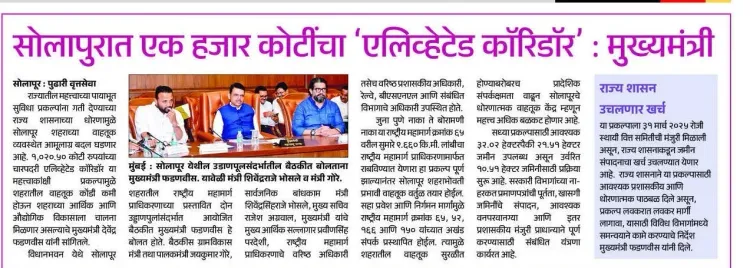
Chief Minister Devendra Fadnavis has announced a ₹1,000 crore elevated corridor for Solapur, extending Maharashtra's urban mobility push to a key industrial tier-2 city on the western Deccan transport network.
Key Takeaways
The Chief Minister's Office of Maharashtra announced a ₹1,000 crore elevated corridor project for Solapur on 4 July 2026 .
Chief Minister Devendra Fadnavis is directly named as the authority behind the project.
Solapur is a critical transport node linking Mumbai , Pune , and Hyderabad , with significant freight and commuter traffic.
The project continues Maharashtra's policy of extending elevated corridor infrastructure to tier-2 cities, following earlier projects in Nagpur , Aurangabad , and Nashik .
Key next steps include tender finalisation, DPR approval, and land acquisition — stages that will determine the actual delivery timeline.
Integration with Solapur's ring road and national highway upgrades remains a critical coordination challenge.
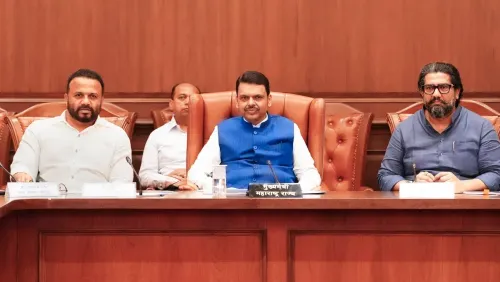
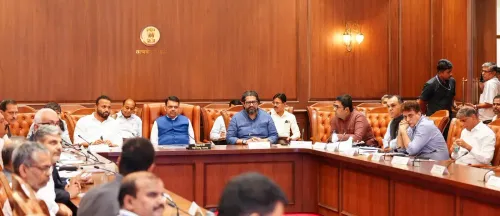
The Chief Minister's Office of Maharashtra announced on Saturday, 4 July 2026 that Chief Minister Devendra Fadnavis has approved a ₹1,000 crore elevated corridor project for Solapur, marking one of the largest single urban-infrastructure commitments to the city in recent memory.
Context
The post, shared by the official CMO Maharashtra handle, announces the project in Marathi: 'सोलापुरात ₹1000 कोटींचा एलिव्हेटेड कॉरिडॉर' — translated as 'A ₹1,000 crore elevated corridor in Solapur.' The announcement names Chief Minister Devendra Fadnavis directly, signalling that the project carries the CM's personal political weight.
Solapur is a major industrial city in western Maharashtra, positioned at a critical transport junction connecting Mumbai, Pune, and Hyderabad. Chronic traffic congestion on its arterial roads has long been cited by local industry and commuters as a drag on economic activity.
Policy Backdrop
The Solapur corridor fits squarely within Maharashtra's sustained push to extend elevated road infrastructure beyond the Mumbai-Pune metropolitan belt into tier-2 cities. Between 2019 and 2024, the state government approved multiple flyover and elevated corridor projects in cities including Nagpur, Aurangabad (now Chhatrapati Sambhajinagar), and Nashik.
Each of those projects was executed under frameworks similar to MMRDA-style public works models, with the state treasury bearing the primary capital cost. A ₹1,000 crore outlay for Solapur places this project in the same league as those earlier tier-2 interventions, and reflects a deliberate policy choice to treat urban mobility in secondary cities as a state priority rather than a local-body responsibility.
Fadnavis, who has served multiple terms as Chief Minister, has consistently positioned road infrastructure as a visible deliverable of his administration, making elevated corridors a signature element of Maharashtra's urban development narrative.
Stakeholders and Impact
Solapur's commuters and the city's textile and manufacturing industries stand to benefit most directly. The city's road network currently handles significant freight movement between the Deccan plateau and the western coast, and an elevated corridor on a key arterial stretch could materially reduce transit times for goods vehicles.
Local residents in areas along the proposed alignment, however, will be closely watching land acquisition proceedings — a stage that has historically caused delays in comparable projects across Maharashtra. The Government of Maharashtra will need to coordinate between the public works department, municipal authorities, and the National Highways Authority where the corridor intersects with national highway upgrades already underway in the Solapur region.
What's Next
The immediate milestones to watch are tender finalisation, detailed project report (DPR) approval, and the start of land acquisition — each of which has the potential to set the project's actual timeline. Integration with Solapur's proposed ring road and ongoing national highway upgrades in the region will be a key engineering and administrative challenge.
With the announcement now public, pressure will mount on the state's public works machinery to move from political commitment to ground-level execution. How swiftly the administration converts this ₹1,000 crore pledge into tendered contracts will be a test of Maharashtra's infrastructure delivery capacity in the post-2024 political cycle.
Point of View
000 crore, the project is substantial enough to shift Solapur's industrial logistics calculus, but the real test will be execution speed, given that land acquisition and inter-agency coordination have historically been the chokepoints in comparable state-funded corridor projects. The announcement also reinforces the state government's preference for elevated solutions over at-grade road widening, a costlier but politically more visible approach. Analysts will watch whether this project reaches the tendering stage before the next electoral cycle or remains a headline commitment.
NationPress
3 Oct 2026
Frequently Asked Questions
What is the Solapur elevated corridor project?
The Solapur elevated corridor is a proposed ₹1,000 crore flyover or raised road project announced by Chief Minister Devendra Fadnavis to reduce traffic congestion on major arterial roads in Solapur, Maharashtra.
Who announced the Solapur elevated corridor?
Chief Minister Devendra Fadnavis announced the project, with the official Chief Minister's Office of Maharashtra sharing the announcement on 4 July 2026.
How much will the Solapur elevated corridor cost?
The project has been announced with an outlay of ₹1,000 crore, making it one of the largest single urban infrastructure commitments to Solapur in recent years.
Why does Solapur need an elevated corridor?
Solapur sits at a key junction between Mumbai, Pune, and Hyderabad, and its arterial roads carry heavy commuter and freight traffic. Congestion on these roads has long been flagged as a constraint on the city's industrial and logistics activity.
When will the Solapur elevated corridor be completed?
No official completion date has been announced. The next milestones are tender finalisation, detailed project report approval, and land acquisition, each of which will shape the actual construction timeline.