CM Fadnavis Approves ₹115 Crore Plan for 3 Maharashtra Tirthas
Synopsis
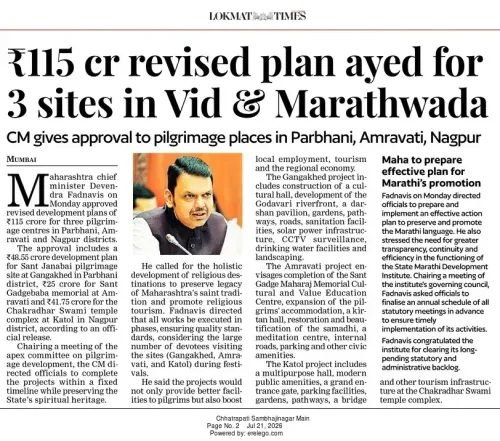
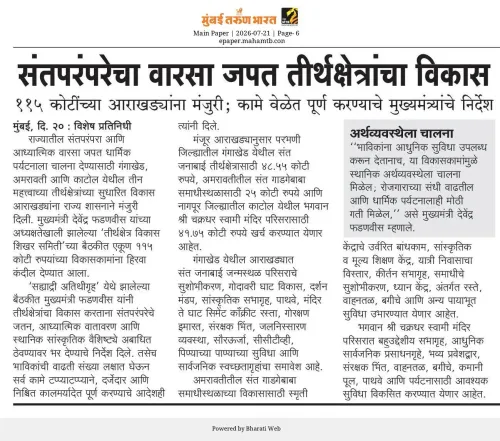
Maharashtra CM Devendra Fadnavis on 20 July 2026 approved ₹115 crore in revised development plans for three pilgrimage centres — Sant Janabai Teerth Kshetra, Gadgebaba Samadhi Sthal, and Shri Chakradhar Swami Temple — directing phased, quality-driven execution to boost spiritual heritage and local economies.
Key Takeaways
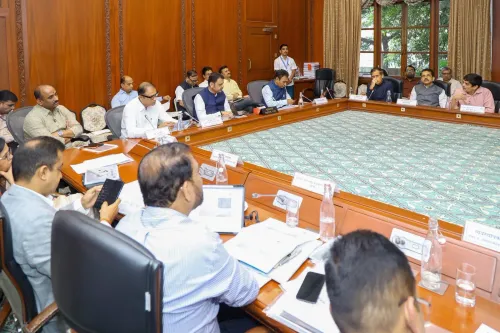
CM Devendra Fadnavis chaired the Apex Committee meeting at Sahyadri Guest House, Mumbai on 20 July 2026 .
Revised development plans worth a total of ₹115 crore were approved for three pilgrimage sites. ₹48.55 crore allocated for Sant Janabai Teerth Kshetra at Gangakhed, Parbhani district . ₹25 crore allocated for Sant Shri Gadgebaba Samadhi Sthal at Amravati . ₹41.75 crore allocated for Shri Chakradhar Swami Temple at Katol, Nagpur district .
Works to be executed in phases with a mandate to generate local employment and promote religious tourism.
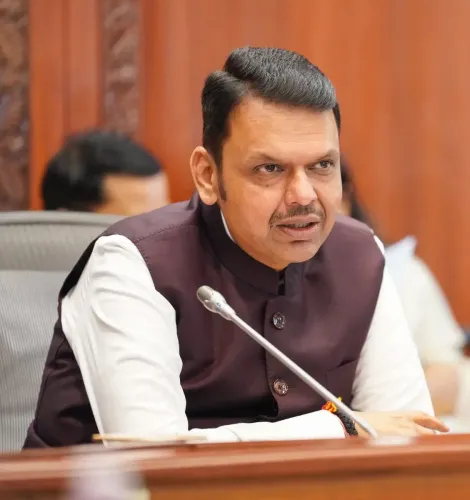
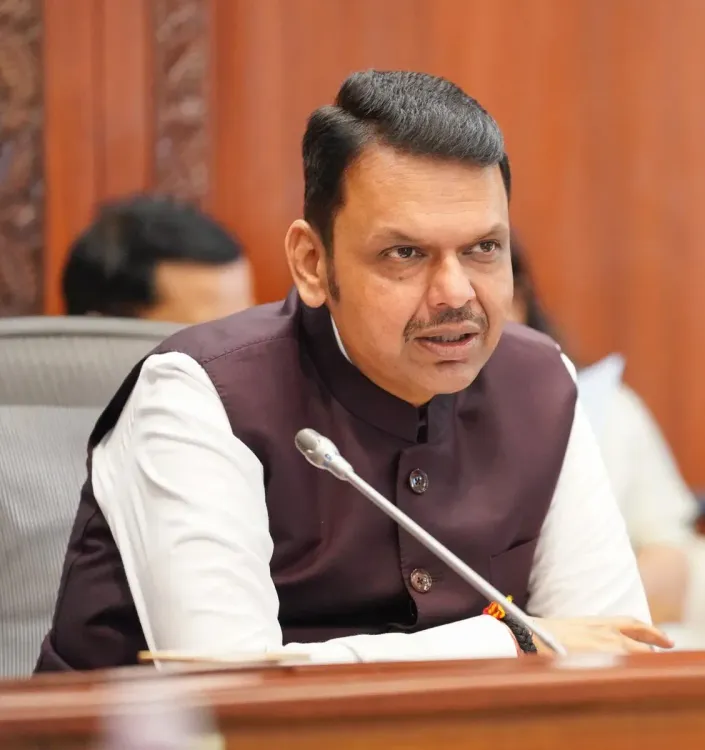
Maharashtra Chief Minister Devendra Fadnavis on Monday, 20 July 2026, chaired a meeting of the Apex Committee at Sahyadri Guest House, Mumbai, approving revised development plans worth ₹115 crore for three pilgrimage centres across the state.
Context
The approved outlay covers three distinct sites: ₹48.55 crore for Sant Janabai Teerth Kshetra at Gangakhed in Parbhani district, ₹25 crore for Sant Shri Gadgebaba Samadhi Sthal at Amravati, and ₹41.75 crore for the Shri Chakradhar Swami Temple premises at Katol in Nagpur district. Fadnavis directed that all works under these master plans be executed in phases, to the highest quality standards, and completed within stipulated timeframes — with particular attention to the surge in footfall during festival periods.
The Chief Minister emphasised that holistic development of pilgrimage centres must preserve spiritual heritage while simultaneously promoting religious tourism. He also instructed that upgraded facilities translate into tangible economic benefits for surrounding communities through employment generation and enhanced tourism activity.
Policy Backdrop
The three sites carry deep roots in Maharashtra's religious and social history. Sant Janabai, the 13th-century Varkari saint whose memorial at Gangakhed draws annual Warkari processions, is among the most venerated figures in the Bhakti tradition. Gadge Baba, honoured at the Amravati Samadhi Sthal, was a prominent social reformer who championed sanitation and anti-caste causes through his itinerant preaching. The Katol temple is associated with Chakradhara, the founder of the Mahanubhava religious sect, one of Maharashtra's oldest organised devotional movements.
At the national level, the central government's PRASAD scheme — launched in 2014-15 — provides infrastructure funding for identified pilgrimage sites, establishing a policy framework that state governments have supplemented with their own budgetary allocations. Maharashtra's current initiative aligns with that broader architecture of heritage-linked tourism investment.
Stakeholders and Impact
The immediate beneficiaries are the millions of pilgrims who visit these three centres annually, who can expect improved crowd management infrastructure, sanitation facilities, and connectivity once the phased works are complete. Local economies around Gangakhed, Amravati, and Katol stand to gain from construction employment in the near term and sustained tourism revenue thereafter.
The meeting was attended by Minister of State Meghnatai Bordikar, Minister of State Ashish Jaiswal, MLA Charansingh Thakur, and senior government officials. BJP-led state governments in Uttar Pradesh and Madhya Pradesh have pursued comparable heritage-tourism circuits, signalling a wider pattern of integrating cultural conservation with rural economic development.
What's Next
With the revised plans approved, the focus shifts to phased tendering and quality audits at all three sites. The Chief Minister's directive on strict timelines and quality standards suggests that project monitoring mechanisms will be central to execution. Observers will watch whether additional pilgrimage centres are brought under revised state tourism budgets in subsequent Apex Committee meetings, as the government signals appetite for expanding this model of development.
Point of View
The administration attempts to reframe tirtha development as an economic policy, not merely a devotional gesture. The inclusion of sites linked to Varkari, Mahanubhava, and social-reform traditions also suggests a deliberate attempt at broad-based community outreach across Maharashtra's diverse religious landscape. How swiftly the phased works move from approval to ground-level execution will determine whether this initiative translates into lasting political capital or remains an announcement on paper.
NationPress
20 Oct 2026
Frequently Asked Questions
What is the total amount approved for pilgrimage development in Maharashtra in 2026?
The Maharashtra government approved a total of ₹115 crore for the holistic development of three pilgrimage centres under revised master plans cleared on 20 July 2026 .
Which three pilgrimage sites are being developed under this Maharashtra plan?
The three sites are Sant Janabai Teerth Kshetra at Gangakhed in Parbhani district, Sant Shri Gadgebaba Samadhi Sthal at Amravati, and Shri Chakradhar Swami Temple at Katol in Nagpur district.
How much money is allocated for Sant Janabai Teerth Kshetra at Gangakhed?
₹48.55 crore has been allocated for the development of Sant Janabai Teerth Kshetra at Gangakhed in Parbhani district, the largest single allocation among the three sites.
Who is Gadge Baba and why is the Amravati site significant?
Gadge Baba was a revered social reformer and saint known for his campaigns on sanitation and anti-caste causes. His Samadhi Sthal in Amravati is a memorial complex that receives ₹25 crore under the newly approved plan.
What is the PRASAD scheme and how does it relate to this Maharashtra initiative?
The PRASAD scheme , launched by the central government in 2014-15 , funds infrastructure upgrades at pilgrimage sites across India. Maharashtra's state-funded plan complements this framework by directing additional budgetary resources to sites of local and regional religious significance.