CM Fadnavis Courts Japanese Investment in Mumbai Meet
Synopsis
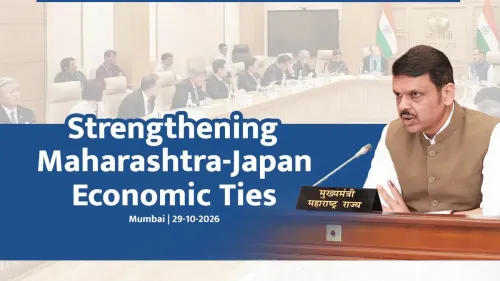
Maharashtra Chief Minister Devendra Fadnavis met Japan Chamber of Commerce and Industry Chairman Ken Kobayashi in Mumbai on 29 October 2026, pitching the state as a premier destination for Japanese investment across trading, automobiles, banking, aviation, aerospace, construction, retail, and food manufacturing.
Key Takeaways
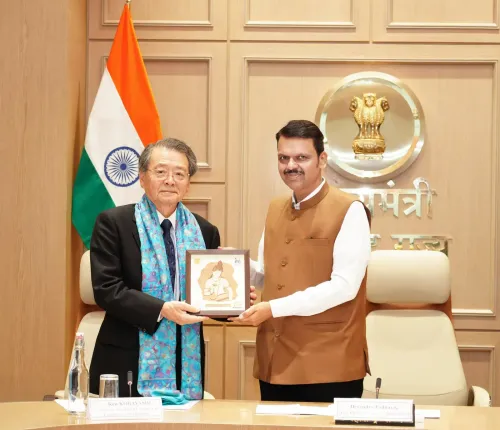
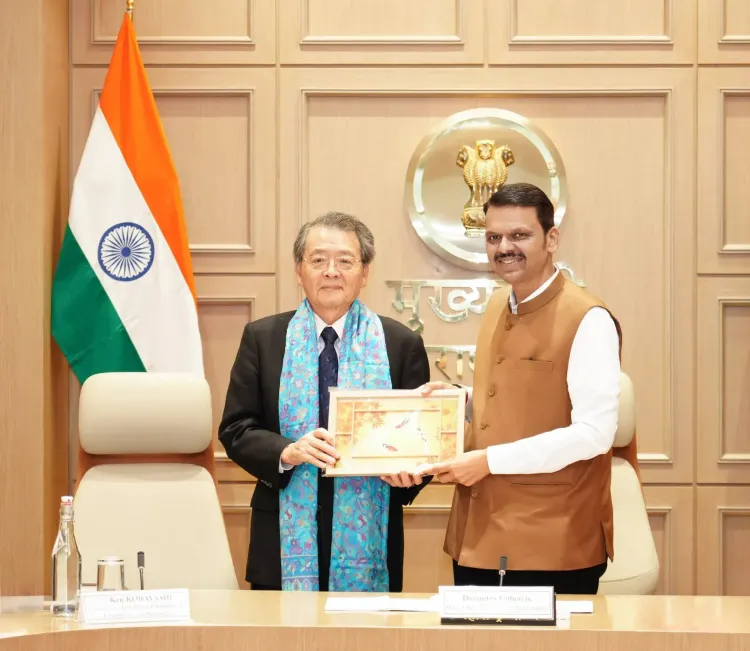
CM Devendra Fadnavis met Ken Kobayashi , Chairman of the Japan Chamber of Commerce and Industry and President of Mitsubishi Corporation, in Mumbai on 29 October 2026 .
Sectors discussed for expanded Japanese investment include trading, automobile, banking, aviation, aerospace, construction, retail, and food manufacturing .
Consul General of Japan in Mumbai, Sato Hitomi , was present, giving the meeting both commercial and diplomatic standing.
Maharashtra has historically been India's top destination for Japanese FDI, with major automotive clusters in Pune and Mumbai .
The meeting builds on the India-Japan Comprehensive Economic Partnership Agreement (2011) and the Mumbai-Ahmedabad high-speed rail corridor agreement (2015) .
Follow-up MoUs in aerospace, aviation, and food processing are being watched as potential outcomes of the engagement.
Japanese business firepower walked into Mumbai on Thursday, 29 October 2026, and Maharashtra Chief Minister Devendra Fadnavis was ready with a pitch. In a high-level meeting with Ken Kobayashi, Chairman of the Japan Chamber of Commerce and Industry and President of Mitsubishi Corporation, Fadnavis laid out Maharashtra's case as Japan's preferred gateway into India.
Kobayashi's Mumbai Visit and What Was on the Table
The discussion ranged wide — trading, automobile, banking, aviation, aerospace, construction, retail, and food manufacturing — covering virtually every pillar of Maharashtra's industrial economy. Consul General of Japan in Mumbai, Sato Hitomi, was also present, signalling that the engagement carried both commercial and diplomatic weight. Fadnavis framed the meeting as a push to 'expand and innovate' rather than simply attract fresh capital, a distinction that points toward deeper technology partnerships rather than transactional FDI.
Maharashtra's Decades-Long Japanese FDI Story
The pitch lands on fertile ground. Maharashtra — anchored by the industrial clusters of Pune and Mumbai — has long been the single largest destination for Japanese foreign direct investment in India, particularly in automobiles and engineering components. Maruti Suzuki's sprawling supply chain, Suzuki's Pune manufacturing base, and a web of Tier-1 Japanese auto-parts suppliers have made the state a de facto Japanese manufacturing hub on the subcontinent. What Fadnavis is now signalling is an ambition to move that relationship up the value chain into aerospace, aviation, and food processing — sectors where Japanese technology transfer could be transformative.
National Framework Behind the State-Level Outreach
The bilateral architecture supporting this kind of meeting is substantial. The India-Japan Comprehensive Economic Partnership Agreement, signed in 2011, liberalised trade and investment flows between the two countries. The landmark Mumbai-Ahmedabad high-speed rail corridor agreement, inked in 2015, remains the flagship symbol of infrastructure cooperation — and a daily reminder that Japanese capital and technology are already embedded in Maharashtra's future. Fadnavis invoked Prime Minister Narendra Modi directly, crediting his leadership for the continued strengthening of India-Japan relations and positioning Maharashtra as the state that converts that national warmth into industrial reality.
What Japanese Businesses Are Being Offered
The CM's message to the delegation was pointed: skilled talent pool, world-class infrastructure, and investor-friendly policies — the trifecta that separates Maharashtra from competing destinations in South and Southeast Asia. The Japan Chamber of Commerce and Industry acts as a multiplier here; a positive signal from Kobayashi reaches hundreds of Japanese firms simultaneously. Watch for follow-up announcements of sector-specific MoUs — particularly in aerospace and food manufacturing, where state-level policy incentives could close deals that national frameworks leave open.
The meeting in Mumbai was one conversation. The investments — or the absence of them — will be the real verdict.
Point of View
Maharashtra is signalling an intent to climb the Japanese FDI value chain, not just defend incumbency. The presence of Consul General Sato Hitomi alongside a top corporate figure like Kobayashi suggests the meeting was pre-coordinated at multiple levels, raising the probability of concrete follow-through. For Fadnavis personally, high-visibility investment pitches double as political capital in a state where industrial employment and infrastructure optics carry significant electoral weight.
NationPress
29 Oct 2026
Frequently Asked Questions
Why did CM Fadnavis meet the Japan Chamber of Commerce Chairman in Mumbai?
Fadnavis met Ken Kobayashi on 29 October 2026 to pitch Maharashtra as a premier investment destination for Japanese businesses, with discussions covering eight sectors including automobiles, aerospace, banking, and food manufacturing.
Who is Ken Kobayashi and why does his visit matter?
Ken Kobayashi is the Chairman of the Japan Chamber of Commerce and Industry and President of Mitsubishi Corporation. A positive signal from him reaches hundreds of Japanese firms simultaneously, making his visit a high-leverage investment diplomacy moment for Maharashtra.
What sectors did Maharashtra pitch to Japan in this meeting?
The sectors discussed were trading, automobile, banking, aviation, aerospace, construction, retail, and food manufacturing — spanning both Maharashtra's existing Japanese FDI strengths and emerging areas like aerospace.
What is the India-Japan economic partnership framework?
India and Japan signed the Comprehensive Economic Partnership Agreement in 2011 to liberalise trade and investment. A landmark 2015 agreement on the Mumbai-Ahmedabad high-speed rail corridor further deepened infrastructure cooperation, providing the broader framework for meetings like this.
What could come next after Fadnavis's meeting with the Japanese delegation?
Analysts will watch for sector-specific MoUs or investment commitments, particularly in aerospace, aviation, and food processing — areas where Fadnavis is seeking to expand beyond Maharashtra's traditional Japanese automotive FDI base.