CM Fadnavis leads Police Commemoration Day march in Mumbai

Synopsis
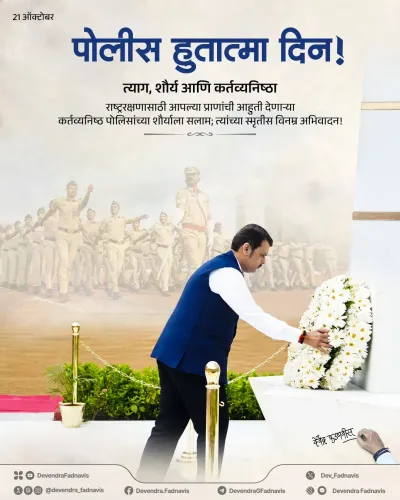
Maharashtra Chief Minister Devendra Fadnavis led the state-level Police Commemoration Day procession at Naigaon, Mumbai on 21 October 2026, paying tribute to police martyrs at a solemn ceremony observed nationally every year since the 1960s.
Key Takeaways
CM Devendra Fadnavis led the Police Commemoration Day march at Naigaon, Mumbai on 21 October 2026 .
The ceremony began at 8:02 a.m. and was broadcast live on X .
Police Commemoration Day has been observed nationally on 21 October every year since the 1960s .
The day honours police personnel who died in the line of duty across counter-insurgency, border, and internal security operations.
Maharashtra Police holds a state-level procession and wreath-laying led by the Chief Minister as part of the annual observance.
Families of martyrs attend as guests of the state in a formal public acknowledgement of their sacrifice.
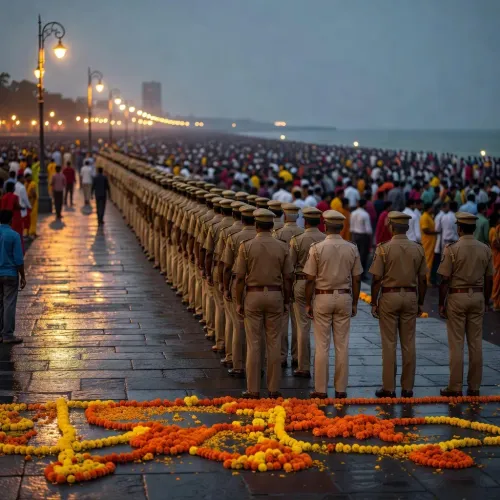
Every year on 21 October, India pauses to honour the police personnel who gave their lives in the line of duty — and in Maharashtra, that moment arrived in uniform and in formation. Maharashtra Chief Minister Devendra Fadnavis led the state-level Police Commemoration Day procession and paid tribute to the brave police martyrs at Naigaon, Mumbai, with the ceremony beginning at 8:02 a.m. on Wednesday, 21 October 2026.
A national date written in sacrifice
Police Commemoration Day has been observed across India every 21 October since the 1960s — a solemn calendar fixture born from the nation's resolve never to forget those who fell protecting it. From counter-insurgency operations in the northeast to internal security duties in some of the country's most volatile zones, the men and women of India's state and central police forces have paid a price measured in lives. The day exists to ensure that price is not forgotten.
Maharashtra Police, one of the country's largest state forces, anchors its state-level commemoration with a formal march and wreath-laying, traditionally led by the Chief Minister. The venue this year — Naigaon in Mumbai — hosted the procession that stands as both a military-style salute and a public act of collective memory.
Fadnavis at the saluting dais
CM Fadnavis shared a live broadcast of the event on X, flagging the ceremony in real time and marking his presence at the dais. His post, written in Marathi, announced the procession and tribute to the 'shoor police hutaatmyanno' — the brave police martyrs — making the observation visible to a wider public audience beyond those gathered at the ground.
The gesture underlines how state governments have increasingly used social media to extend the reach of solemn official commemorations, bringing the march to citizens who cannot attend in person. For the families of martyrs, that visibility carries its own weight.
The Maharashtra Police legacy being saluted
Maharashtra's police force has faced decades of challenge — from organised crime in Mumbai to Naxal-affected districts in Gadchiroli, where personnel have lost their lives on active duty. Police Commemoration Day is the one moment in the year when rank, region, and role collapse into a single, unified tribute. Wreath-laying ceremonies, guard-of-honour drills, and the reading of martyrs' names form the spine of these events across the country.
The families of fallen personnel attend these ceremonies as guests of the state — a formal acknowledgement that their loss belongs not just to them but to the society their loved ones died protecting.
As long as the march continues, the names it honours are not history — they are a standing order.
Point of View
That signal carries extra weight given the state's long exposure to organised crime and Naxal violence. Fadnavis, a former Home Minister of Maharashtra before becoming Chief Minister, has a particularly close institutional association with the state's police apparatus, making his presence at the saluting dais more than ceremonial. Broadcasting the tribute live on social media also reflects a broader shift in how state governments communicate solemn occasions — transforming a parade-ground event into a public act of mass mourning. The consistent holding of these ceremonies, year after year, anchors police welfare as a standing political commitment rather than an election-season talking point.
NationPress
21 Oct 2026
Frequently Asked Questions
What is Police Commemoration Day in India?
Police Commemoration Day is observed every year on 21 October across India to honour police personnel who died in the line of duty. The tradition dates to the 1960s and involves marches, wreath-laying, and guard-of-honour ceremonies at the national and state level.
Where was the Maharashtra Police Commemoration Day 2026 event held?
The state-level event was held at Naigaon, Mumbai , with the procession beginning at 8:02 a.m. on 21 October 2026 .
Did CM Devendra Fadnavis attend Police Commemoration Day 2026?
Yes. Maharashtra Chief Minister Devendra Fadnavis led the state-level procession and paid tribute to police martyrs at Naigaon, Mumbai on 21 October 2026 , sharing a live broadcast of the event on X.
Why is 21 October observed as Police Commemoration Day?
21 October was chosen to mark the sacrifice of police personnel killed in action, with the observance institutionalised since the 1960s to ensure the nation formally acknowledges the cost of keeping public order and national security.
What happens at Maharashtra's Police Commemoration Day ceremony?
The Maharashtra event features a formal march, wreath-laying for police martyrs, and a guard-of-honour drill, traditionally led by the Chief Minister. Families of fallen personnel attend as guests of the state.