CM Fadnavis pays tribute to Rabindranath Tagore on Smruti Din
Synopsis
Maharashtra Chief Minister Devendra Fadnavis marked the Smruti Din of Nobel Laureate Rabindranath Tagore on 7 August 2026, honouring the Vishwakavi as the father of India's national anthem and a poet whose legacy of freedom and humanity endures over a century on.
Key Takeaways
Maharashtra CM Devendra Fadnavis paid tribute to Rabindranath Tagore on his death anniversary, 7 August 2026 .
Tagore is honoured by the title Vishwakavi ('poet of the world') and won the Nobel Prize in Literature in 1913 .
He composed Jana Gana Mana , India's national anthem, making him a daily presence in the republic's life.
Fadnavis offered the tribute in both English and Marathi , reflecting Maharashtra's place in the pan-Indian cultural commemoration.
Indian political leaders across parties routinely mark Tagore's Smruti Din each August, acknowledging his role in literature and the independence movement.
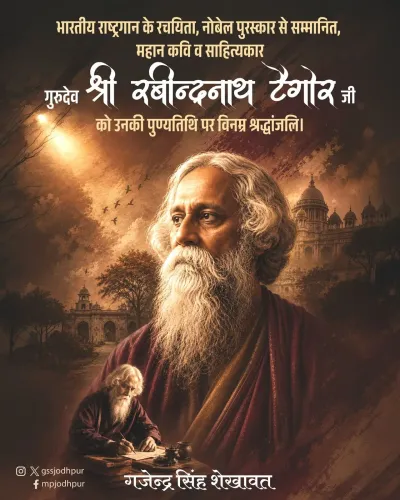
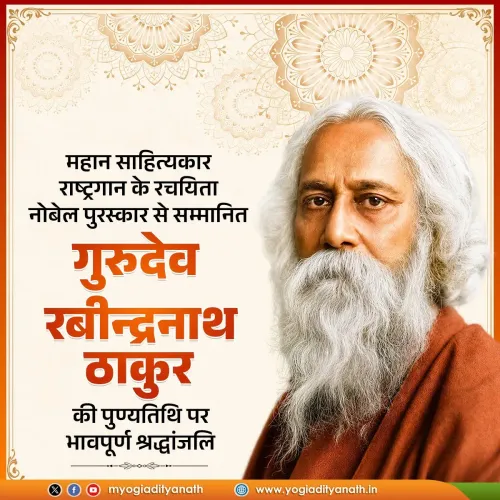
On the death anniversary of Nobel Laureate Rabindranath Tagore, Maharashtra Chief Minister Devendra Fadnavis offered a humble tribute on Friday, 7 August 2026 to the poet-philosopher who gave India its national anthem and a literary legacy that endures more than a century on.
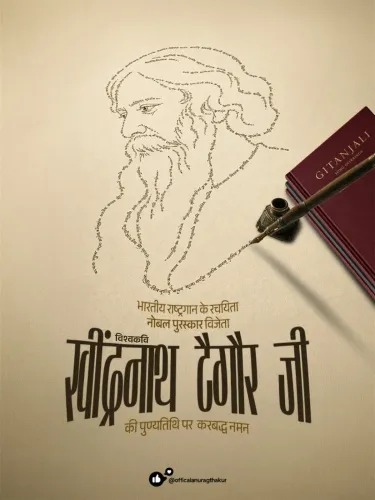
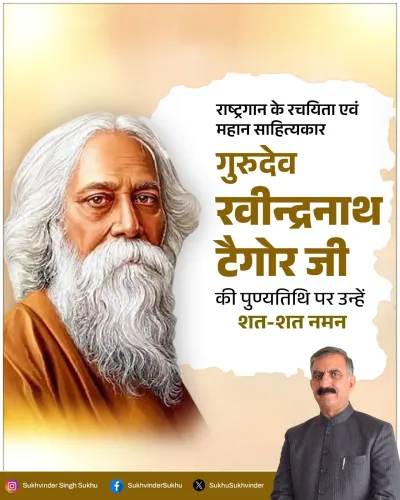
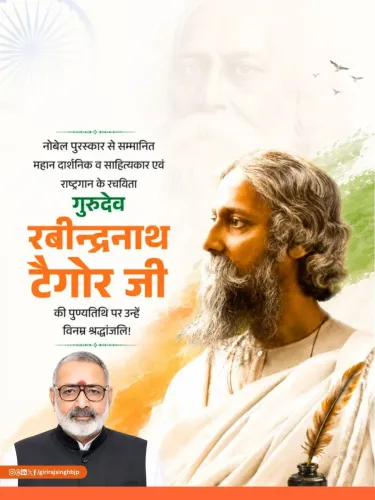
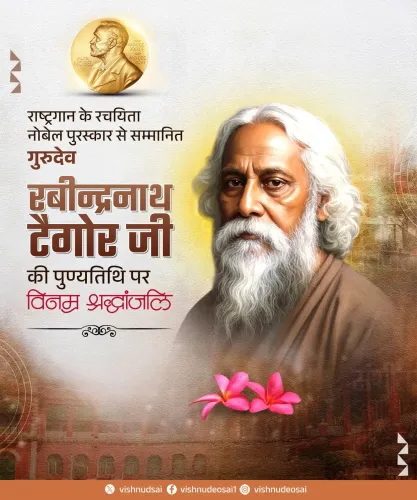
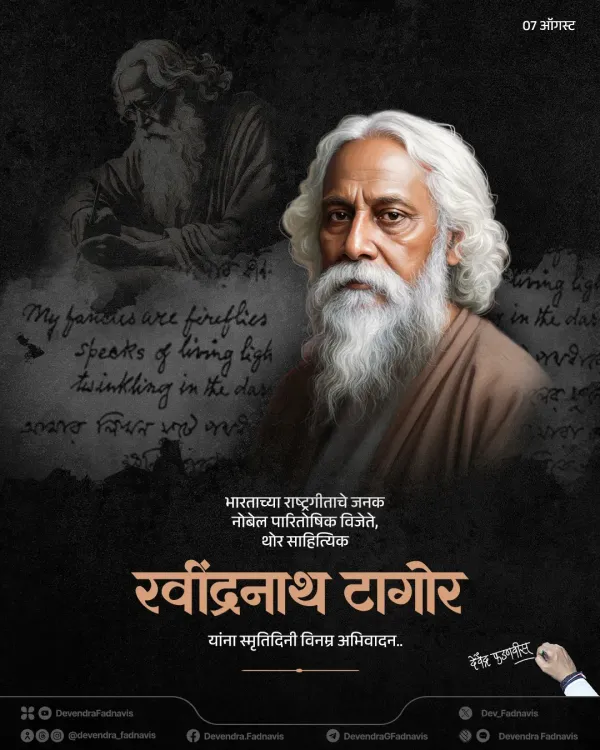
Fadnavis addressed Tagore by his revered title Vishwakavi — 'poet of the world' — honouring him as 'a true visionary whose pen gave voice to freedom, beauty, and humanity.' In Marathi, the Chief Minister offered: 'भारताच्या राष्ट्रगीताचे जनक, नोबेल पारितोषिक विजेते, थोर साहित्यिक रवींद्रनाथ टागोर यांना स्मृतिदिनी विनम्र अभिवादन' — 'A humble salute to Rabindranath Tagore, father of India's national anthem, Nobel Prize winner, and great literary figure, on his death anniversary.'
The poet who became a nation's conscience
Rabindranath Tagore won the Nobel Prize in Literature in 1913 — the first Asian to receive the honour — for his collection Gitanjali. He composed Jana Gana Mana, adopted as India's national anthem, making him a figure whose presence is felt every single day in the republic he helped imagine into being. His writings on freedom, spiritual inquiry, and human dignity shaped the intellectual foundation of the independence movement.
A pan-Indian ritual, Maharashtra's voice in it
Tagore's Smruti Din — his death anniversary — draws tributes from political leaders across party lines every 7 August, a date that cuts across regional and ideological divides. Maharashtra Chief Ministers have historically joined this pan-Indian commemoration, situating the state within a broader cultural conversation that Tagore himself championed: the idea that literature and art are inseparable from a free people's identity. Schools and cultural organisations across the state typically mark the occasion with readings and programmes through August.
Tagore's reach was never confined to Bengal. His ideas on education, nationalism, and the relationship between art and freedom resonated deeply in Maharashtra's own reformist tradition. Fadnavis's tribute, offered in both English and Marathi, reflects that dual inheritance — national pride anchored in local voice.
One hundred and twelve years after Stockholm, the Vishwakavi's words still travel. That is the only tribute that truly counts.
Point of View
Educated Maharashtra electorate. Paying homage to the composer of Jana Gana Mana reinforces constitutional patriotism, a frame the ruling dispensation has leaned into alongside its cultural-nationalist messaging. The ritual nature of Tagore tributes across party lines also illustrates how India's literary giants function as rare common ground in an otherwise fractured political landscape. For Maharashtra, a state with its own towering reformist tradition, invoking Tagore is also an implicit nod to the universalism that connects Marathi intellectual culture to Bengal's renaissance.
NationPress
21 Sept 2026
Frequently Asked Questions
Why is 7 August observed as Rabindranath Tagore's Smruti Din?
7 August is the death anniversary of Rabindranath Tagore , who passed away on this date in 1941 . It is observed across India as Smruti Din — a day of remembrance — with tributes from political leaders, cultural organisations, and schools.
What did CM Devendra Fadnavis say about Rabindranath Tagore?
Fadnavis called Tagore 'a true visionary whose pen gave voice to freedom, beauty, and humanity,' addressing him by the title Vishwakavi . In Marathi, he offered a 'humble salute' to Tagore as the father of India's national anthem and a Nobel Prize-winning literary figure.
Why is Rabindranath Tagore called Vishwakavi?
Vishwakavi means 'poet of the world' in Sanskrit. The title was conferred on Rabindranath Tagore in recognition of the universal reach of his poetry, music, and philosophy, which transcended national and linguistic boundaries.
What is Rabindranath Tagore's connection to India's national anthem?
Rabindranath Tagore composed Jana Gana Mana , which was adopted as India's national anthem after independence. This makes him a uniquely permanent presence in Indian public life — the anthem is sung at official functions across the country every day.
When did Rabindranath Tagore win the Nobel Prize?
Rabindranath Tagore won the Nobel Prize in Literature in 1913 for his poetry collection Gitanjali . He was the first Asian to receive the Nobel Prize in Literature.