CM Fadnavis Unveils Quantum Tech Ecosystem Vision for Maharashtra
Synopsis
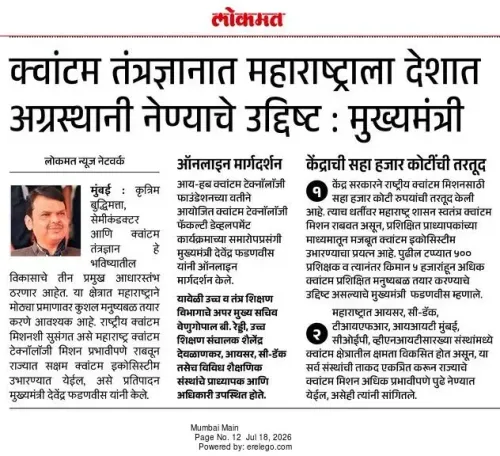
Chief Minister Devendra Fadnavis on 17 July 2026 outlined Maharashtra's vision for a quantum technology ecosystem, announcing targets of 500 trained instructors and 5,000-plus quantum professionals, aligned with India's ₹6,000 crore National Quantum Mission.
Key Takeaways
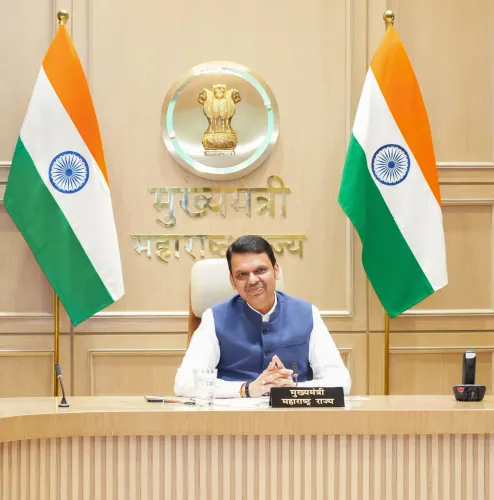
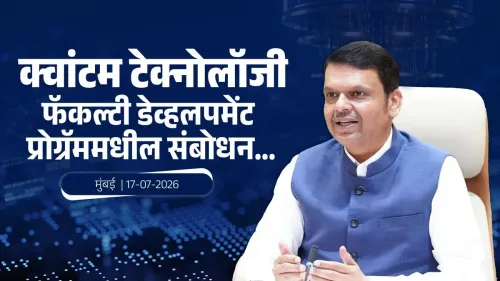
CM Devendra Fadnavis addressed the closing of IISER Pune's Quantum Technology Faculty Development Programme online from Varsha, Mumbai, on 17 July 2026.
He identified AI, semiconductors, and quantum technology as the three pillars of future development and called for large-scale skilled manpower creation in Maharashtra.
The Maharashtra Quantum Technology Mission is being implemented in alignment with India's National Quantum Mission, which carries a central outlay of approximately ₹6,000 crore.
The state targets training 500 quantum instructors in the next phase, followed by a minimum of 5,000 quantum-trained professionals.
Institutions including IISER Pune, C-DAC, TIFR, IIT Bombay, COEP, and VNIT will pool their strengths under the state mission.
AI chatbots 'Chandra' and 'Surya', along with a dedicated LMS and curriculum, have been developed to support foundational quantum education.
Chief Minister Devendra Fadnavis on Friday, 17 July 2026, addressed the closing ceremony of the Quantum Technology Faculty Development Programme organised by IISER Pune, speaking online from Varsha, his official residence in Mumbai. Delivering the keynote on the theme 'Vision for Quantum Technology Ecosystem in Maharashtra', he announced that the state will build a robust quantum ecosystem aligned with the National Quantum Mission, with targets to train 500 instructors and more than 5,000 quantum-skilled professionals.
Context
Addressing faculty and researchers online, CM Fadnavis declared that Artificial Intelligence (AI), semiconductors, and quantum technology will be the three foundational pillars of future economic growth. He said the world is rapidly transitioning from a data-driven economy into an era of high-speed data processing, and that these three domains will be decisive in future global competition. 'जग अतिशय वेगाने बदलत असून डेटा-आधारित अर्थव्यवस्थेपासून आता उच्च गतीच्या डेटा प्रोसेसिंगच्या युगात प्रवेश होत आहे' ['The world is changing very rapidly, and we are now entering an era of high-speed data processing from a data-driven economy'], he stated.
Drawing a parallel with India's IT sector success, the Chief Minister argued that just as the country built global leadership in information technology on the strength of skilled manpower, it must seize the same opportunity in quantum technologies. He emphasised that Maharashtra must produce large-scale skilled human resources in this field without delay.
Policy Backdrop
The Government of India approved the National Quantum Mission in 2023 with a financial outlay of approximately ₹6,000 crore to develop national capabilities across quantum computing, communication, and sensing. CM Fadnavis stated that Maharashtra is already implementing its own independent Maharashtra Quantum Technology Mission in alignment with this central programme.
The state mission aims to leverage trained faculty as the primary channel for building a strong quantum ecosystem. Curriculum developed for training purposes, a Learning Management System (LMS), and two AI chatbots named 'Chandra' and 'Surya' have been deployed to help students clarify foundational quantum concepts. The Chief Minister commended all participating institutions, experts, and faculty members involved in the initiative.
Stakeholders and Impact
Maharashtra's quantum push draws on a cluster of premier institutions already active in the field: IISER Pune, C-DAC, TIFR (Tata Institute of Fundamental Research), IIT Bombay, COEP Technological University, and VNIT (Visvesvaraya National Institute of Technology). CM Fadnavis said the collective strength of these institutions will be harnessed to advance the state mission more effectively.
The Chief Minister noted that quantum technology is set to trigger major transformation across engineering, medicine, space, industry, and defence. He stressed the urgency of preparing students and faculty today, warning that the employment landscape will change dramatically within the next few years.
What's Next
The immediate target under the Maharashtra Quantum Technology Mission is to train 500 instructors in the next phase, followed by the creation of a workforce of at least 5,000 quantum-trained professionals. The state government intends to consolidate the capabilities of its academic institutions into a unified ecosystem rather than operating in silos.
As India pursues a coordinated national-state approach to quantum technologies — mirroring earlier complementary missions in biotechnology and IT — Maharashtra's initiative signals that state governments are moving from passive adoption to active ecosystem building. The success of the trainer-first model and the pace of institutional collaboration will determine whether the state can establish itself as a genuine quantum hub within the national framework.
Point of View
000 professionals, CM Fadnavis is anchoring an aspirational policy to measurable milestones, which will make accountability harder to sidestep. The trainer-first approach is institutionally sound: it multiplies impact without requiring the state to directly fund every learner. The broader significance lies in Maharashtra positioning itself as the state most likely to capture the economic dividend when India's quantum sector matures, much as it did with IT services in the 1990s.
NationPress
16 Oct 2026
Frequently Asked Questions
What is the Maharashtra Quantum Technology Mission?
The Maharashtra Quantum Technology Mission is a state-level initiative announced by Chief Minister Devendra Fadnavis to build a quantum technology ecosystem in Maharashtra, aligned with India's National Quantum Mission. It aims to train 500 instructors and create a workforce of more than 5,000 quantum-skilled professionals.
What is India's National Quantum Mission and how much funding does it have?
India's National Quantum Mission was approved by the central government in 2023 with an outlay of approximately ₹6,000 crore to develop capabilities in quantum computing, communication, and sensing across the country.
Which institutions are involved in Maharashtra's quantum ecosystem?
Key institutions include IISER Pune, C-DAC, TIFR (Tata Institute of Fundamental Research), IIT Bombay, COEP Technological University, and VNIT. CM Fadnavis said their collective strengths will be consolidated to advance the state mission.
What are Chandra and Surya chatbots in quantum education?
'Chandra' and 'Surya' are AI-powered chatbots developed under Maharashtra's quantum training initiative to help students understand foundational quantum concepts. They are part of a broader learning infrastructure that includes a dedicated curriculum and a Learning Management System.
Why did CM Fadnavis compare quantum technology to India's IT sector?
CM Fadnavis drew the comparison to argue that just as India built global IT leadership through skilled manpower, it has the same opportunity in quantum technologies. He urged Maharashtra to proactively develop large-scale quantum talent to secure a similar competitive advantage globally.