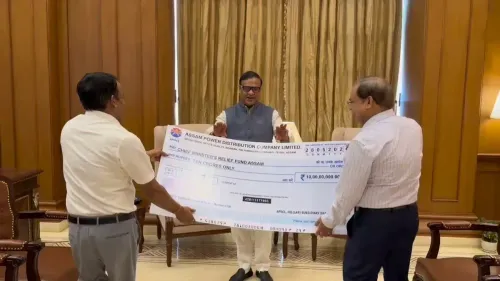
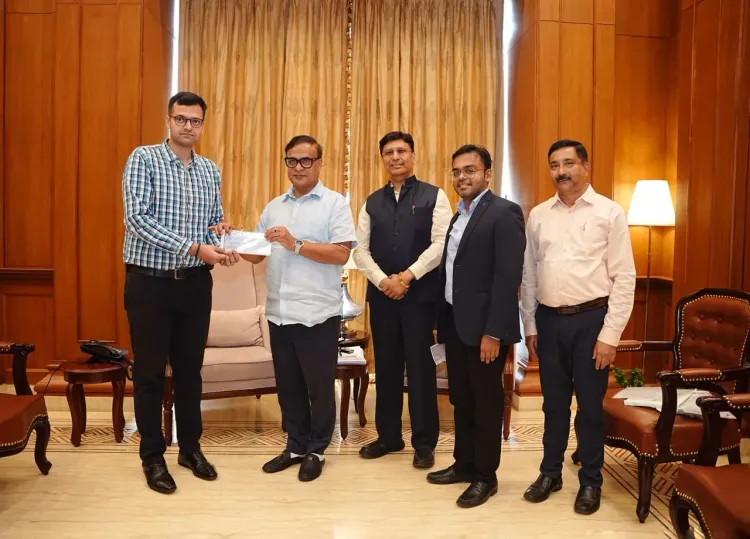
FAITTA donates ₹81.36 lakh to Assam flood relief via CM Sarma
Synopsis
FAITTA's delegation, led by Wagh Bakri Tea Group's Paras Desai, met Assam CM Himanta Biswa Sarma on August 13, 2026, donating ₹81.36 lakh to the Chief Minister's Relief Fund for flood victims and raising key tea trade and industry concerns.
Key Takeaways
₹81.36 lakh contributed by FAITTA to Assam's Chief Minister's Relief Fund for flood-affected people.
Delegation was led by Paras Desai , Chairman of FAITTA and Executive Director of Wagh Bakri Tea Group .
Meeting held on Thursday, August 13, 2026 with Chief Minister Dr.
Himanta Biswa Sarma .
Delegation also raised key issues concerning the tea trade and industry with the CM.
The CMRF is Assam's primary state-managed fund for channelling disaster relief during annual Brahmaputra floods .
Corporate contributions to the CMRF from industry bodies during monsoon season reflect a long-standing pattern of public-private disaster coordination in Assam.
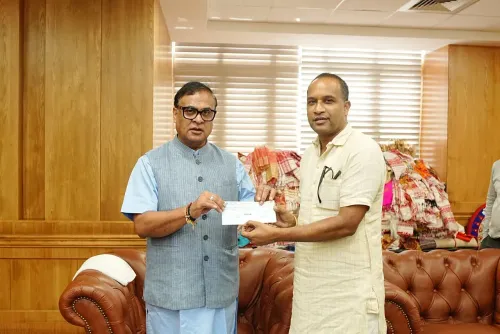
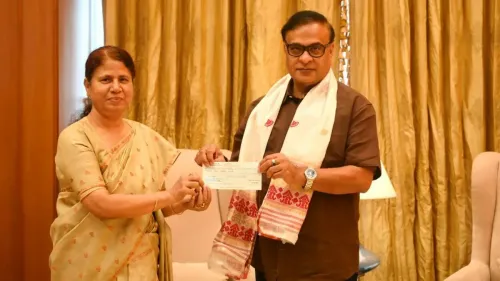
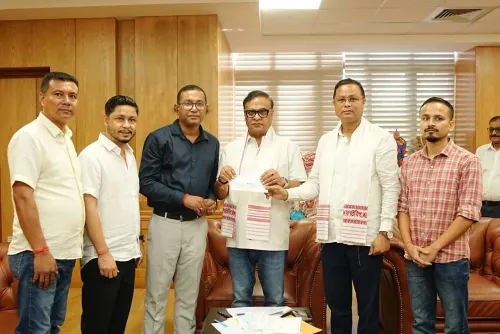
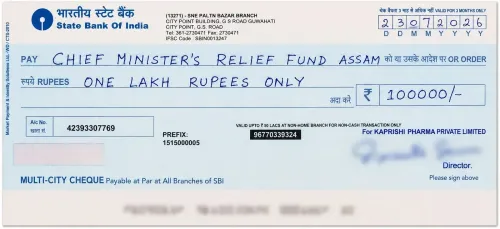
When floodwaters rise across the Brahmaputra plains, Assam's tea industry has a history of showing up — and Thursday, August 13, 2026 was no different. A delegation of the Federation of All India Tea Traders Association (FAITTA), led by Paras Desai, Chairman of FAITTA and Executive Director of the Wagh Bakri Tea Group, called on Chief Minister Dr. Himanta Biswa Sarma at his office in Guwahati, Assam, contributing ₹81.36 lakh to the Chief Minister's Relief Fund (CMRF) for flood-affected communities across the state.
₹81.36 lakh for the Brahmaputra's victims
The contribution, channelled through the CMRF — the state's primary mechanism for routing disaster relief donations — reflects a pattern of public-private coordination that Assam governments have relied upon for decades during monsoon flood seasons. CM Sarma acknowledged the gesture, expressing appreciation for what the Chief Minister's Office described as 'the generous contribution and the spirit of solidarity with the people of Assam.'
Assam is among India's most flood-prone states, with the Brahmaputra river system routinely inundating vast tracts of agricultural and residential land every monsoon. The CMRF serves as a fast-disbursement channel for immediate assistance to displaced and affected families.
Tea trade concerns on the table alongside relief
The meeting was not solely a relief handover. The FAITTA delegation also briefed Dr. Sarma on 'key issues concerning the tea trade and industry' — a broad agenda that the national body of tea traders regularly places before state governments. Assam produces a significant share of India's total tea output, making the state government a critical interlocutor on regulatory, labour, and market policy for the sector.
The Wagh Bakri Tea Group, one of India's established tea companies with interests spanning production, packaging, and domestic and export trade, lent institutional weight to the delegation through Paras Desai's dual role as both FAITTA chairman and a senior executive of the group. Industry-government dialogues of this kind often set the agenda for subsequent state-level policy discussions on the tea value chain.
Industry solidarity as a recurring monsoon ritual
Corporate contributions to the CMRF from industry bodies during Assam's flood season have become a dependable feature of the state's disaster response architecture. For the tea sector specifically — whose labour force and plantation infrastructure are themselves vulnerable to flooding — such contributions carry an added dimension: the industry is both a donor and a stakeholder in Assam's recovery.
Whether the policy concerns raised by FAITTA translate into concrete state action in the weeks ahead will be the real measure of Thursday's meeting.
Point of View
The industry body signals that its relationship with the Sarma government is transactional in the best sense — mutual obligation, not mere charity. For CM Sarma, accepting such contributions publicly reinforces his administration's disaster-response credibility ahead of what is typically the most intense phase of the monsoon. The unresolved question is whether the tea trade concerns raised behind closed doors receive any legislative or regulatory follow-through.
NationPress
13 Aug 2026
Frequently Asked Questions
How much did FAITTA donate to Assam flood relief in 2026?
FAITTA donated ₹81.36 lakh to the Assam Chief Minister's Relief Fund on August 13, 2026 , for flood-affected people in the state.
Who led the FAITTA delegation that met CM Himanta Biswa Sarma?
The delegation was led by Paras Desai , Chairman of FAITTA and Executive Director of the Wagh Bakri Tea Group .
What is the Chief Minister's Relief Fund (CMRF) in Assam?
The Chief Minister's Relief Fund (CMRF) is a state-managed fund used to channel donations for immediate assistance to people affected by natural disasters, including the annual floods caused by the Brahmaputra river system in Assam.
What is FAITTA and what does it do?
The Federation of All India Tea Traders Association (FAITTA) is a national body representing tea traders across India. It periodically meets state governments to discuss industry concerns and also participates in relief efforts during disasters.
Why does Assam face floods every year?
Assam is one of India's most flood-prone states due to the Brahmaputra river system , which regularly overflows its banks during the monsoon season, inundating agricultural land, villages, and infrastructure across the state.