Farooq Abdullah invites 52 leaders to J&K statehood protest at Jantar Mantar
Synopsis
Farooq Abdullah is taking the J&K statehood fight to Parliament's doorstep — literally. By inviting 52 leaders from across India to a Jantar Mantar protest timed to the Monsoon Session's opening day, the NC president is attempting to reframe a regional demand as a national federalism question. The response of those 52 will reveal just how far that argument travels beyond the Valley.
Key Takeaways
Farooq Abdullah has invited 52 prominent political, religious, and civil society figures to an NC -led protest at Jantar Mantar , New Delhi .
The protest is scheduled on the opening day of the Monsoon Session of Parliament .
The central demand is the restoration of Jammu & Kashmir's statehood , which the Centre had indicated would be granted 'at an appropriate time' after the 2019 reorganisation.
Abdullah's letter frames statehood restoration as a matter of Indian federalism , not just a J&K issue.
The NC -led government under Chief Minister Omar Abdullah has been pressing the statehood demand since taking office after the 2024 Assembly elections .
The protest is described as 'peaceful, democratic, and constitutional,' with demands limited to what has already been promised by Parliament.
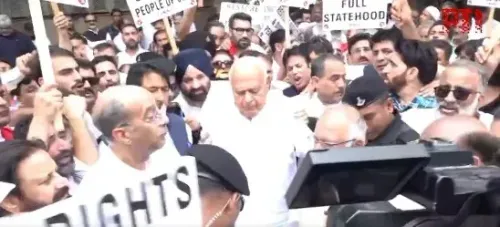
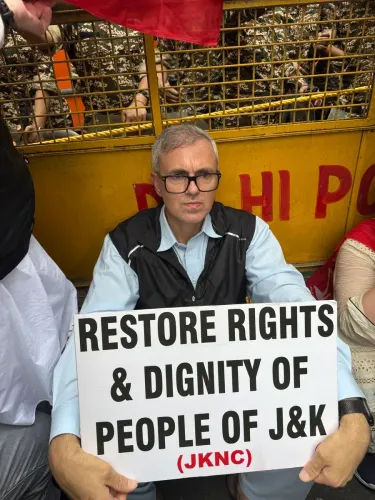
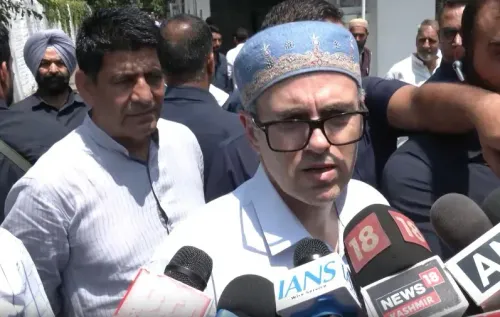
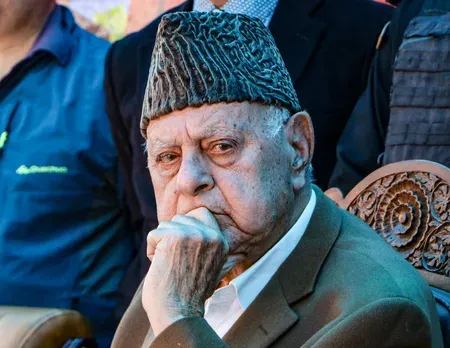
Former Jammu & Kashmir Chief Minister and National Conference (NC) president Farooq Abdullah on Thursday, 9 July formally invited 52 prominent political, religious, and civil society figures from across India to join his party's protest demanding the restoration of statehood to Jammu & Kashmir. The demonstration is scheduled at Jantar Mantar in New Delhi on the opening day of the Monsoon Session of Parliament.
The Invitation and Its Scope
Abdullah dispatched a detailed letter to the 52 invitees, drawing from political parties, religious institutions, and civil society organisations across the country. The NC simultaneously posted on its official X account, framing the protest as a collective democratic cause rather than a party or regional one. 'This is not about one party, one region, or one people. It is about defending India's federal spirit, upholding the Constitution, and demanding the long-overdue restoration of Jammu & Kashmir's Statehood, as repeatedly promised,' the party stated.
Abdullah's Core Argument
In his letter, Farooq Abdullah argued that the continued denial of statehood is 'not merely a delay — it is an affront to the democratic will of an entire people.' He invoked the constitutional architecture of India's federal structure, contending that states are 'not merely administrative conveniences of the Union but living, breathing expressions of the democratic will of the people who inhabit them.'
Abdullah said that reducing J&K — once a constitutional entity with its own Assembly, government, and identity — to administrative subordination 'strikes at the very root of our federal polity.' He urged invitees not to be 'silent bystanders to the erosion of the constitutional framework' that they had all sworn to uphold.
The Federalism Argument
A significant portion of Abdullah's letter was devoted to the broader principle of Indian federalism, arguing that the cause of statehood restoration is 'the cause of every citizen of India who believes that the genius of our constitutional order lies in the balance it strikes between unity and diversity.' He stressed that the protest would remain 'peaceful, democratic, and constitutional' and that the NC's demands do not go beyond what has already been promised by Parliament.
Notably, the Centre had, at the time of J&K's reorganisation in August 2019, indicated that statehood would be restored 'at an appropriate time.' That commitment, critics argue, has remained unfulfilled despite the subsequent restoration of an elected government in the Union Territory.
Political Context
The protest comes after the NC-led government, headed by Chief Minister Omar Abdullah, took office in J&K following Assembly elections in late 2024 — the first such polls since the region's reorganisation. The elected government has repeatedly raised the statehood demand, but the Centre has not yet announced a timeline for its restoration. By staging the protest at Jantar Mantar on the Monsoon Session's opening day, the NC is seeking maximum parliamentary visibility for its demand.
Farooq Abdullah closed his appeal with a call to collective conscience: 'Together, let us send an unambiguous message that the people of Jammu and Kashmir remain the guardians of the voice of those who have been made to wait too long.' Whether the 52 invited leaders respond in numbers will be an early indicator of how much political momentum the statehood demand can generate beyond J&K's own borders.
Point of View
Which no longer holds. Whether this protest becomes a political inflection point or a symbolic gesture depends almost entirely on cross-party participation.
NationPress
8 Oct 2026
Frequently Asked Questions
What is the NC's protest at Jantar Mantar about?
The National Conference is staging a protest at Jantar Mantar in New Delhi to demand the restoration of statehood to Jammu & Kashmir. It is scheduled for the opening day of the Monsoon Session of Parliament, and NC president Farooq Abdullah has invited 52 political, religious, and civil society leaders from across India to join.
Why has J&K's statehood not been restored yet?
Jammu & Kashmir was reorganised into two Union Territories in August 2019, with the Centre indicating statehood would be restored 'at an appropriate time.' No formal timeline has been announced despite the subsequent restoration of an elected government following the 2024 Assembly elections.
Who has Farooq Abdullah invited to the protest?
Abdullah has reached out to 52 prominent figures including political party leaders, religious representatives, and civil society members from across India. The NC framed the invitation as a call to defend India's federal spirit rather than a partisan or regional cause.
What is the NC's argument for statehood restoration?
The NC argues that reducing J&K — a former constitutional entity with its own Assembly and government — to indefinite administrative subordination violates India's federal structure. Farooq Abdullah's letter contends that the statehood demand is a constitutional issue affecting all Indians, not just the people of J&K.
What is the significance of the protest's timing?
By holding the protest on the opening day of the Monsoon Session of Parliament, the NC aims to maximise legislative and media visibility for its statehood demand. The timing ensures the issue is placed squarely before parliamentarians as the session begins.