FCI rejects monopoly charge in grain silo project awards
Synopsis
The FCI has formally denied that its grain silo tenders were rigged in favour of Adani Agri Logistics, pointing out that Adani won Phase I contracts but secured none in Phase II. The real question the rebuttal leaves unanswered is why NITI Aayog and the Department of Economic Affairs were involved in shaping tender eligibility conditions in the first place.
Key Takeaways
The Food Corporation of India (FCI) rejected allegations of monopoly promotion in its Hub and Spoke silo modernisation programme on 2 June 2025 .
A Newslaundry report alleged that the Department of Economic Affairs and NITI Aayog pushed the FCI to drop an 'anti-monopoly' clause, benefiting Adani Agri Logistics Ltd and Leap India Food & Logistics Pvt Ltd .
The FCI noted that Adani won contracts in Phase I but secured none in Phase II , citing this as evidence of a fair process.
The FCI described silos as a 'sunrise sector' and argued that restricting bidder participation would reduce competition and investment.
Contracts were awarded solely on the basis of competitive bidding outcomes and quoted rates , according to the FCI.
The Food Corporation of India (FCI) has formally rejected allegations of favouritism and monopoly promotion in the award of grain silo contracts, asserting that its tendering process was open, transparent, and designed to maximise private sector participation. The rebuttal, issued on 2 June, directly contradicts a report by digital news portal Newslaundry, which alleged that the Department of Economic Affairs and NITI Aayog pressured the FCI to drop an 'anti-monopoly' clause from tenders under its 'Hub and Spoke' silo modernisation programme.
The Allegation
According to the Newslaundry report, the removal of the anti-monopoly clause from tender conditions under two phases of the programme enabled Adani Agri Logistics Ltd and Leap India Food & Logistics Pvt Ltd to secure contracts across both phases. The report implied that the clause's removal was orchestrated to benefit specific private entities.
FCI's Counter-Position
The FCI pushed back sharply, pointing to what it described as clear evidence against preferential treatment. The corporation noted that Adani Agri Logistics secured projects in Phase I but did not win a single contract in Phase II, while other bidders succeeded in subsequent phases. The FCI argued this outcome itself demonstrated the absence of bias, exclusionary practices, or a rigged process.
'The allegation that the bidding process was restrictive, non-transparent, or designed to favour any particular bidder is unfounded,' the FCI stated. It added that tender conditions were uniformly applicable to all bidders and that no special preference or relaxation was extended to any particular entity.
Why the Anti-Monopoly Clause Was Dropped
The FCI explained that the decision to remove participation restrictions was taken collectively, in view of the significant growth potential of the silo sector. The corporation described silos as a 'sunrise sector' and argued that capping participation to a limited set of entities would reduce competition, discourage innovation, and constrain investment — outcomes contrary to the programme's objectives.
Tender notices for both phases were, according to the FCI, widely publicised through multiple channels in line with standard procurement procedures. The corporation maintained that all eligible bidders had equal access and that contract awards were determined solely on the basis of competitive bidding outcomes and quoted rates.
About the Hub and Spoke Programme
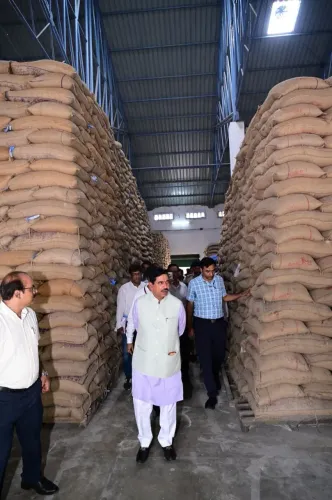
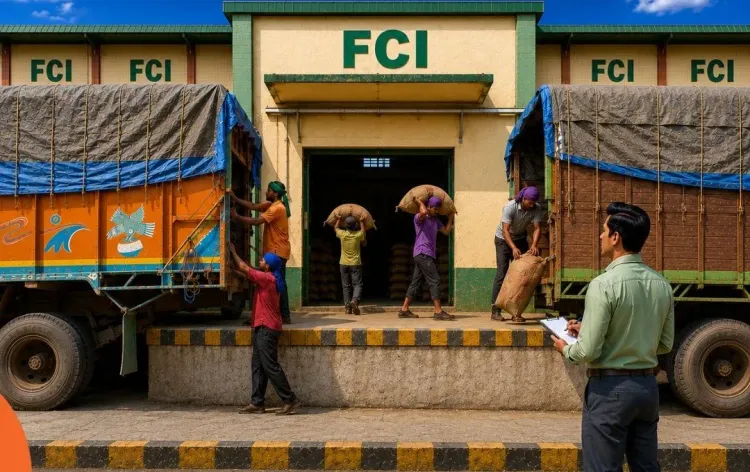
The 'Hub and Spoke' silo modernisation programme is the FCI's flagship initiative to overhaul India's grain supply chain through scientific warehousing. Executed under the public-private partnership (PPP) model, the programme aims to build modern foodgrain storage infrastructure while encouraging greater private sector involvement in storage management. The initiative is part of broader efforts to reduce post-harvest losses and modernise the country's food security architecture.
What Happens Next
The FCI's rebuttal does not close the controversy — the Newslaundry report has already drawn attention to the role of NITI Aayog and the Department of Economic Affairs in shaping tender conditions, raising questions that go beyond the procurement agency itself. Whether opposition parties or parliamentary committees take up the matter remains to be seen. The FCI has not indicated any plans for an independent audit of the process.
Point of View
But it sidesteps the more pointed allegation — that NITI Aayog and the Department of Economic Affairs intervened upstream to reshape eligibility conditions before bids were even invited. That is a structural question about how procurement policy is set, not just how it is executed. India's grain storage infrastructure gap is real and urgent, and PPP participation is necessary — but the credibility of that model depends on the integrity of the rule-making process, not just the bidding mechanics. The FCI's silence on the inter-ministerial pressure angle is the loudest part of its statement.
NationPress
21 Oct 2026
Frequently Asked Questions
What is the FCI grain silo monopoly controversy about?
The controversy centres on allegations that the Department of Economic Affairs and NITI Aayog pressured the FCI to remove an 'anti-monopoly' clause from tenders under its Hub and Spoke silo modernisation programme, allegedly enabling Adani Agri Logistics Ltd and Leap India Food & Logistics Pvt Ltd to secure contracts across two phases. The FCI has denied any favouritism or bias in the process.
What is the FCI's Hub and Spoke silo modernisation programme?
It is the Food Corporation of India's initiative to build modern, scientific grain storage infrastructure across India under the public-private partnership model. The programme aims to overhaul the country's grain supply chain and reduce post-harvest losses by encouraging private sector participation in foodgrain storage.
Did Adani Agri Logistics win contracts in both phases of the FCI silo programme?
According to the FCI, Adani Agri Logistics secured projects in Phase I but did not win any contract in Phase II. The FCI has cited this outcome as evidence that the bidding process was competitive and free of preferential treatment.
Why was the anti-monopoly clause removed from FCI silo tenders?
The FCI stated that the decision to remove participation restrictions was taken collectively, on the grounds that the silo sector has significant growth potential and that limiting eligible bidders would reduce competition, discourage innovation, and constrain investment. The corporation described the removal as consistent with its objective of broad private sector participation.
What role did NITI Aayog and the Department of Economic Affairs play?
According to the Newslaundry report, both NITI Aayog and the Department of Economic Affairs reportedly pushed the FCI to drop the anti-monopoly clause from tender conditions. The FCI's rebuttal did not directly address this inter-ministerial pressure allegation, focusing instead on the fairness of the bidding mechanics.