Finance Minister Sitharaman outlines poverty reduction approach

Synopsis
Finance Minister Nirmala Sitharaman says India has shifted from temporary poverty relief to addressing household-level deprivation under Prime Minister Narendra Modi. Her office's post invokes Antyodaya, a philosophy focused on the poorest, as debates over poverty increasingly look beyond income to health, education and living standards.
Key Takeaways
Sitharaman's office shared her assessment of poverty reduction on 23 November 2026 .
She credited the approach to Prime Minister Narendra Modi 's leadership.
The post describes Antyodaya as the welfare of the last person in the line.
It says the government addressed deprivation household by household but provides no poverty figures.
NITI Aayog reports from 2021 to 2023 documented declines in measured multidimensional deprivation.
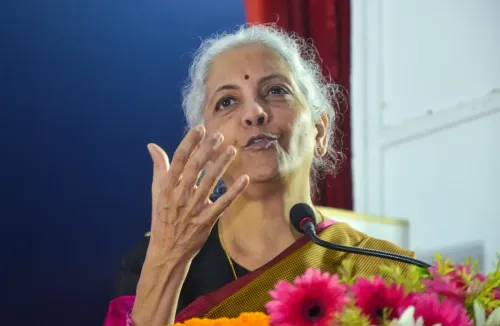
Union Finance Minister Nirmala Sitharaman has framed India's fight against poverty as a shift from temporary relief to tackling the barriers that keep households deprived. In a post shared on 23 November 2026, her office highlighted her account of the government's approach under Prime Minister Narendra Modi and linked to an article by the minister.
Sitharaman puts Antyodaya at the centre
The post quotes Sitharaman describing Antyodaya as the welfare of the last person in the line. It says the government chose to address deprivations 'household by household, ensuring development reached those who needed it most'.
She attributes what she calls a 'fundamental shift' in India's approach to poverty to Modi's leadership. The post presents that assessment as the government's account; it does not provide figures to measure the change.
Measuring poverty beyond income
Antyodaya, a welfare philosophy centred on the poorest, featured in the BJP's 2014 election manifesto. Since then, the government's welfare approach has emphasised reaching households with basic services, including housing, sanitation, cooking fuel and financial inclusion.
That approach sits alongside a broader way of measuring poverty. NITI Aayog's multidimensional poverty reports from 2021 to 2023 documented declines in measured deprivations across health, education and living standards.
The distinction matters: access to services can illuminate hardship that income alone may miss. Future poverty data will be key to assessing how far those gains reach.
Point of View
Linking poverty reduction to household-level access to services. That framing is consistent with a broader shift towards measuring deprivation across health, education and living standards as well as income. The post offers a political assessment rather than new data; future poverty releases will be important for evaluating the scale and reach of progress.
NationPress
23 Nov 2026
Frequently Asked Questions
What did Nirmala Sitharaman say about poverty in India?
She said India had shifted from temporary relief to addressing barriers that perpetuate poverty under Prime Minister Narendra Modi's leadership. Her office shared the remarks in a post linking to an article by the minister.
What does Antyodaya mean in the government's welfare approach?
Antyodaya is a welfare philosophy that prioritises the poorest and last-mile households. The post describes it as the welfare of the last person in the line.
Did Sitharaman's post give poverty reduction figures?
No, the post did not provide poverty reduction figures. It outlined the government's claimed approach to addressing household deprivation.
What is multidimensional poverty in India?
Multidimensional poverty measures deprivation across areas such as health, education and living standards, rather than relying on income alone. NITI Aayog reports from 2021 to 2023 documented declines in measured deprivations.