India poverty: Sitharaman cites shift beyond temporary relief
Synopsis
Finance Minister Nirmala Sitharaman cited a World Bank report showing nearly 50 crore Indians moved out of poverty between 2011 and 2023, arguing that targeted services and welfare delivery have addressed barriers beyond the need for temporary relief.
Key Takeaways
Nirmala Sitharaman cited a World Bank report showing nearly 50 crore Indians moved out of poverty between 2011 and 2023 .
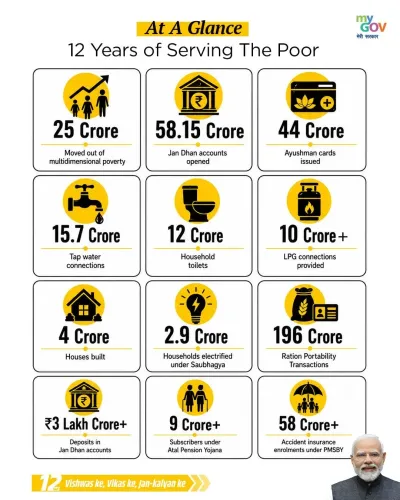
The Finance Minister said rural tap-water connections rose from about 3 crore households in 2019 to nearly 16 crore under Jal Jeevan Mission.
Sitharaman said more than 59 crore Jan Dhan accounts enable direct benefit transfers.
She said 60 crore MUDRA loan accounts had been sanctioned, about two-thirds to women.
More than 3.7 crore women have become Lakhpati Didis, according to Sitharaman.
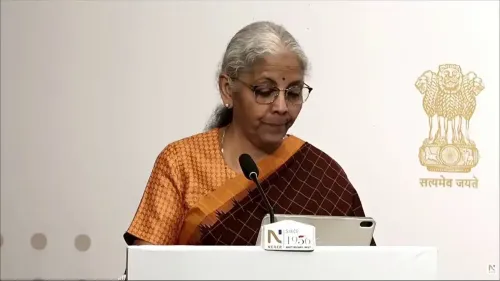
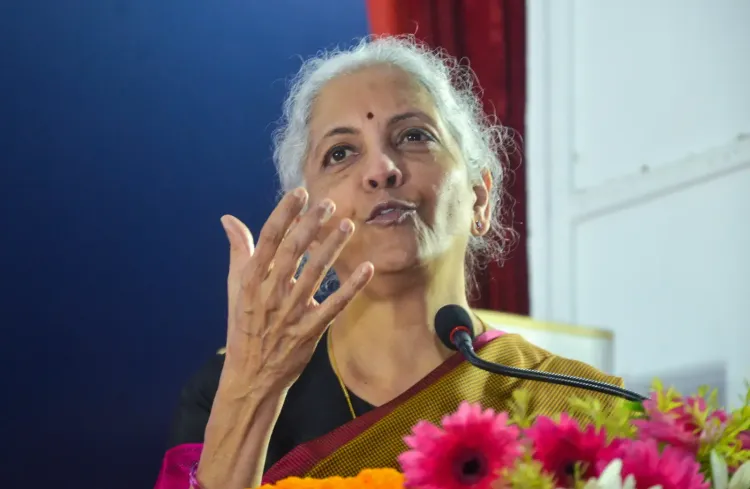
Finance Minister Nirmala Sitharaman said on 23 November that India’s approach to poverty had shifted from temporary relief towards removing the barriers that perpetuate it under Prime Minister Narendra Modi’s leadership. Writing on LinkedIn, she cited a World Bank report that she said showed nearly 50 crore Indians moved out of poverty between 2011 and 2023, while extreme poverty was almost eradicated.
Sitharaman said the figures reflected a transformation she had witnessed firsthand. Her article linked the progress to targeted welfare delivery and set out the government’s ambition of achieving Viksit Bharat by 2047.
Poverty figures and the government’s approach
The Finance Minister argued that eradicating mass poverty had remained an unfulfilled promise for more than six decades after Independence. She contrasted earlier reliance on putting money into the hands of poor people with what she described as a more targeted approach to individual deprivations.
Guided by Antyodaya, or the welfare of the last person in the line, the government addressed needs household by household, she said. Sitharaman added that schemes required identifying beneficiaries, delivering services and following up until the last household was reached.
She also credited Modi with monitoring implementation, intervening to resolve bottlenecks and encouraging the use of technology to track delivery. These are the minister’s account of the government’s role; the cited poverty figures cover the period from 2011 to 2023.
Sanitation, water and household protection
Sitharaman said improved access to household toilets under Swachh Bharat had helped avert an estimated 60,000 to 70,000 infant deaths a year. She also said the Jal Jeevan Mission had expanded rural tap-water connections from about 3 crore households in 2019 to nearly 16 crore, reducing long walks for water and exposure to waterborne diseases.
She cited Ujjwala Yojana for cleaner cooking, PM Awas Yojana for pucca homes and Ayushman Bharat for cashless hospital care. Together, she argued, such programmes reduce household expenses and help protect families against shocks that could push them back into poverty.
Direct transfers and women’s livelihoods
The minister said more than 59 crore Jan Dhan accounts enable benefits to reach recipients directly, without middlemen, through Direct Benefit Transfer. She contrasted this with an earlier understanding that only 15 paise of every rupee sent from the exchequer reached its intended recipient.
Under MUDRA, 60 crore loan accounts have been sanctioned, about two-thirds of them to women, Sitharaman said. She also identified PM SVANidhi and PM Vishwakarma as programmes supporting street vendors and traditional artisans.
She said more than 3.7 crore women had become Lakhpati Didis, with some becoming Crorepati Didis. Others trained as Namo Drone Didis provide drone-spraying services to farmers, she added.
The challenge ahead
Sitharaman said the next phase must reach people who remain at the bottom of the economic ladder while preventing those who have risen out of poverty from slipping back. She framed that task as part of the wider Viksit Bharat 2047 ambition.
“Yet this is no time to rest; the road to Viksit Bharat by 2047 brings its own challenges,” the Finance Minister wrote. The next phase, in her account, will need to sustain progress for households that have already benefited while reaching those still in poverty.
Point of View
So the figures alone should not be treated as a measure of any single intervention’s contribution. Accountability requires transparent, comparable evidence on who is still deprived and whether claimed benefits reach households consistently. The next test is not simply expanding coverage, but protecting families from falling back.
NationPress
23 Nov 2026
Frequently Asked Questions
What did Nirmala Sitharaman say about poverty in India?
Sitharaman said India had shifted from temporary relief towards removing barriers that perpetuate poverty under Prime Minister Narendra Modi’s leadership. She made the remarks in a LinkedIn article on 23 November.
How many Indians moved out of poverty between 2011 and 2023?
Sitharaman cited a World Bank report showing that nearly 50 crore Indians moved out of poverty between 2011 and 2023. She also said extreme poverty had almost been eradicated.
Which welfare schemes did Sitharaman cite?
Sitharaman cited Swachh Bharat, Jal Jeevan Mission, Ujjwala Yojana, PM Awas Yojana and Ayushman Bharat among the programmes addressing household needs. She also discussed direct transfers and schemes supporting livelihoods.
What did Sitharaman say about women and MUDRA loans?
Sitharaman said about two-thirds of the 60 crore MUDRA loan accounts sanctioned were to women. She also said more than 3.7 crore women had become Lakhpati Didis.
What is the next challenge in reducing poverty, according to Sitharaman?
Sitharaman said the next phase must reach people still at the bottom of the economic ladder and prevent others from slipping back into poverty. She linked the challenge to the Viksit Bharat 2047 ambition.