World Bank: 496 million Indians escaped poverty in 12 years, extreme poor at 2.6%
Synopsis
The World Bank says India lifted nearly 496 million people above the $4.20-a-day poverty line in just 12 years — one of the fastest poverty reductions ever recorded for a country of this size. But 232 million remain below that threshold, and crossing the line does not guarantee lasting security. India's real test now is building prosperity, not just reducing headcount poverty.
Key Takeaways
Nearly 496 million Indians moved above the $4.20-a-day lower-middle-income poverty line between 2011–12 and 2023–24 , according to the World Bank .
The share of Indians below that threshold fell from 57.7% to 16.1% over 12 years.
Extreme poverty (at $3 a day ) dropped from 27.1% to just 2.6% in the same period.
Around 35 million Indians remain in extreme poverty; 232 million still live below the $4.20 threshold.
Key drivers include Jan Dhan Yojana , Aadhaar -linked transfers, free food grain distribution, rural electrification, and digital connectivity.
The World Bank calls on India to shift focus from poverty alleviation to lasting prosperity through jobs, manufacturing, education, and women's economic participation.
The World Bank's latest assessment reveals that nearly 496 million Indians crossed above the poverty threshold between 2011–12 and 2023–24, marking one of the most sweeping socioeconomic transformations in modern history. The share of Indians living below the lower-middle-income poverty line of $4.20 a day fell from 57.7% to 16.1% over that period.
Scale of the Shift
The World Bank data show that extreme poverty — measured at $3 a day — declined even more sharply, dropping from 27.1% to just 2.6% within the same 12-year window. To put that in perspective, the number of people lifted above the extreme-poverty line is larger than the combined population of several major economies.
Notably, this pace of reduction is among the fastest recorded for a country of India's scale, drawing comparisons to China's poverty-reduction drive in the 1990s and 2000s, though India's democratic and federal context makes the achievement structurally distinct.
Key Policy Drivers
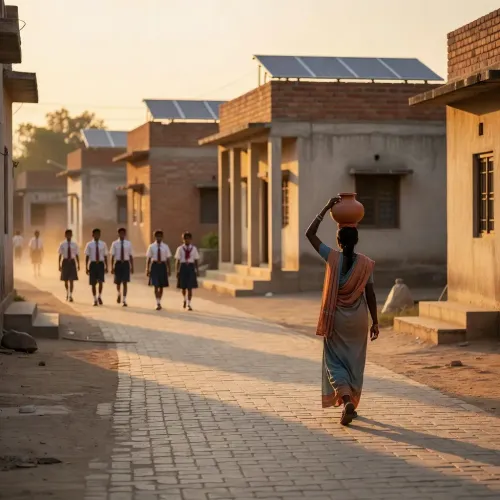
According to the assessment, a cluster of government programmes provided the structural scaffolding for this progress. These include expanded banking access through the Pradhan Mantri Jan Dhan Yojana, Aadhaar-linked direct benefit transfers, subsidised food distribution, rural electrification, sanitation drives, infrastructure development, and the rapid rollout of digital connectivity.
The provision of free food grains to vulnerable households, expanded under the Pradhan Mantri Garib Kalyan Anna Yojana, is credited with protecting millions from food insecurity and economic shocks, particularly during the COVID-19 pandemic years. Sustained economic growth, the report notes, created the fiscal headroom to fund these programmes at scale.
Caution: Millions Still Left Behind
Despite the headline figures, the World Bank cautions against complacency. Approximately 35 million Indians remain in extreme poverty, and around 232 million continue to live below the broader $4.20 threshold. Crossing a poverty line, the assessment notes, does not automatically translate into financial security.
Families that have moved above the threshold continue to face pressures from healthcare costs, inadequate housing, irregular employment, and limited access to quality education — vulnerabilities that can quickly push households back below the line during economic downturns or health crises.
The Next Challenge: Prosperity, Not Just Survival
The World Bank's assessment frames India's next phase as a move from poverty alleviation to lasting prosperity. That transition, it argues, demands productive employment generation, a stronger manufacturing base, better educational outcomes, accessible healthcare, and significantly greater economic participation by women and young people.
India's experience, the report argues, demonstrates that economic growth becomes most meaningful when its benefits actively reach historically excluded communities — a reminder that the remaining gaps are as much structural as they are financial. With general and state elections continuing to sharpen the political focus on welfare delivery, the pressure to sustain and deepen these gains is unlikely to ease.
Point of View
But the World Bank's own data surface a critical asterisk: 232 million Indians still live below $4.20 a day, and 35 million remain in extreme poverty. India has excelled at moving people across a statistical line; the harder task — keeping them there and building resilience against healthcare shocks, job loss, and climate disruption — has barely begun. The report's framing of 'prosperity, not just survival' is pointed: India's welfare architecture was built for poverty alleviation, not upward mobility. Without a serious push on manufacturing employment and women's labour force participation — the latter has stagnated well below peer economies — the next 12 years will be structurally harder than the last.
NationPress
8 Nov 2026
Frequently Asked Questions
How many Indians have been lifted out of poverty according to the World Bank?
The World Bank estimates that nearly 496 million Indians moved above the $4.20-a-day lower-middle-income poverty threshold between 2011–12 and 2023–24. The share of the population below this line fell from 57.7% to 16.1% over the same period.
What happened to extreme poverty in India over this period?
Extreme poverty, measured at $3 a day, fell from 27.1% to just 2.6% between 2011–12 and 2023–24, according to World Bank data. That represents one of the sharpest such declines recorded for a country of India's population size.
How many people in India are still in poverty?
Despite the progress, approximately 35 million Indians remain in extreme poverty and around 232 million still live below the broader $4.20-a-day threshold. The World Bank cautions that crossing a poverty line does not guarantee financial security.
What policies drove India's poverty reduction?
The World Bank credits several programmes: the Pradhan Mantri Jan Dhan Yojana for banking access, Aadhaar-linked direct benefit transfers, free food grain distribution, rural electrification, sanitation infrastructure, and the expansion of digital connectivity. Sustained economic growth provided the fiscal base for these initiatives.
What does the World Bank say India must do next?
The World Bank argues that India must transition from poverty alleviation to lasting prosperity by focusing on productive employment, stronger manufacturing, better education, accessible healthcare, and greater economic opportunities for women and young people. It warns against complacency given the millions still below the poverty threshold.