Sitharaman: World Bank report validates India's inclusion drive
Synopsis
Finance Minister Nirmala Sitharaman, speaking at HSBC India's Mumbai inclusion event, said a World Bank report validates India's poverty-reduction strategy built on Jan Dhan, Ayushman Bharat, free food grains and digital infrastructure — while declaring India 'can aspire for lots more.'
Key Takeaways
Nirmala Sitharaman cited a World Bank poverty report as validation of India's inclusion strategy at HSBC India's 'Algorithm of Inclusion' event in Mumbai on November 2, 2026 .
She identified healthcare access, education and financial inclusion as the three core pillars of the government's consistent approach.
Pradhan Mantri Jan Dhan Yojana (launched 2014 ), Ayushman Bharat ( 2018 ) and PM Garib Kalyan Anna Yojana ( 2020 ) form the scheme backbone she credited.
Digitalisation — including Aadhaar-linked payments and UPI — was highlighted as key to reducing leakages and improving last-mile delivery.
Sitharaman closed with an explicit forward ambition: 'India can aspire for lots more,' framing the World Bank findings as a floor, not an endpoint.
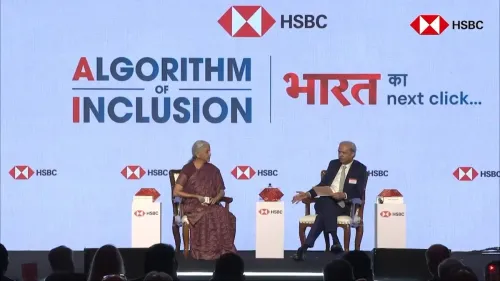
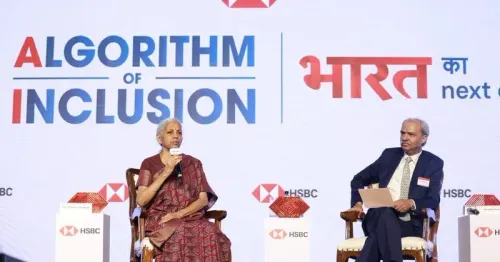
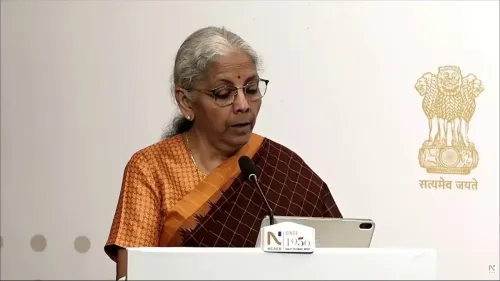
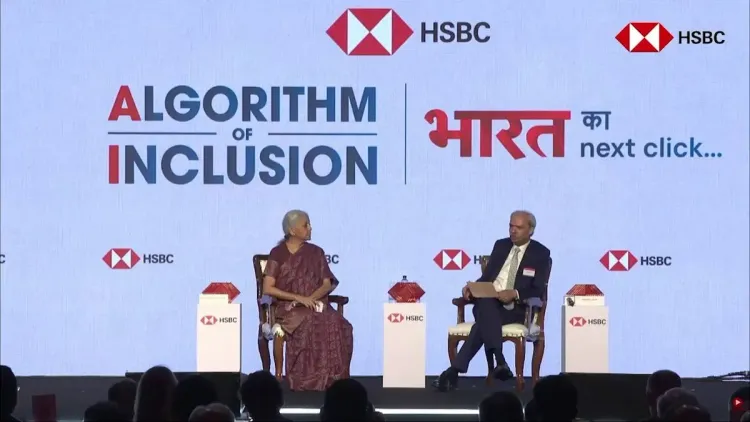
A World Bank report on poverty has given India's finance minister a data point to lean on — and she did not hold back. Union Finance Minister Nirmala Sitharaman, speaking at HSBC India's 'Algorithm of Inclusion — Bharat ka Next Click' event in Mumbai, Maharashtra on Monday, November 2, 2026, said the findings reflect a deliberate, consistent strategy built around three pillars: healthcare access, education, and financial inclusion.
What the Finance Minister actually said
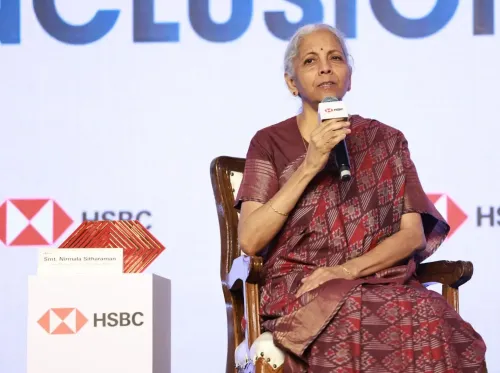
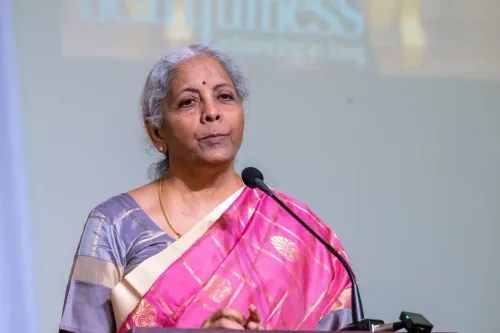
Sitharaman was direct: 'The World Bank report reflects the results of our consistent approach to dealing with poverty by expanding access to healthcare, education and financial inclusion.' She pointed to three specific delivery mechanisms — 'well-tailored government schemes, free food grains and digitalisation' — as the engines that have helped people 'move up the ladder.' And she did not stop at credit: 'India can aspire for lots more.'
That closing line was not a throwaway. It signals that the government views the World Bank validation as a floor, not a ceiling — an acknowledgement of distance already covered paired with an explicit claim on greater ambition.
The three-scheme spine behind the numbers
The architecture Sitharaman described has been assembled over more than a decade. Pradhan Mantri Jan Dhan Yojana, launched in 2014, created zero-balance bank accounts at scale and enabled direct benefit transfers to bypass leakages. Ayushman Bharat, introduced in 2018, extended health insurance coverage to low-income families, bringing hospitalisation within reach for households that had none. PM Garib Kalyan Anna Yojana, which began distributing free food grains to vulnerable households from 2020 onward, added a nutrition floor under the entire architecture.
Binding all three is a digital backbone — Aadhaar-linked payments and UPI — that India has used to reduce the distance between a government promise and a household bank account. The combination of welfare design and digital infrastructure is now the model India presents to multilateral audiences as proof that scale and precision can coexist.
Why HSBC's Mumbai platform matters for this message
The choice of venue is worth noting. An event titled 'Algorithm of Inclusion' hosted by a global banking group in Mumbai — India's financial capital — signals the audience Sitharaman was addressing: not just domestic policy circles but international capital and the multilateral financial community. Citing a World Bank report in that room is a deliberate act of credentialing, linking India's domestic social policy record to the language global investors and development financiers understand.
The 'Next Click' framing of the event itself gestures toward what comes after the access story — the next layer of digital and financial deepening that India's inclusion agenda is expected to pursue.
What the next Budget cycle will test
Sitharaman's 'lots more' coda points squarely at the upcoming Union Budget cycle, where decisions on extending or expanding the food security scheme and the Ayushman Bharat coverage envelope will either substantiate or quietly dilute the ambition she declared from the HSBC stage. The next World Bank poverty update and India Development Update will serve as independent scorecards. The minister has now publicly set the bar.
Point of View
However, sets a self-imposed benchmark that the forthcoming Budget will either validate or expose. The broader pattern — combining targeted transfers with digital public infrastructure — has become India's signature development pitch to global institutions, and Sitharaman is its most prominent narrator.
NationPress
2 Nov 2026
Frequently Asked Questions
What did Nirmala Sitharaman say about the World Bank poverty report?
She said the report reflects India's consistent approach to reducing poverty through healthcare, education and financial inclusion, crediting government schemes, free food grains and digitalisation for helping people move up the economic ladder.
Which government schemes did Sitharaman mention for poverty reduction?
She referred broadly to 'well-tailored government schemes,' which include Pradhan Mantri Jan Dhan Yojana for financial inclusion, Ayushman Bharat for health coverage and PM Garib Kalyan Anna Yojana for free food grain distribution.
Where did Nirmala Sitharaman make these remarks?
She spoke at HSBC India's event titled 'Algorithm of Inclusion — Bharat ka Next Click' held in Mumbai, Maharashtra on November 2, 2026.
What is PM Garib Kalyan Anna Yojana and when did it start?
PM Garib Kalyan Anna Yojana is a government scheme that provides free food grains to vulnerable households. It began in 2020 and has been extended multiple times as a key food security measure.
What is India's next step on financial inclusion after the World Bank report?
Sitharaman signalled further ambition by saying 'India can aspire for lots more.' Key developments to watch include the upcoming Union Budget, where extensions to food security and health schemes may be announced, and the next World Bank India Development Update.