Sitharaman at CD Deshmukh Lecture: JAM, MPC, NPA Reforms
Synopsis
At the CD Deshmukh Lecture 2026 in New Delhi, Finance Minister Nirmala Sitharaman defended three pillars of post-2014 economic reform: the JAM trinity for financial inclusion, the Monetary Policy Committee for rules-based inflation targeting, and the RBI's honest recognition of mounting non-performing assets.
Key Takeaways
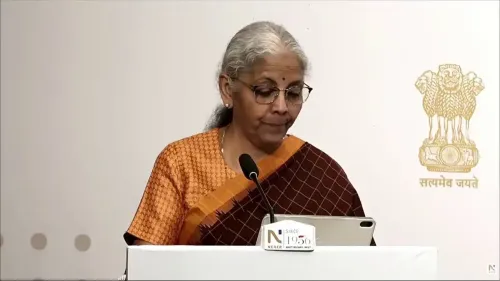
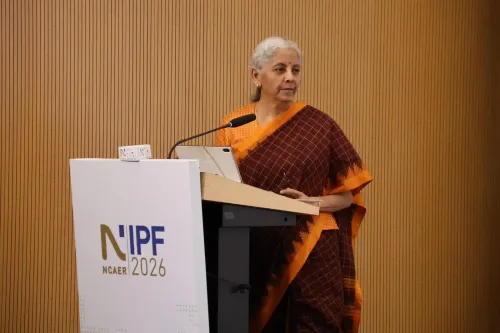
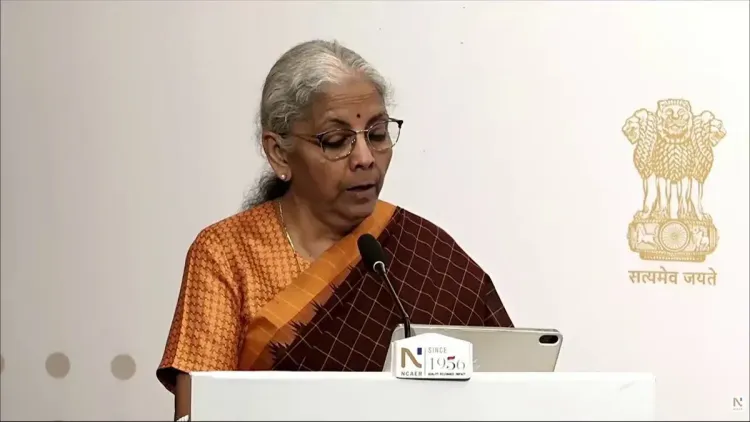
Finance Minister Nirmala Sitharaman spoke at the C.D.
Deshmukh Lecture 2026 in New Delhi on 6 August 2026 .
She cited the JAM Trinity (Jan Dhan, Aadhaar, Mobile) as the foundation of post-2014 financial inclusion.
The Monetary Policy Committee , formalised via RBI Act amendment in June 2016 , set a statutory 4% inflation target .
The RBI Asset Quality Review of 2015-16 forced transparent recognition of non-performing assets rather than deferral.
Her address was marked '1/n', indicating further substantive remarks are forthcoming.
Three reforms, one decade, and a country remade from the ground up. At the C.D. Deshmukh Lecture 2026 in New Delhi, Union Finance Minister Nirmala Sitharaman laid out what she called the structural pillars of India's post-2014 economic transformation — financial inclusion, rules-based monetary policy, and an honest reckoning with bad loans.
Speaking in the first part of her address, Sitharaman said: 'After 2014, financial inclusion became a top priority. The JAM trinity showed its results. The inflation-targeting framework was formalised with the Monetary Policy Committee, which gave a clear objective of maintaining price stability while keeping sustained economic growth in mind. The mounting NPAs were recognised and addressed honestly rather than deferred.'
JAM Trinity: Banking the Unbanked
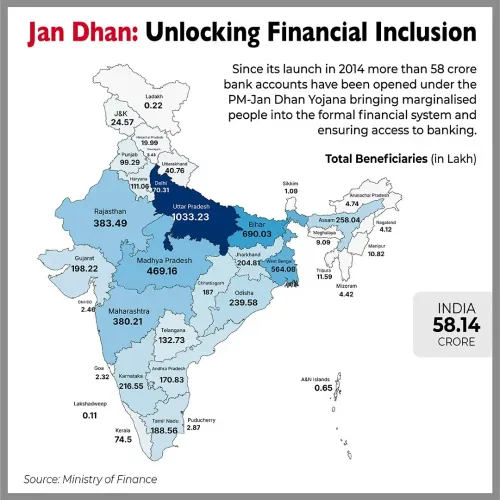
The JAM Trinity — Jan Dhan Yojana, Aadhaar, and Mobile linkage — sits at the heart of the government's inclusion argument. Launched in August 2014, the Pradhan Mantri Jan Dhan Yojana set out to bring every Indian household into the formal banking system, enabling direct benefit transfers that bypassed the leakages of the old cash-handout model. Sitharaman's invocation of the JAM trinity at a lecture series named after a former RBI Governor and Finance Minister was pointed: she was making the case that inclusion was not welfare, but architecture.The MPC and the End of Discretionary Rate-Setting
Before 2016, India's monetary policy was effectively one person's call. The RBI Act was amended in June 2016 to create the Monetary Policy Committee — a statutory, six-member body with a clear mandate: keep inflation at 4 per cent, with a tolerance band, while supporting growth. Sitharaman highlighted this as a shift from discretion to rules, a change that gave markets, businesses, and households a predictable anchor. That institutional credibility, she implied, does not happen by accident.The NPA Reckoning India Chose Not to Avoid
Perhaps the sharpest line in her remarks was on non-performing assets. The RBI's Asset Quality Review of 2015-16 forced banks to stop evergreening loans and report bad debt as it actually was. The NPA numbers that followed were ugly — but Sitharaman's framing was deliberate: recognition, not concealment, was the honest path. The clean-up of bank balance sheets, she argued, was a precondition for the lending capacity India needed to grow. It was a reform that hurt before it helped. That, she suggested, is what distinguishes structural change from short-term management. The lecture is part of a series honouring C.D. Deshmukh, the first Indian Governor of the Reserve Bank of India and a former Finance Minister — a fitting stage for a sitting Finance Minister to defend a decade of economic architecture. Sitharaman's remarks were marked '1/n', signalling that more substantive portions of the address are still to follow. The three pillars she named — inclusion, institutional monetary policy, and transparent NPA resolution — are not new talking points. But delivered together at this platform, they form a coherent defence of a reform decade that is now old enough to be judged on outcomes, not intent.Point of View
Positioning the government's economic record on institutional, not merely political, terrain. The three pillars she named (JAM, MPC, NPA clean-up) represent distinct reform logics: inclusion, rules, and transparency — a framing designed to pre-empt the critique that growth came at the cost of fiscal or banking discipline. With the address marked '1/n', the full arc of her argument is yet to emerge, but the opening salvo signals a comprehensive defence of a decade in office. Analysts will watch whether subsequent parts address the harder questions: credit growth, private investment, and the long-term fiscal trajectory.
NationPress
21 Sept 2026
Frequently Asked Questions
What is the CD Deshmukh Lecture?
The CD Deshmukh Lecture is an annual lecture series named after C.D. Deshmukh, the first Indian Governor of the Reserve Bank of India and a former Union Finance Minister, held to honour his legacy in Indian economic policy.
What is the JAM Trinity in India?
The JAM Trinity refers to the combination of Jan Dhan Yojana (bank accounts), Aadhaar (biometric identity), and Mobile linkage that enables direct benefit transfers to citizens, reducing leakages in welfare delivery. It was a centrepiece of post-2014 financial inclusion policy.
What is the Monetary Policy Committee and what does it do?
The Monetary Policy Committee (MPC) is a six-member statutory body under the RBI Act, formalised in 2016, tasked with setting policy interest rates to maintain inflation at 4 per cent while supporting economic growth.
What were India's NPA problems and how were they addressed?
Non-performing assets (NPAs) are loans that borrowers have stopped repaying. The RBI's Asset Quality Review of 2015-16 required banks to recognise bad loans transparently rather than defer or evergreen them, leading to a short-term spike in reported NPAs but a cleaner banking system over time.
What did Nirmala Sitharaman say at the CD Deshmukh Lecture 2026?
Sitharaman argued that post-2014 India prioritised financial inclusion through the JAM trinity, established rules-based monetary policy through the Monetary Policy Committee, and honestly addressed mounting bank NPAs rather than deferring the problem. Her remarks were the first part of a longer address.