Sitharaman highlights JAM trinity, UPI and MUDRA milestones in Bengaluru
Synopsis
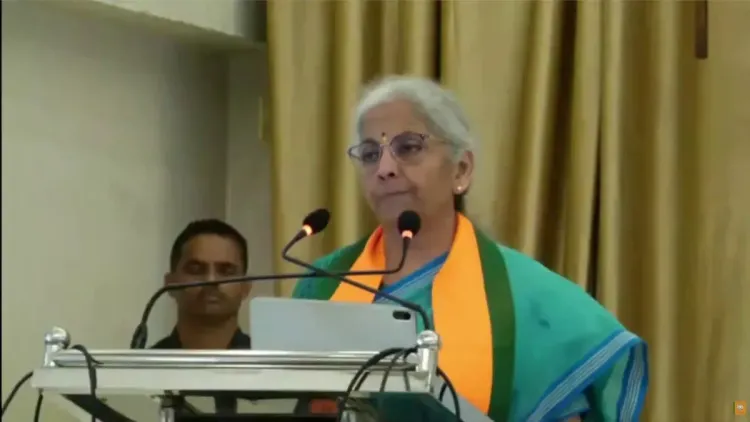
Finance Minister Nirmala Sitharaman, speaking in Bengaluru, cited 58 crore Jan Dhan accounts, 144 crore Aadhaar identities, 2,100 crore monthly UPI transactions, 31 crore eShram registrations, and 57 crore MUDRA loans — 66% to women — as milestones in India's technology-led economic formalisation drive.
Key Takeaways
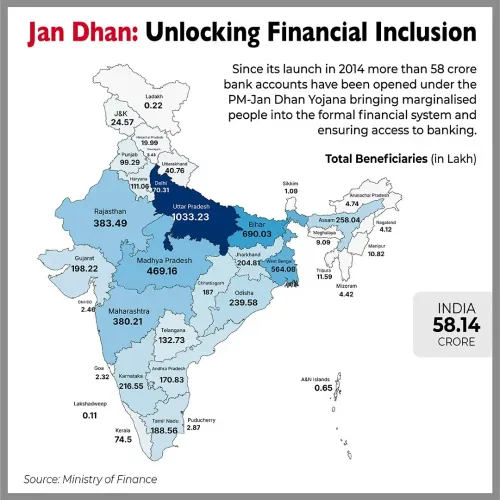
The JAM trinity comprises more than 58 crore PM Jan Dhan accounts , 144 crore Aadhaar identities , and 125 crore mobile connections .
UPI now processes over 2,100 crore transactions every month , one of the highest volumes of any real-time payments system globally. eShram has registered over 31 crore unorganised sector workers since its launch in August 2021.
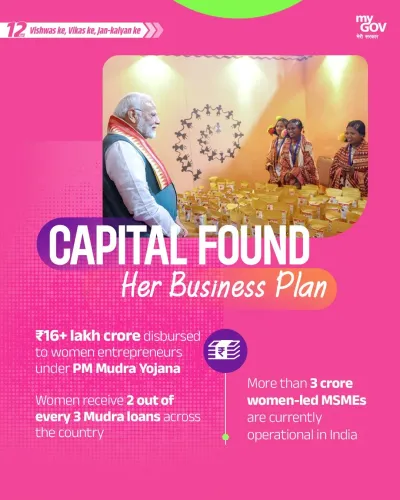
More than 57 crore loans have been sanctioned under PM MUDRA , with 66 per cent going to women borrowers.
Finance Minister Sitharaman framed these figures as evidence that technology, formalisation, and credit access are 'opening up opportunities for Indians'.
The remarks were made in Bengaluru on 14 June 2026 .
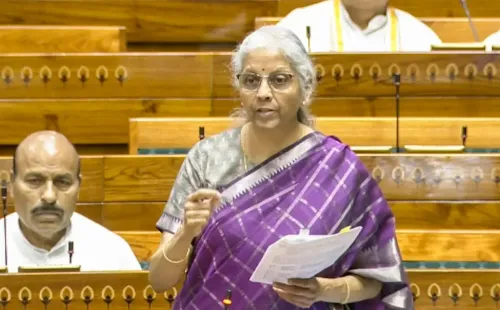
Union Finance Minister Nirmala Sitharaman, speaking in Bengaluru on Sunday, 14 June 2026, highlighted the scale of India's digital public infrastructure, citing landmark figures across the JAM trinity, UPI, eShram, and PM MUDRA as evidence that technology and formalisation are expanding economic opportunity for ordinary Indians.
Context
Sitharaman underscored that the JAM trinity — more than 58 crore PM Jan Dhan accounts, 144 crore Aadhaar identities, and 125 crore mobile connections — has narrowed the distance between citizens and government services. She added that UPI now processes over 2,100 crore transactions every month, reflecting the depth of digital payments adoption across the country.
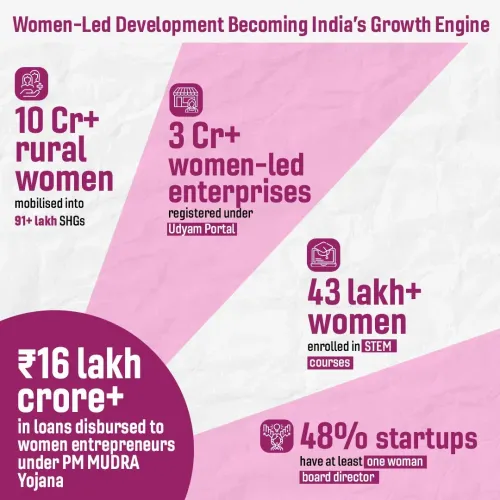
On the labour and credit side, she noted that eShram has registered over 31 crore workers from the unorganised sector, while more than 57 crore loans have been sanctioned under PM MUDRA, with 66 per cent of those loans going to women borrowers.
Policy backdrop
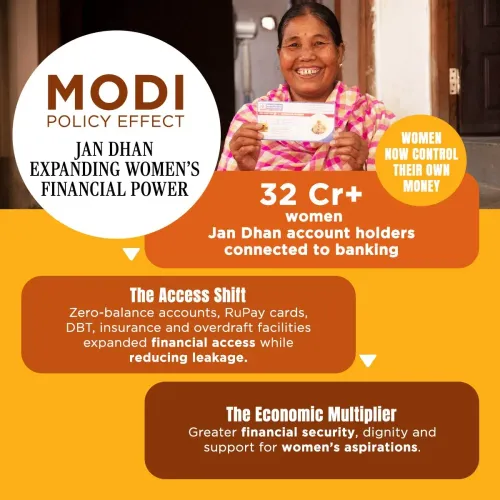
Pradhan Mantri Jan Dhan Yojana was launched in August 2014 to bring zero-balance bank accounts to unbanked households, forming the banking pillar of the JAM stack. Aadhaar, administered by the UIDAI, provides the biometric identity layer that enables direct benefit transfers and authentication across welfare programmes.
UPI, rolled out by the National Payments Corporation of India (NPCI) in April 2016, created a low-cost, interoperable payments rail that has since grown into one of the world's highest-volume real-time payment systems. PM MUDRA, announced in April 2015, channels collateral-free credit to micro and small enterprises through banks and non-banking lenders. The eShram portal, launched in August 2021, was designed to create a national database of unorganised workers and link them to social security schemes.
Together, these programmes form an integrated digital public infrastructure stack aimed at formalising informal economic activity and reducing leakages in welfare delivery — a policy architecture built incrementally since 2014.
Stakeholders and impact
The figures cited by Sitharaman point to three distinct beneficiary groups: rural and semi-urban households brought into formal banking through Jan Dhan; unorganised workers — including daily-wage labourers and gig workers — registered on eShram; and micro-entrepreneurs, particularly women, who have accessed credit under MUDRA. The 66 per cent share of MUDRA loans going to women is a recurring data point the government uses to illustrate gender-inclusive credit expansion.
For the broader economy, UPI's monthly transaction volume of over 2,100 crore signals that digital payments have moved well beyond urban early adopters, with small merchants and rural users now driving a significant share of throughput.
What's next
Sitharaman's remarks in Bengaluru come ahead of the next Union Budget cycle, where digital public infrastructure and fintech regulation are expected to figure prominently. Observers will watch for any legislative proposals on data protection that could affect Aadhaar-linked services, as well as potential expansions of the MUDRA credit ceiling or new eShram-linked social security entitlements. The government's ability to sustain and deepen this infrastructure stack will be a key indicator of how far formalisation of the informal economy has progressed.
Point of View
Ahead of what is expected to be a politically sensitive budget season. By bundling Jan Dhan, Aadhaar, UPI, eShram, and MUDRA into a single arc, the government is presenting a decade-long formalisation project as a coherent, compounding achievement rather than a collection of discrete schemes. The 66 per cent women-borrower share under MUDRA is a particularly pointed statistic, signalling that the administration is conscious of the need to demonstrate gender-inclusive growth. Whether these headline numbers translate into sustained income gains for the unorganised sector remains the central question opposition parties and independent economists are likely to press.
NationPress
13 Sept 2026
Frequently Asked Questions
What is the JAM trinity in India?
The JAM trinity refers to the combination of Jan Dhan bank accounts, Aadhaar biometric identity, and Mobile connectivity that the Indian government uses to deliver welfare benefits directly to citizens and reduce leakages.
How many UPI transactions happen every month in India?
According to Finance Minister Nirmala Sitharaman , UPI now handles over 2,100 crore transactions every month , making it one of the largest real-time digital payments systems in the world.
What is PM MUDRA Yojana and who benefits from it?
PM MUDRA Yojana , launched in April 2015 , provides collateral-free loans to micro and small enterprises. More than 57 crore loans have been sanctioned under the scheme, with 66 per cent going to women borrowers.
What is the eShram portal and how many workers are registered?
eShram is a Ministry of Labour portal launched in August 2021 to register unorganised sector workers and connect them to welfare schemes. Over 31 crore workers have registered on the platform.
How many Jan Dhan accounts have been opened in India?
Finance Minister Sitharaman cited more than 58 crore PM Jan Dhan accounts as part of India's financial inclusion drive, which began with the scheme's launch in August 2014 .