Sitharaman in Odisha: 59 Cr Jan Dhan, ₹43 Lakh Cr MUDRA
Synopsis
Union Finance Minister Nirmala Sitharaman, speaking in Khordha, Odisha, highlighted over 59 crore Jan Dhan accounts, ₹43 lakh crore in MUDRA loans to 60 crore borrowers — 65% women — and 1.2 crore SVANidhi disbursements, framing a decade of financial inclusion under PM Modi.
Key Takeaways
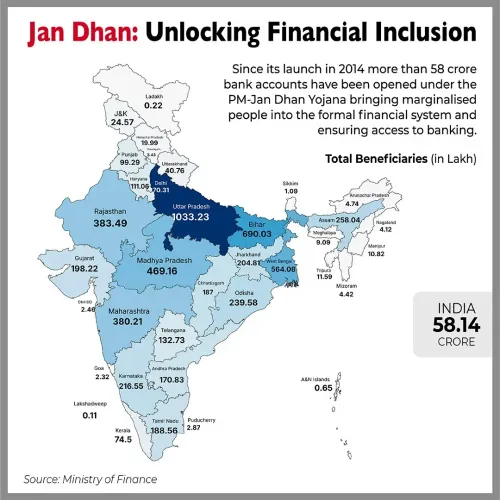
59 crore PM Jan Dhan accounts are now operational with zero charges and no minimum-balance requirement, enabling direct benefit transfers without leakages.
Under Pradhan Mantri MUDRA Yojana , more than ₹43 lakh crore has been sanctioned across over 60 crore collateral-free loan accounts for micro and small entrepreneurs.
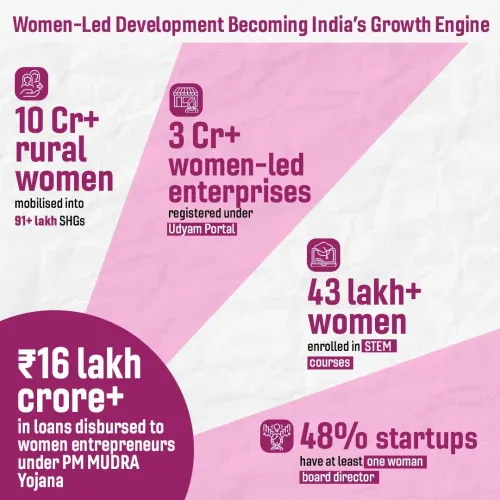
More than 65% of MUDRA beneficiaries are women , with many repaying loans and accessing higher credit for business growth.
PM SVANidhi has disbursed nearly 1.2 crore loans to street vendors, with repeat borrowers scaling up their livelihoods.
PM Jeevan Jyoti Bima Yojana, PMSBY, and Atal Pension Yojana provide low-cost life insurance, accident cover, and pension to unorganised-sector workers.
Sitharaman made the address at an event in Khordha, Odisha on 25 October 2026 , underscoring the BJP's political emphasis on welfare delivery in eastern India.
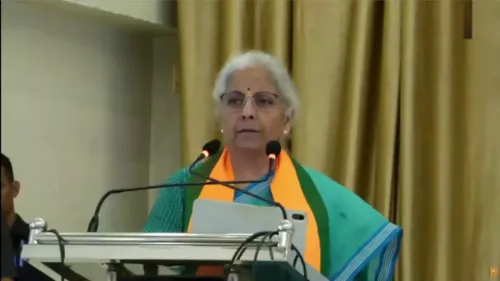
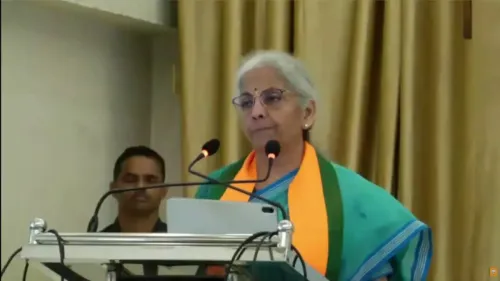
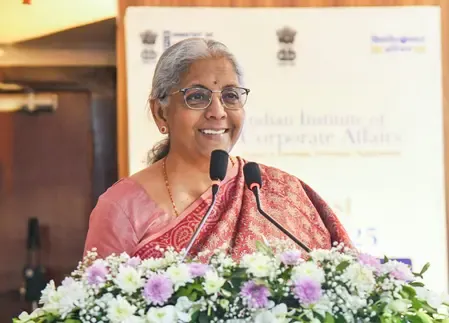
A single political promise made in 2014 — that no Indian household would remain outside the banking system — has, over a decade, quietly rewired how hundreds of millions of Indians save, borrow, and insure themselves. Speaking at an event in Khordha, Odisha on Sunday, 25 October 2026, Union Finance Minister Nirmala Sitharaman laid out the arithmetic of that transformation in striking detail.
59 crore accounts and counting: the Jan Dhan decade
The centrepiece of the Finance Minister's address was the Pradhan Mantri Jan Dhan Yojana (PMJDY), launched in August 2014 as the first leg of India's JAM trinity — Jan Dhan, Aadhaar, Mobile. Sitharaman cited over 59 crore accounts now active under the scheme, each carrying zero annual charges and no minimum-balance requirement. The political salience is direct benefit transfer: welfare money flows into individual accounts rather than through the multi-layered chains that historically bled it away. No middlemen. No leakages. Straight in.
₹43 lakh crore to 60 crore borrowers — and 65% are women
Formal credit — historically the hardest wall for India's informal economy to breach — has seen its own revolution, the Finance Minister argued. Under the Pradhan Mantri MUDRA Yojana, announced in the 2015 Union Budget to extend collateral-free loans up to ₹10 lakh to micro and small enterprises, cumulative sanctions have crossed ₹43 lakh crore across over 60 crore loan accounts. The detail that lands hardest: more than 65% of beneficiaries are women. Many have cycled through a first loan, repaid it, and graduated to higher credit — the hallmark of a functioning credit ladder rather than a one-time subsidy.
The pattern repeats under PM SVANidhi, the 2020 working-capital scheme for urban street vendors launched as part of the Atmanirbhar Bharat package. Nearly 1.2 crore loans have been disbursed, and vendors too have taken repeat loans to scale up, the Finance Minister said. A cart-pusher graduating to a small stall — that is the micro-story the government is using as proof of concept.
Insurance and pensions: the safety net that costs almost nothing
Sitharaman also highlighted the low-premium social security layer built alongside the credit push. PM Jeevan Jyoti Bima Yojana offers life insurance cover; PM Suraksha Bima Yojana (PMSBY) covers accident-related disability and death; and the Atal Pension Yojana (APY), targeted at unorganised-sector workers, provides a defined retirement benefit — all introduced in May 2015 and designed to run at costs that do not price out the very poor. The pitch is that formal financial inclusion is not just a bank account anymore; it is a bundled floor: credit, insurance, and pension, available to someone who, a decade ago, had none of the three.
Why Odisha, why now
Khordha — the district that encompasses Bhubaneswar — sits in a state where the BJP has been consolidating ground after its historic 2024 Odisha assembly win. A Finance Minister personally itemising flagship scheme milestones on the ground is as much political signalling as it is policy communication. The JAM architecture, successive budgets have emphasised, is the infrastructure on which everything from farm subsidies to cooking-gas transfers now runs. Calling out the numbers in public, in a key eastern state, is the government making the case that the plumbing works — and that voters should notice.
The next test will come in the data: RBI and Finance Ministry figures on Jan Dhan account dormancy and MUDRA non-performing assets will tell a fuller story than any single stage address. But the scale of the headline numbers alone — 59 crore bank accounts, ₹43 lakh crore in credit, 1.2 crore vendor loans — frames a decade of financial inclusion as one of independent India's larger administrative undertakings. Whether it has been deep enough is the question the next Economic Survey will have to answer.
Point of View
Now over a decade old, has become the Modi government's preferred rebuttal to welfare-delivery criticism, and the 65% women-borrower figure in MUDRA is a pointed counter to gender-equity critiques. However, analysts and the RBI have repeatedly flagged Jan Dhan account dormancy and MUDRA non-performing assets as metrics that complicate the headline numbers; the Finance Minister's framing, unsurprisingly, cites only the affirmative side. With a Union Budget cycle approaching, these public appearances also function as pre-budget positioning — reminding beneficiary constituencies of existing schemes before new ones are announced.
NationPress
25 Oct 2026
Frequently Asked Questions
What is PM Jan Dhan Yojana and how many accounts are open?
PM Jan Dhan Yojana is a government scheme launched in August 2014 to provide zero-balance bank accounts to every unbanked household. Finance Minister Nirmala Sitharaman cited over 59 crore accounts now active under the scheme, with no annual charges or minimum-balance requirements.
How much has been sanctioned under Pradhan Mantri MUDRA Yojana?
Over ₹43 lakh crore has been sanctioned under Pradhan Mantri MUDRA Yojana across more than 60 crore collateral-free loan accounts for micro and small entrepreneurs, according to figures cited by Sitharaman on 25 October 2026.
What percentage of MUDRA Yojana beneficiaries are women?
More than 65% of MUDRA Yojana beneficiaries are women, Finance Minister Nirmala Sitharaman stated at the Khordha, Odisha event. Many have repaid their first loans and taken higher loans to grow their businesses.
What is PM SVANidhi and who does it help?
PM SVANidhi, launched in June 2020, provides working-capital loans to urban street vendors. Nearly 1.2 crore loans have been disbursed under the scheme, with vendors availing repeat and larger loans to expand their livelihoods.
What are PM Jeevan Jyoti Bima Yojana and Atal Pension Yojana?
PM Jeevan Jyoti Bima Yojana is a low-premium life insurance scheme for bank account holders aged 18–50, introduced in May 2015. Atal Pension Yojana is a contributory pension scheme for unorganised-sector workers, also launched in 2015, guaranteeing a defined monthly pension.