PM Mudra Yojana: Over ₹2.18 lakh crore sanctioned in Rajasthan

Synopsis
Over ₹2.18 lakh crore sanctioned to more than 2.55 crore beneficiaries in Rajasthan alone — with women making up 60% of borrowers. Nationally, the PM Mudra Yojana has crossed ₹41.71 lakh crore in total disbursements to 59.14 crore accounts, cementing its status as one of the world's largest micro-credit programmes.
Key Takeaways
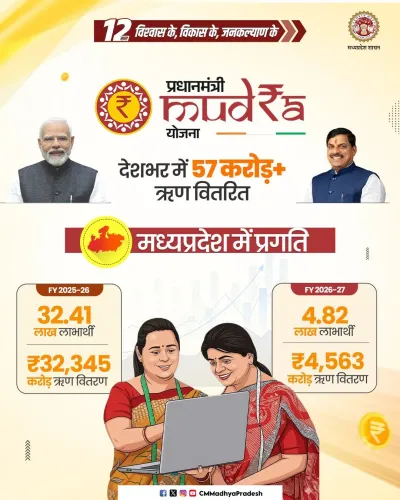
The PM Mudra Yojana (PMMY) has sanctioned ₹2,18,423 crore to 2,55,91,381 beneficiaries in Rajasthan since inception.
More than 1.54 crore women in Rajasthan received over ₹67,982 crore , representing nearly 60% of all state beneficiaries.
In FY 2025–26 , Rajasthan has already seen ₹31,460 crore sanctioned to over 23 lakh borrowers.
Nationally, ₹41.71 lakh crore has been disbursed to more than 59.14 crore beneficiaries as of June 2026 .
Loans are available under four tiers — Shishu , Kishore , Tarun , and Tarun Plus — with a ceiling of ₹20 lakh per borrower.
A significant share of borrowers belong to SC , ST , and OBC communities, historically reliant on informal credit.
The Pradhan Mantri Mudra Yojana (PMMY) has sanctioned loans worth ₹2,18,423 crore to 2,55,91,381 beneficiaries in Rajasthan since its launch, according to official data presented in the Lok Sabha. The scheme, which provides collateral-free credit to micro and small enterprises, has emerged as one of the most far-reaching financial inclusion instruments in the state.
Scale of Disbursements in Rajasthan
Of the total beneficiaries in Rajasthan, more than 1.54 crore are women, who have collectively received loans worth over ₹67,982 crore. Women account for nearly 60 per cent of all PMMY beneficiaries in the state, underscoring the scheme's role in fostering women-led entrepreneurship at the grassroots level.
Momentum has continued into the current financial year. During FY 2025–26, loans worth ₹31,460 crore have already been sanctioned to more than 23 lakh beneficiaries in Rajasthan alone.
What the Government Said
Replying to an unstarred question in the Lok Sabha, Union Minister of State for Finance Pankaj Chaudhary said the PMMY has played a significant role in providing collateral-free credit to India's non-corporate, non-farm micro and small enterprises. As of June 2026, loans worth ₹41.71 lakh crore had been sanctioned to more than 59.14 crore beneficiaries across the country under the scheme.
How the Scheme Works
Launched in 2015, the PMMY provides collateral-free loans of up to ₹20 lakh to eligible non-corporate small business enterprises. Loans are structured under four categories — Shishu, Kishore, Tarun, and Tarun Plus — designed to cater to businesses at different stages of growth and varying capital requirements.
The scheme supports a wide range of economic activities, including manufacturing units, retail shops, fruit and vegetable vendors, truck and taxi operators, food service businesses, artisans, food processors, and street vendors.
Impact on Marginalised Communities
A substantial proportion of Mudra borrowers belong to Scheduled Castes (SC), Scheduled Tribes (ST), and Other Backward Classes (OBC). Traditionally, many of these entrepreneurs depended on informal credit sources such as moneylenders, relatives, or friends. By channelling institutional finance to these groups, the scheme has reduced dependence on informal lending while strengthening financial inclusion and self-reliance.
Notably, the PMMY is now regarded as one of the world's largest micro-credit ecosystems by beneficiary count, a distinction that reflects the scale of India's push to formalise small-enterprise finance over the past decade.
What Comes Next
With FY 2025–26 disbursements already crossing ₹31,460 crore in Rajasthan midway through the year, the state is on track to record one of its stronger annual uptake figures. Analysts and industry observers will watch whether the scheme's expansion to Tarun Plus — the highest loan category — draws more established micro-enterprises into the formal credit fold.
Point of View
But the more telling figure is the 60% women-borrower share — a signal that micro-credit, when designed without collateral requirements, reaches demographics that formal banking has historically excluded. Yet volume alone does not confirm impact: repayment rates, business survival data, and income trajectories of Mudra borrowers are not routinely published, making it difficult to assess whether the scheme is creating durable livelihoods or simply expanding the debt footprint of vulnerable households. As PMMY crosses ₹41.71 lakh crore nationally, the policy conversation must shift from disbursement milestones to verifiable economic outcomes.
NationPress
19 Sept 2026
Frequently Asked Questions
What is the PM Mudra Yojana and who can apply?
The Pradhan Mantri Mudra Yojana (PMMY), launched in 2015, provides collateral-free loans of up to ₹20 lakh to non-corporate, non-farm micro and small enterprises. Eligible borrowers include shopkeepers, artisans, vendors, small manufacturers, and service providers across India.
How much has been sanctioned under PMMY in Rajasthan?
A total of ₹2,18,423 crore has been sanctioned to 2,55,91,381 beneficiaries in Rajasthan since the scheme's inception, according to official data presented in the Lok Sabha. In FY 2025–26 alone, ₹31,460 crore has already been disbursed to over 23 lakh borrowers in the state.
What share of Mudra beneficiaries in Rajasthan are women?
Women account for nearly 60% of all PMMY beneficiaries in Rajasthan. More than 1.54 crore women have received loans totalling over ₹67,982 crore under the scheme in the state.
What are the four loan categories under PMMY?
PMMY offers loans under four tiers: Shishu (smallest loans for early-stage businesses), Kishore, Tarun, and Tarun Plus (up to ₹20 lakh for more established enterprises). The tiered structure is designed to match credit to a business's stage of growth.
How large is the PMMY nationally as of 2026?
As of June 2026, loans worth ₹41.71 lakh crore have been sanctioned to more than 59.14 crore beneficiaries across India, making PMMY one of the world's largest micro-credit programmes by beneficiary count, according to Union Minister of State for Finance Pankaj Chaudhary.