NITI Aayog on India's welfare convergence boosting financial health
Synopsis
India didn't just tell Queen Maxima about bank accounts — it made the case that financial health requires stacking health cover, food security, clean energy, and direct transfers on top of digital finance. NITI Aayog's framing of the JAM trinity as a foundation, not a destination, is a quiet but significant repositioning of how India describes its own development model to the world.
Key Takeaways
NITI Aayog Member Dr.
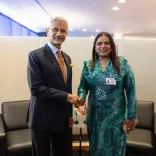
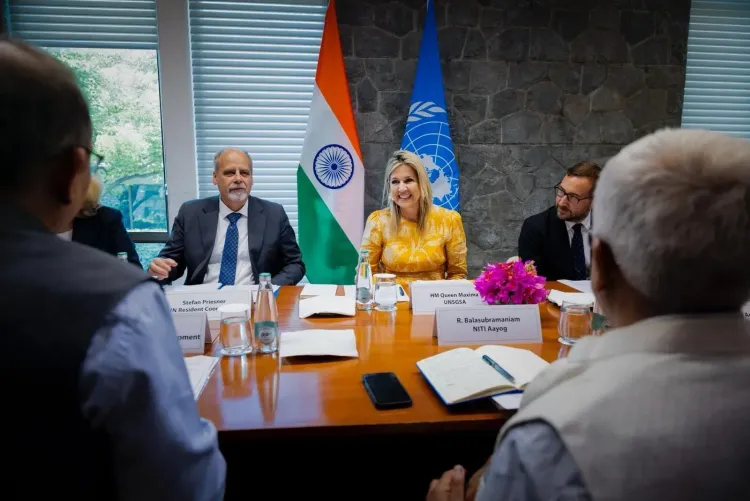
Balasubramaniam met Queen Maxima of the Netherlands , the UN Secretary-General's Special Advocate for Financial Health , on 26 June .
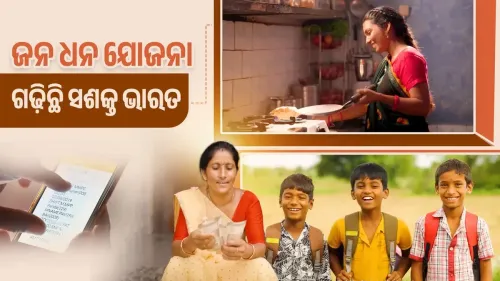
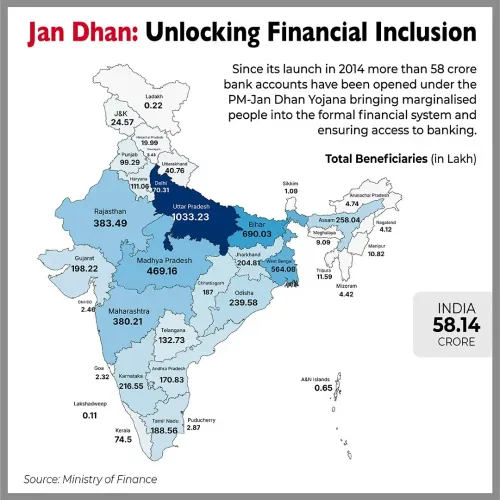
India's financial inclusion journey began with the JAM trinity — Jan Dhan accounts, Aadhaar , and mobile connectivity — over the last decade.
Welfare programmes including Ayushman Bharat , PM Ujjwala Yojana , the Public Distribution System , and Direct Benefit Transfers have been layered onto financial access to improve household resilience.
Balasubramaniam argued that financial access alone is insufficient without complementary social protection mechanisms.
The interaction positioned India's convergence model as a potential reference framework for other emerging economies.
NITI Aayog Member Dr. R. Balasubramaniam on Friday, 26 June presented India's integrated model of financial inclusion and welfare convergence during a high-level interaction with Queen Maxima of the Netherlands, who serves as the United Nations Secretary-General's Special Advocate for Financial Health. The engagement offered India a platform to demonstrate how layering social protection over financial access has meaningfully improved household resilience at scale.
The JAM Trinity as Foundation
Dr. Balasubramaniam traced India's financial inclusion journey to the JAM trinity — Jan Dhan accounts, Aadhaar, and mobile connectivity — which, over the last decade, established the infrastructure for population-scale financial access. He described this as the foundational layer upon which a broader social protection architecture has since been built.
Notably, the NITI Aayog member drew on his direct experience working with rural and tribal communities, arguing that access to financial services alone is insufficient without complementary social safety nets. 'Financial health should be viewed in the broader context of economic and social security,' he said.
Welfare Schemes Driving Household Resilience
Dr. Balasubramaniam outlined how multiple government programmes have converged to reinforce financial health outcomes. These include health security through Ayushman Bharat and the Ayushman Bharat Health Account (ABHA), food security via the Public Distribution System (PDS), energy access under PM Ujjwala Yojana, and the expansion of Direct Benefit Transfers (DBT) and pension schemes.
Together, he said, these interconnected interventions have reduced household vulnerabilities and extended social security to millions of families across the country — translating financial inclusion into measurable financial health improvements.
India's Model on the Global Stage
The interaction with Queen Maxima gave India an opportunity to articulate a replicable framework: that financial health is best achieved not through banking access in isolation, but through the deliberate convergence of financial, health, food, energy, and social security systems. This positions India's approach as a potential reference model for other emerging economies grappling with similar inclusion challenges.
This comes amid growing global attention on the distinction between financial inclusion — having access to formal financial services — and financial health, which measures whether households can absorb shocks, save, and plan for the future. India's case, as presented by NITI Aayog, suggests the two are inseparable.
What This Signals
The NITI Aayog's engagement with a UN-level advocate underscores India's intent to shape global discourse on development finance. As the country approaches its next phase of welfare consolidation, the emphasis on convergence — rather than isolated scheme delivery — may inform how future social protection budgets are structured and evaluated.
Point of View
However, is the uneven quality of these schemes across states, where DBT leakages, ABHA adoption gaps, and Ujjwala refill costs remain live problems. Showcasing the architecture is one thing; the global credibility of India's model will ultimately depend on whether the outcomes data — not the scheme design — holds up to scrutiny.
NationPress
25 Sept 2026
Frequently Asked Questions
What did NITI Aayog discuss with Queen Maxima of the Netherlands?
NITI Aayog Member Dr. R. Balasubramaniam discussed India's integrated approach to financial inclusion and financial health with Queen Maxima on 26 June. Queen Maxima serves as the UN Secretary-General's Special Advocate for Financial Health, and the meeting focused on how India's convergence of welfare schemes has improved household resilience.
What is the JAM trinity and why does it matter?
The JAM trinity refers to Jan Dhan accounts, Aadhaar, and mobile connectivity — the three pillars that enabled population-scale financial inclusion in India over the last decade. NITI Aayog describes it as the foundational layer on which India's broader social protection architecture has been built.
Which welfare schemes were highlighted as strengthening financial health?
Dr. Balasubramaniam highlighted Ayushman Bharat and the Ayushman Bharat Health Account (ABHA) for health security, the Public Distribution System for food security, PM Ujjwala Yojana for energy access, and the expansion of Direct Benefit Transfers and pension schemes. Together, these are said to reduce household vulnerabilities and extend social security.
Why does NITI Aayog argue that financial inclusion alone is not enough?
According to Dr. Balasubramaniam, access to financial services without complementary social protection leaves households exposed to health, food, and energy shocks. Financial health — the ability to absorb shocks, save, and plan — requires layering welfare programmes on top of banking access.
What is the significance of India sharing this model at the UN level?
The engagement positions India's convergence-based approach as a potential reference model for other emerging economies. It also signals India's intent to shape global discourse on development finance, distinguishing between mere financial inclusion and broader financial health outcomes.