Kishan Reddy: 50 Crore Indians Out of Poverty, World Bank Confirms
Synopsis
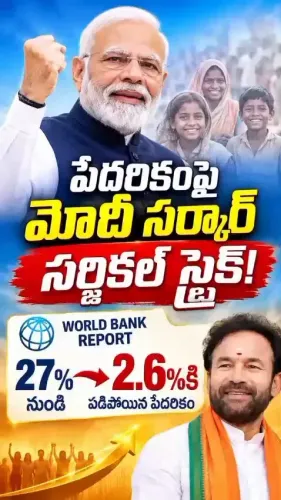
Union Minister G. Kishan Reddy amplified PM Modi's claim that a World Bank report shows nearly 50 crore Indians have exited poverty in 10-12 years, framing India's growth as a shift from slogans to measurable outcomes.
Key Takeaways
Kishan Reddy shared a statement attributed to PM Narendra Modi citing World Bank data on poverty reduction.
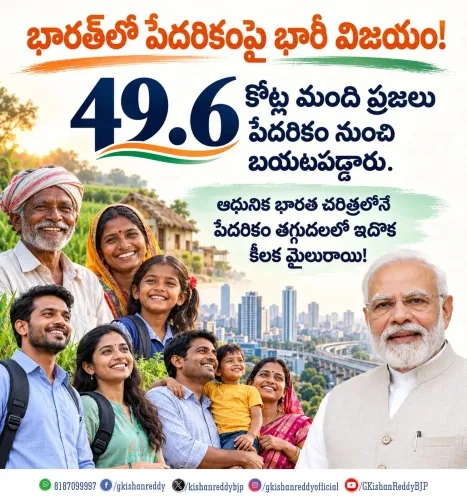
The post claims nearly 50 crore Indians have exited poverty within 10-12 years .
India is described as the world's fastest-growing major economy alongside this poverty reduction progress.
NITI Aayog 's Multidimensional Poverty Index has independently documented reductions in deprivations across health, education, and living standards since 2015-16.
The narrative explicitly contrasts current outcome-based metrics with a past era of policy slogans without comparable measurement.
Future World Bank Poverty Platform updates and Labour Force Surveys will be critical in validating the sustained trend.
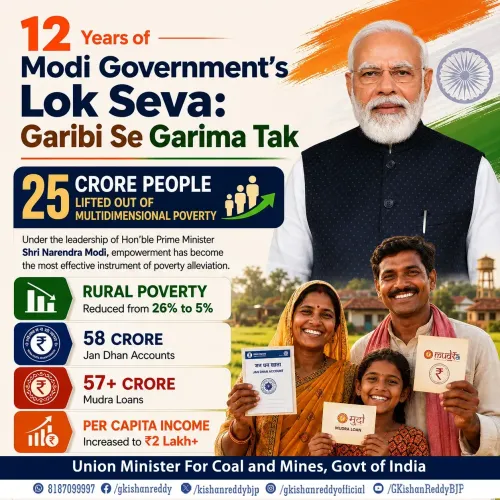
Half a billion people. That is the scale of poverty reduction Union Coal and Mines Minister G. Kishan Reddy is citing as he amplifies a statement attributed to Prime Minister Narendra Modi — that within just 10 to 12 years, nearly 50 crore Indians have moved out of poverty, according to a World Bank report shared on Tuesday, November 3, 2026.
From Slogans to Scorecards
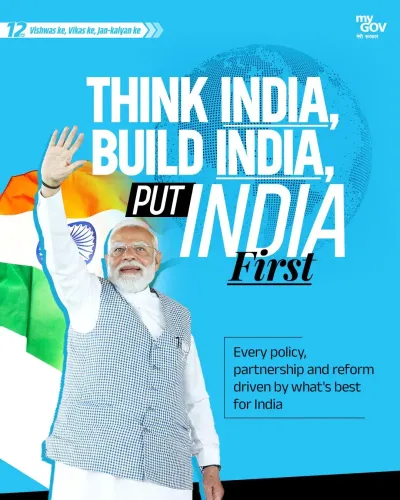
The post draws a sharp contrast with earlier eras of Indian poverty policy. 'Earlier, the fight against poverty remained limited to slogans,' the statement reads. 'Today, India is making measurable progress on the ground.' The language is deliberate — it positions the current administration's record not on promises, but on independently sourced numbers.
That framing matters. For decades, poverty eradication featured in election manifestos and five-year plans across governments. The shift the post signals is from aspiration to metrics — citing a multilateral institution's data as the measuring rod rather than government-issued figures alone.
The World Bank Figure and What Backs It Up
The claim of 50 crore people exiting poverty in a little over a decade is a significant one. While the precise World Bank report underpinning this number has not been independently verified from available data, the broader trajectory it describes is consistent with documented trends. NITI Aayog's National Multidimensional Poverty Index, first published in 2021, recorded substantial reductions in deprivations across health, education and living standards since 2015-16, covering hundreds of millions of households.
India's rise as the world's fastest-growing major economy during this period is also well-documented — a combination of high GDP growth, direct-benefit transfers routing welfare funds directly to bank accounts, and large-scale infrastructure expansion under schemes spanning roads, housing, sanitation and electrification.
Why Kishan Reddy Is Carrying This Message
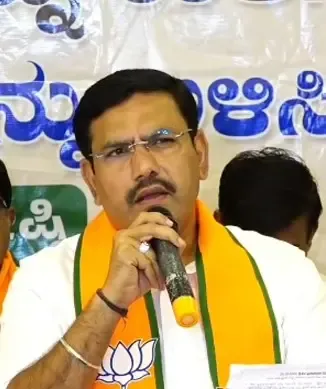
As BJP Telangana state president, Kishan Reddy's amplification of this national economic narrative is politically purposeful. Telangana, a state with significant rural poverty pockets and a competitive electoral landscape, is a key theatre where the BJP has been building its footprint. Tying the party's national governance record to a globally recognised institution's poverty data is a ground-level messaging tool as much as a macro-economic point.
The post quotes the Prime Minister directly, lending it the weight of central government voice while being broadcast from a state-level leader — a layered communication that carries the national story into regional political ground.
The Measure That Will Be Watched
The next edition of the World Bank Poverty and Inequality Platform data and India's periodic Labour Force Surveys will be the real test of whether this trajectory is holding. Poverty reduction at scale is never linear — economic shocks, inflation, and rural wage stagnation can reverse gains quickly. The government's case rests on sustaining the numbers, not just announcing them.
India at 50 crore fewer poor is a headline. Whether that headline still stands in the next measurement cycle is the question policymakers and economists will be tracking closely.
Point of View
Which is significantly harder to dismiss. Kishan Reddy's amplification from a Telangana platform suggests the party is pushing this story aggressively into states where it is still building credibility. However, the 50-crore figure, if it holds up to scrutiny, would represent one of the largest poverty-reduction episodes in modern economic history — a claim that demands, and will receive, rigorous independent verification. The framing of 'slogans versus scorecards' is also a direct electoral weapon aimed at the opposition's welfare legacy.
NationPress
4 Nov 2026
Frequently Asked Questions
How many people in India have come out of poverty according to the World Bank?
According to the statement shared by Union Minister G. Kishan Reddy and attributed to PM Narendra Modi, a World Bank report indicates that nearly 50 crore (500 million) people in India have moved out of poverty in the last 10-12 years.
Which World Bank report talks about India's poverty reduction?
The post references a recent World Bank report on poverty in India, though the specific report title has not been publicly detailed in the statement. The World Bank's Poverty and Inequality Platform periodically publishes updated headcount data for India.
What is India's ranking as a global economy in 2026?
India is described in the post as the world's fastest-growing major economy, a characterisation consistent with its GDP growth trajectory over the past decade.
What is NITI Aayog's Multidimensional Poverty Index?
NITI Aayog's National Multidimensional Poverty Index, first released in 2021, measures poverty across health, education and living standards indicators. It documented significant reductions in deprivation since 2015-16 across hundreds of millions of Indian households.
Why is G. Kishan Reddy sharing statements about poverty reduction?
G. Kishan Reddy is both Union Coal and Mines Minister and BJP's Telangana state president. Amplifying national economic achievements attributed to PM Modi serves the party's political messaging, particularly in states like Telangana where the BJP is consolidating its presence.