Is the Company Linked to Bengal's Coal Mining Project Implicated in a Sand Smuggling Case?
Click to start listening
Synopsis
The involvement of Pachami Basalt Mining Limited in a sand smuggling case raises serious questions about corruption and political integrity. With allegations of money laundering and a canceled tender, the situation has escalated into a significant political controversy. Explore the implications for the Deocha-Pachami coal mining project and its broader impact on West Bengal.
Key Takeaways
- Pachami Basalt Mining Limited implicated in a sand smuggling case.
- Allegations of money laundering through GD Mining.
- Political controversies surrounding the project.
- State government canceled the tender before the chargesheet.
- Deocha-Pachami project is set to cover 3,400 acres.
Kolkata, Jan 7 (NationPress) The company associated with excavation activities at the Deocha-Pachami coal mining project in West Bengal has been named in the Enforcement Directorate's (ED) chargesheet concerning a sand smuggling case.
Sources indicate that the ED has referenced Pachami Basalt Mining Limited in the charge sheet. Arun Sharaf, the proprietor of GD Mining, who was detained in connection with the sand smuggling case, allegedly funneled profits obtained from sand smuggling into this firm.
The ED claims that funds were also channeled through GD Mining as part of a money laundering scheme.
Interestingly, CPI(M) state secretary Md Salim previously questioned how Pachami Basalt Mining Limited secured the tender for the Deocha-Pachami project in Birbhum district of West Bengal. The revelation of the company's name in the ED's chargesheet has ignited new controversies in political circles.
The investigative body alleges that proceeds from sand smuggling were laundered via this company. It is noteworthy that the state government annulled the tender awarded to Pachami Basalt Mining Limited roughly fifteen days prior to the ED filing its chargesheet in the sand smuggling affair.
Meanwhile, while the chargesheet cites corruption amounting to approximately Rs 145 crore linked to GD Mining in the sand smuggling case, it does not clarify where this money ultimately ended up. Although substantial amounts of cash were retrieved during searches at the residence of Midnapore-based sand trader Sourav Roy and other locations, this recovery is reportedly absent from the chargesheet.
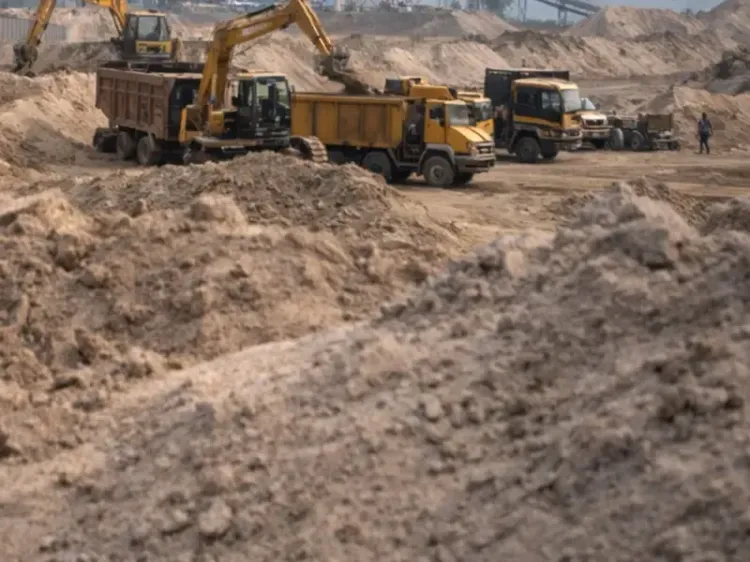
As per sources from the state power department, the Deocha-Pachami coal block is poised to become India's largest coal mine, spanning around 3,400 acres. However, the development of this coal mine has been fraught with controversy since its inception.
Numerous issues have arisen regarding coal extraction and land acquisition, leading landowners to initiate significant protest movements, resulting in prolonged impasses, delays in project execution, and considerable political unrest. Ultimately, the land-related disputes have seen considerable resolution.
Point of View
I recognize the gravity of the allegations facing Pachami Basalt Mining Limited. The intersection of politics, corruption, and economic development must be scrutinized, ensuring transparency and accountability in projects that impact the livelihoods of many. Our commitment is to report with integrity while advocating for the truth in these critical matters.
NationPress
08/01/2026
Frequently Asked Questions
What is the significance of the ED chargesheet?
The chargesheet links Pachami Basalt Mining Limited to a sand smuggling case, raising concerns about corruption and money laundering in the coal mining sector.
What are the implications for the Deocha-Pachami project?
The project, set to be India's largest coal mine, is now under scrutiny due to the allegations against its contractor, potentially delaying its development.